Product Description
Detailed Photos
Product Description
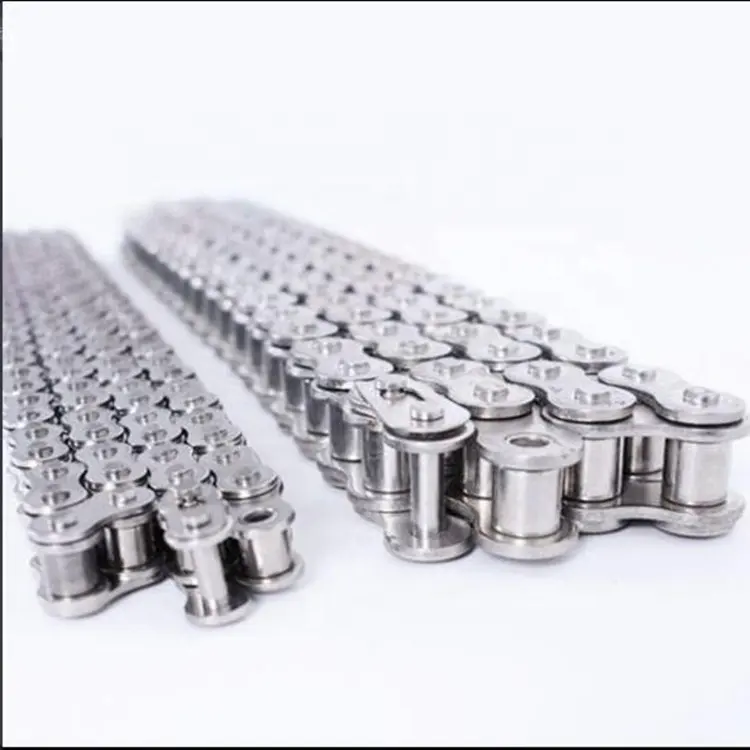
| Item Name | Standrad transmission Roller Chains | Model | Series A, Series B |
| Row | Simplex Duplex Triplrex |
Application | Machinery Parts |
| Suiface Treament | netural/sand-blasted/shot-peening | Certification | ISO, ANSI, DIN, BS |
| Packing | Packaged in boxes and wooden cases, or packaged in reels and then on pallets | Port | Any sea port or airport in china |
Standard roller chains are a type of industrial chain that is commonly used in power transmission
applications. They consist of a series of cylindrical rollers that are linked together by side plates.
The rollers rotate within the links, transmitting power from 1 sprocket to another.
Standard roller chains are available in a range of sizes and configurations to fit different industrial
applications. They are made from high-quality materials, such as carbon steel or stainless steel,
which are resistant to wear, corrosion, and fatigue.
These chains are designed to provide smooth and efficient power transmission, with minimal energy
loss. They have a high load-bearing capacity, making them suitable for use in heavy-duty machinery,
such as conveyors, elevators, and industrial equipment.
Standard roller chains are also easy to install and maintain, with simple lubrication requirements to
ensure long-lasting performance. Overall, they offer a reliable and cost-effective solution for power
transmission in a wide range of industrial applications.
Other Products
Company Profile
Packaging & Shipping
After Sales Service
/* January 22, 2571 19:08:37 */!function(){function s(e,r){var a,o={};try{e&&e.split(“,”).forEach(function(e,t){e&&(a=e.match(/(.*?):(.*)$/))&&1
| Standard or Nonstandard: | Standard |
|---|---|
| Application: | Textile Machinery, Garment Machinery, Conveyer Equipment, Packaging Machinery, Electric Cars, Motorcycle, Food Machinery, Mining Equipment, Agricultural Machinery |
| Surface Treatment: | Netural/Sand-Blasted/Shot-Peening |
| Material: | Carbon Steel |
| Type: | Short Pitch Chain |
| Surface: | Shot Peening, Black, Blue or Original |
| Samples: |
US$ 1.28/Meter
1 Meter(Min.Order) | |
|---|
| Customization: |
Available
| Customized Request |
|---|
What are the benefits of using a maintenance-free transmission chain?
Using a maintenance-free transmission chain offers several advantages in terms of convenience, cost savings, and overall performance. Here’s a detailed explanation:
1. Reduced Maintenance Requirements: Maintenance-free transmission chains are designed to operate without the need for regular lubrication or additional maintenance tasks. This eliminates the time and effort typically associated with lubrication and inspection schedules, reducing overall maintenance requirements and associated costs.
2. Increased Operational Efficiency: Maintenance-free chains often incorporate specialized self-lubricating materials or coatings that provide excellent lubrication properties over an extended period. This helps to reduce friction, wear, and power losses, resulting in improved operational efficiency. The reduced friction also contributes to lower energy consumption and increased power transmission efficiency.
3. Extended Chain Life: Maintenance-free transmission chains are engineered to have a longer service life compared to traditional lubricated chains. The use of self-lubricating materials or coatings helps to minimize wear, corrosion, and elongation, ensuring the chain remains in optimal condition for an extended period. This leads to reduced downtime, fewer chain replacements, and lower replacement costs.
4. Clean and Environmentally Friendly: Maintenance-free chains do not require external lubrication, which means there is no need for oil or grease application. This results in a cleaner and more environmentally friendly working environment, as there is no risk of oil contamination or leakage. Additionally, maintenance-free chains often generate less noise due to reduced friction, contributing to a quieter working environment.
5. Application Versatility: Maintenance-free transmission chains are available in various types and sizes, making them suitable for a wide range of applications. They can be used in industries such as packaging, food processing, automotive, material handling, and many others where reliability, cleanliness, and reduced maintenance are essential.
It’s important to note that while maintenance-free transmission chains offer numerous benefits, they may not be suitable for all applications. Factors such as load capacity, operating conditions, and environmental factors should be considered when determining the appropriate chain type. Consulting with chain manufacturers or industry experts will ensure the selection of a maintenance-free transmission chain that best meets the specific application requirements.
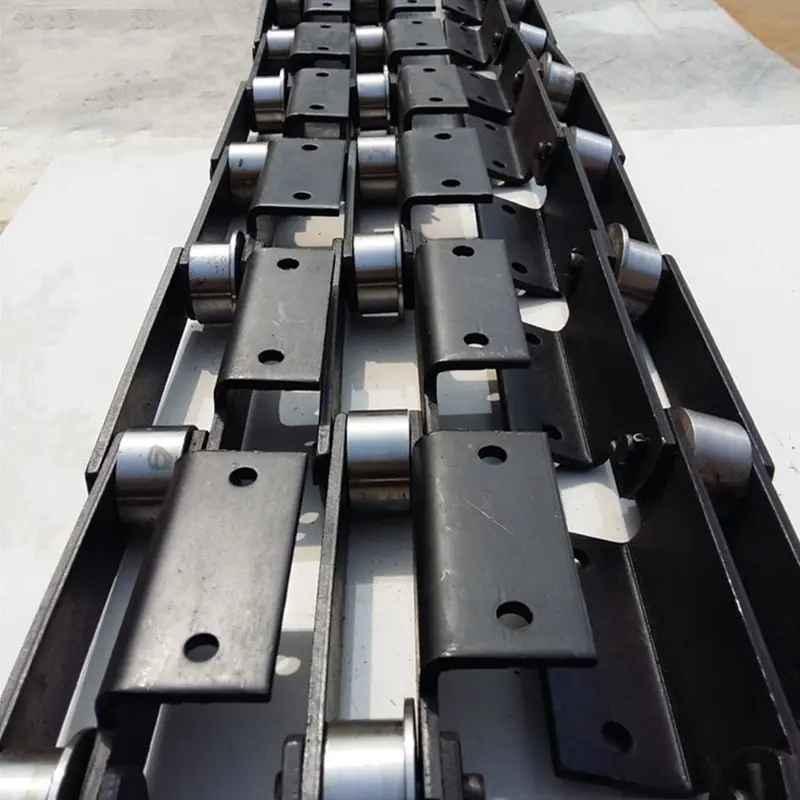
Can transmission chains be used in high-torque applications?
Yes, transmission chains are commonly used in high-torque applications due to their ability to transmit power efficiently. Here’s a detailed answer to the question:
1. Robust Power Transmission: Transmission chains are designed to handle significant amounts of power transmission, including high-torque applications. They are capable of transferring torque from the driving source to the driven components effectively.
2. Load Capacity: Transmission chains are engineered to withstand heavy loads and high levels of torque. They are designed with appropriate material strength, chain pitch, and components to handle the specific torque requirements of the application.
3. Diverse Applications: Transmission chains are utilized in various high-torque applications across industries such as automotive, construction, mining, agriculture, and manufacturing. They are commonly used in power transmission systems, machinery, equipment, conveyors, and other mechanisms that require efficient torque transfer.
4. Compatibility with Sprockets: Transmission chains work in conjunction with sprockets, which are designed to engage with the chain links and transfer torque. The design and selection of appropriate sprockets ensure smooth and reliable torque transmission in high-torque applications.
5. Strength and Durability: Transmission chains are manufactured using high-strength materials such as alloy steel, stainless steel, or heat-treated steels to provide the necessary strength and durability required for high-torque operations. These materials can withstand the forces generated by high levels of torque without premature wear or failure.
6. Proper Lubrication and Maintenance: To ensure optimal performance in high-torque applications, it is essential to maintain proper lubrication and perform regular maintenance on the transmission chain. Adequate lubrication reduces friction, heat generation, and wear, thereby prolonging the chain’s lifespan and preserving its torque transmission capabilities.
It’s important to consult with industry experts or manufacturers to select the appropriate transmission chain and ensure it meets the specific torque requirements of the application. Additionally, following recommended installation and maintenance practices will help maximize the performance and longevity of the transmission chain in high-torque applications.
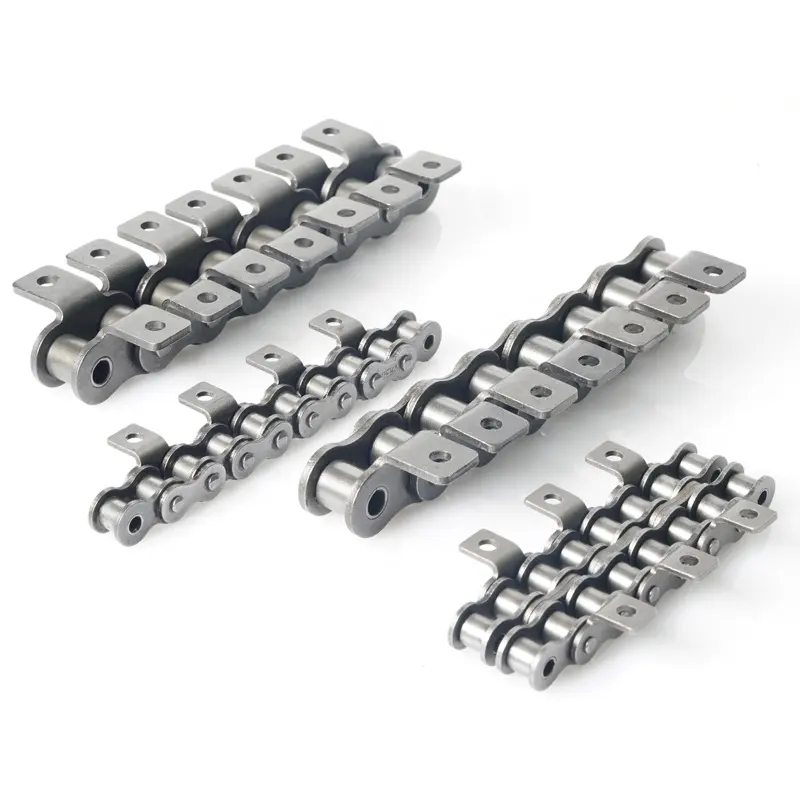
What are the main differences between standard and heavy-duty transmission chains?
Standard and heavy-duty transmission chains are designed to meet different load and performance requirements. Here are the main differences between these two types:
- Load Capacity: Heavy-duty transmission chains are built to handle higher loads and provide greater strength compared to standard chains. They are designed to withstand heavier and more demanding applications.
- Construction: Heavy-duty transmission chains are typically constructed with thicker plates, larger pins, and stronger components to enhance their durability and load-carrying capacity.
- Size: Heavy-duty transmission chains are often larger in size compared to standard chains to accommodate the increased load requirements.
- Weight: Due to their robust construction, heavy-duty transmission chains tend to be heavier than standard chains.
- Durability: Heavy-duty chains are engineered to have greater wear resistance, fatigue resistance, and overall durability to withstand harsh operating conditions and prolonged usage.
- Applications: Standard transmission chains are suitable for lighter-duty applications where moderate loads are involved, such as light machinery, conveyors, and small equipment. Heavy-duty transmission chains, on the other hand, are designed for heavy machinery, industrial equipment, mining applications, and other demanding environments.
It’s important to consider the specific requirements of your application, including load capacity, operating conditions, and expected lifespan, to determine whether a standard or heavy-duty transmission chain is the right choice.


editor by CX 2024-04-30