Product Description
Product Description
Specification
|
Product Name |
Wholesale Price Conveyor Chain 12b-2 Roller Chains with Sprocket For Machinery |
|
Type |
Roller Chain |
|
MOQ |
1meter |
|
Brand |
CHINAMFG |
|
OEM |
YES,We also can produce special chain according to your requirements,also produce matched sprocket/wheel. |
|
Package |
According to customer’s requirements |
|
Weight |
0.56kg/Meter |
|
Delivery time |
7 days |
other models
| Chain No. | P | h2 | H | $ | T |
| 08AF29 | 12.700 | 10^)0 | 15.6 | – | 1.50 |
| O8BF9O | 12.700 | 10^0 | 17.0 | 0.3 | 1.60 |
| 0M-1STCF15 | 12.700 | 1571 | 17.0 | 1.60 | |
| 10AF2 | 15.875 | 13.00 | 17.0 | 0.3 | 2.(0 |
| 10AF15 | 15.875 | 15.09 | 17.0 | – | 2.03 |
| 10AF23 | 15.875 | 13.00 | 2(18 | 0.3 | 2.03 |
| 10AF48 | 15«5 | 1100 | 16.9 | « | 2.03 |
| 10BF50 | 15B75 | 13.70 | 17.0 | 0.3 | 1.70 |
| 10AF5« | 15^75 | 1SX)9 | 17.0 | . | 2.03 |
| P | h2 | h | 1 | S | a | |
| Chain No. | ||||||
| 08BF25 | 12.7XJ | 10.6 | 15.6 | 1.60 | 30, | |
| 08BF29 | 12. TO | 1&6 | 14.5 | 1.60 | as | 30* |
| 08BF30 | 12 | 1G6 | 14.5 | l.g | Q3 | 30* |
| 08BF35 | 12. W | ia6 | 21.5 | 1.60 | 0.6 | 30* |
| 08BF67 | 12.TO | ia6 | 16.1 | 1.60 | as | 30* |
| 0fflF195 | 12.70 | 10.6 | 45 | 1.60 | 0.4 | 30, |
| 08AF10 | 12.70 | 10.6 | L50 | – | 30* | |
| 12B-1STCF1 | 19.05 | 15.0 | 19.0 | 1.85 | – | 30, |
| 12AF33 | 19.05 | 15.6 | 19.7 | 2.42 | 0£ | 18* |
| P | hl | h2 | h | A | Q | |
| Chain No. | ||||||
| 08BF21 | 12.7 | 10 | 1Q6 | 15.0 | 10 | 0 |
Company Profile
HangZhou Terry Machinery Co.Ltd is a leading supplier of bearings, Linear motion system for CNC , Ball transfer
Unit and transmission component .the growing industrial and Favorable policy of HangZhou benefit the developm
ent of Terry Machinery .Our products are utilized in industrial, motorcycle, vehicle and Automation applications.
Now we are exporting to 46 countries. including USA, GBR , Germany , Spain, Poland ,Turkey ect .The Goal o
f Terry Machinery to provide out customers with widest range of products at competitive prices, backed with the
best Service.OUR ADVANTAGE Products Our major products & Supplied:Meet all the international standards
and ISO9001 -TS1694 Certificate Big volume in Stock, No MOQ required Personnel Our salespersons are well
trained to accommodate your requests and speak English for your conveniences.Our technicians and engineers
Experience in the Industry area exceeds 23 years Service &Quality control ,We supply detailed drawings and
offer when ever necessary,We help all customers promote and improve their sales.We inspect every piece of
products by ourselves before delivery.
Application
related product
product-list-1.html
Packing &Delivery
Customer Praise
FAQ
/* January 22, 2571 19:08:37 */!function(){function s(e,r){var a,o={};try{e&&e.split(“,”).forEach(function(e,t){e&&(a=e.match(/(.*?):(.*)$/))&&1
| Standard Or Nonstandard: | Standard |
|---|---|
| Application: | Motor, Electric Cars, Motorcycle, Machinery, Marine, Toy, Agricultural Machinery, Car |
| Hardness: | Hardened Tooth Surface |
| Samples: |
US$ 5.84/Piece
1 Piece(Min.Order) | Order Sample |
|---|
.shipping-cost-tm .tm-status-off{background: none;padding:0;color: #1470cc}
| Shipping Cost:
Estimated freight per unit. |
about shipping cost and estimated delivery time. |
|---|
| Payment Method: |
|
|---|---|
|
Initial Payment Full Payment |
| Currency: | US$ |
|---|
| Return&refunds: | You can apply for a refund up to 30 days after receipt of the products. |
|---|
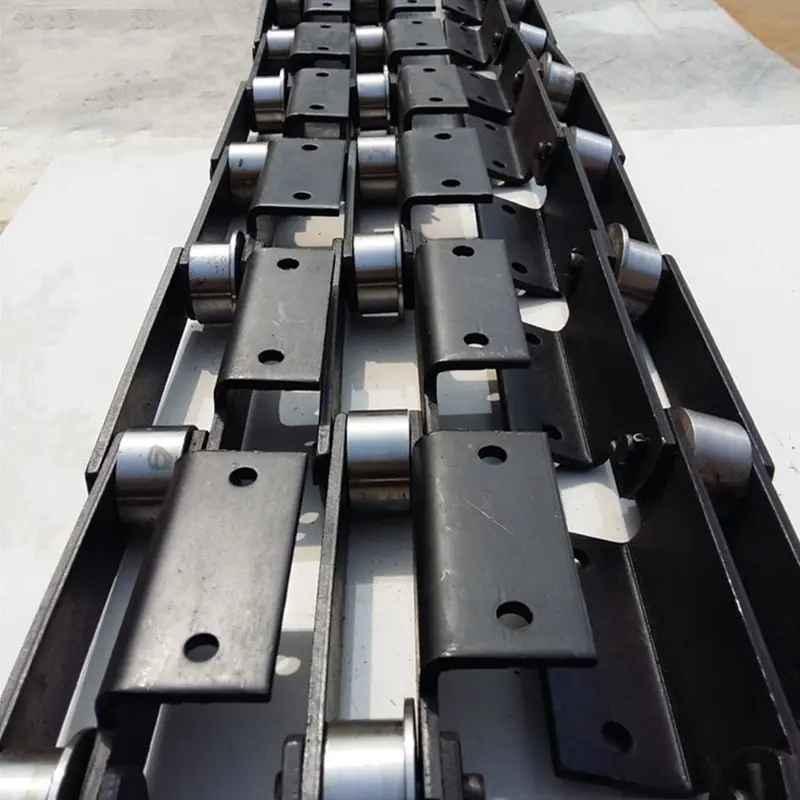
How does the choice of chain attachment type affect the versatility of a transmission chain?
The choice of chain attachment type has a significant impact on the versatility and functionality of a transmission chain. Here’s a detailed answer to the question:
The attachment type refers to the specific design or configuration of the links or plates at the ends of the transmission chain. Different attachment types are available to accommodate various applications, equipment, and industry requirements. The selection of the right attachment type affects the chain’s versatility in the following ways:
1. Connection and Compatibility: The chain attachment type determines how the chain connects and interacts with other components in the system. It should be compatible with the equipment, sprockets, gears, or other mechanisms to ensure proper functioning and power transmission. Different attachment types may be required for different machinery or applications, such as conveyors, elevators, or industrial machinery.
2. Load Capacity and Strength: The attachment type influences the load capacity and strength of the transmission chain. Some attachment designs provide increased load-bearing capacity, allowing the chain to handle heavy loads or withstand high-torque applications. By choosing the appropriate attachment type, the chain’s versatility can be enhanced to suit a wide range of load requirements.
3. Flexibility and Adaptability: Certain attachment types offer greater flexibility and adaptability in terms of accommodating variations in equipment design or layout. They may allow for easier adjustment, tensioning, or lengthening of the chain to fit specific requirements. This flexibility enables the chain to be more versatile and adaptable to different configurations or changes in the operating environment.
4. Specific Application Requirements: Depending on the application, specific chain attachment types may be necessary to meet industry standards, safety regulations, or operational needs. For example, certain industries may require specialized attachments to ensure proper alignment, positioning, or engagement with specific components or materials. Choosing the appropriate attachment type ensures compliance with these requirements, enhancing the chain’s versatility for specific applications.
5. Easy Maintenance and Replacement: The choice of attachment type can also impact the ease of maintenance and replacement of the transmission chain. Some attachment designs allow for quick and convenient disassembly or replacement of damaged or worn-out chain links or plates. This facilitates efficient maintenance and reduces downtime, contributing to the overall versatility and reliability of the chain.
When selecting a transmission chain, it’s crucial to consider the specific attachment type required for the intended application. Factors such as load capacity, compatibility with equipment, ease of maintenance, and industry standards should be considered to ensure optimal versatility and performance of the transmission chain.
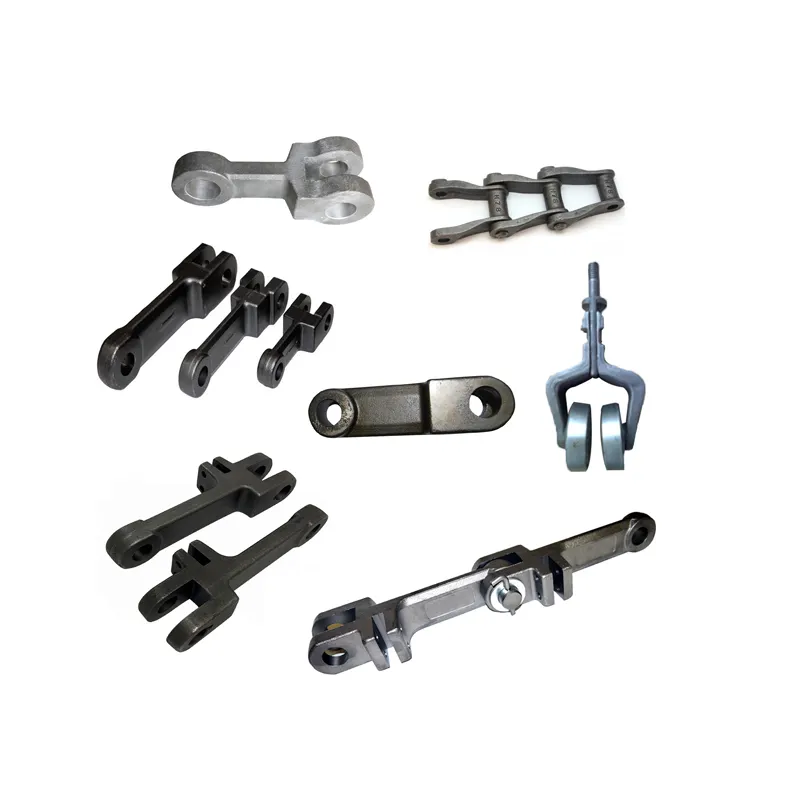
What are the benefits of using a high-strength transmission chain?
Using a high-strength transmission chain offers several advantages in various applications. Here’s a detailed answer to the question:
1. Increased Load Capacity: A high-strength transmission chain is designed to withstand higher loads and transmit greater amounts of power. It provides enhanced load-carrying capabilities, making it suitable for applications that require heavy-duty operation.
2. Improved Durability: High-strength transmission chains are constructed using high-quality materials and advanced manufacturing processes. This results in superior durability, increased resistance to wear, and improved resistance to fatigue failure. It ensures that the chain can withstand demanding operating conditions and extended service life.
3. Enhanced Safety: The use of a high-strength transmission chain enhances safety in applications where there is a high load or the potential for sudden dynamic forces. It reduces the risk of chain failure, breakage, or unexpected downtime, minimizing the chances of accidents and ensuring a reliable and secure power transmission system.
4. Compact Design: High-strength transmission chains offer a higher strength-to-size ratio, allowing for a more compact and lightweight design compared to standard chains. This can be beneficial in applications with limited space or weight restrictions.
5. Increased Efficiency: High-strength transmission chains typically have lower friction losses, resulting in improved overall system efficiency. The reduced friction ensures efficient power transfer, minimizes energy waste, and contributes to cost savings.
6. Versatile Application: High-strength transmission chains can be utilized in a wide range of industries and applications, including automotive, manufacturing, mining, construction, and more. Their versatility makes them suitable for various power transmission systems.
7. Customization Options: Manufacturers offer a range of high-strength transmission chains with different sizes, pitches, and configurations. This allows for customization based on specific application requirements, ensuring optimal performance and reliability.
When considering the use of a high-strength transmission chain, it is crucial to assess the application’s load requirements, operating conditions, and environmental factors. Consulting with a knowledgeable supplier or engineer can help in selecting the most appropriate chain for the intended application.
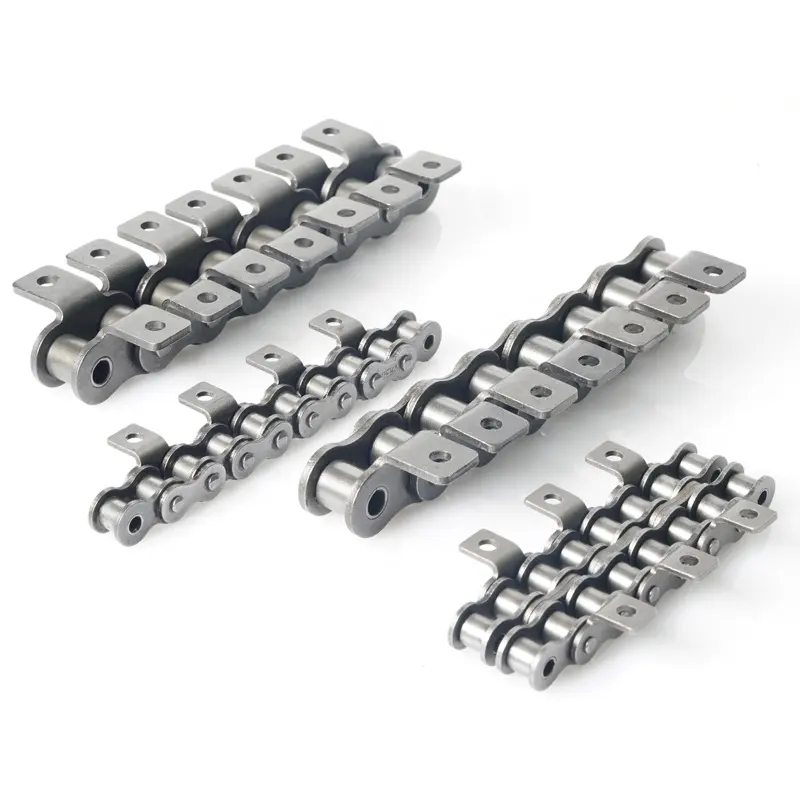
What are the main differences between standard and heavy-duty transmission chains?
Standard and heavy-duty transmission chains are designed to meet different load and performance requirements. Here are the main differences between these two types:
- Load Capacity: Heavy-duty transmission chains are built to handle higher loads and provide greater strength compared to standard chains. They are designed to withstand heavier and more demanding applications.
- Construction: Heavy-duty transmission chains are typically constructed with thicker plates, larger pins, and stronger components to enhance their durability and load-carrying capacity.
- Size: Heavy-duty transmission chains are often larger in size compared to standard chains to accommodate the increased load requirements.
- Weight: Due to their robust construction, heavy-duty transmission chains tend to be heavier than standard chains.
- Durability: Heavy-duty chains are engineered to have greater wear resistance, fatigue resistance, and overall durability to withstand harsh operating conditions and prolonged usage.
- Applications: Standard transmission chains are suitable for lighter-duty applications where moderate loads are involved, such as light machinery, conveyors, and small equipment. Heavy-duty transmission chains, on the other hand, are designed for heavy machinery, industrial equipment, mining applications, and other demanding environments.
It’s important to consider the specific requirements of your application, including load capacity, operating conditions, and expected lifespan, to determine whether a standard or heavy-duty transmission chain is the right choice.


editor by CX 2024-05-02