Descrição do produto
Drive Stainless Steel Engineering Plastic Combination Chain
Combined stainless steel engineering plastic chain
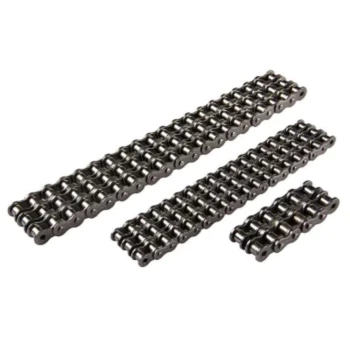
Engineering plastic composite chain (PC) uses stainless steel outer chain plate and pin to improve strength. It also uses elastic engineering plastic inner chains to reduce weight and improve wear life without lubrication.
HZPT is the CHINAMFG of chain specification. It launched the ANSI series for the first time more than 10 years ago. Many satisfied customers usually call it the Poly Steel chain.
The product is flexible to outdoor conditions, detergents, and steam, as well as food ingredients (such as oil and lactic acid), and can provide ideal anti-corrosion solutions in various mechanical applications.
Advantages of engineering plastic composite chain
Improved performance
Engineering plastic composite chain provides a cleaner and more durable substitute for stainless steel chain for applications with corrosion and insufficient lubrication. It is much lighter than the stainless steel chain, and another advantage is that the noise is lower.
Reduce maintenance costs
The engineering plastic composite chain can be interchanged with BS and ANSI chains to reduce chain wear, which is good news for customers – reduce maintenance.
Wide application
It can provide multiple configurations and complete accessories (a-1, K-1, SA-1, SK-1, D-1, and D-3). Almost any application can use a PC chain.
Industrial application of engineering plastic composite chain
• Food processing
• Packaging
• Pharmaceutical
• Healthcare
• Lighting electronics
• Small conveyors
• … There are more
We are committed to relying on our scientific and process management, as well as continuous innovation and improvement, to provide reliable and easy-to-use special agricultural chains, flat-top transport chains, and double-plus chains. We absorb new ideas, have strict quality control, all-around service tracking, and insist on making high-quality products. From a practical point of view, paying attention to the user experience is the basic requirement of our research and development.
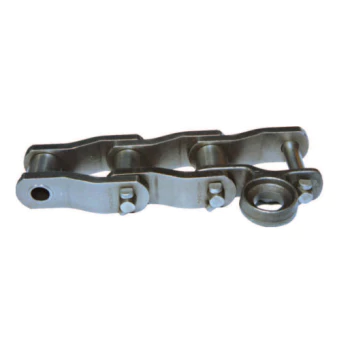
The double-pitch chain with an extension pin is a deformed product of a standard roller chain. Its structure
The characteristics are the same as the standard roller chain, except that the pin shaft is lengthened according to special requirements
Requirements for raw materials or semi-finished products used in fixed production. This chain is mainly used in assembly lines, such as rubber glove production lines. The company can select different materials according to customer requirements, such as carbon steel, stainless steel, etc. The pin shaft can be customized with different diameters and lengths according to customer requirements.
1). Quality standard: ISO9001 certification
2). Material: alloy steel, carbon steel, or stainless steel
3). Long service life
4). Standard pitch
5). Excellent quality control and advanced production equipment.
We are chain manufacturers. For extended pin space, it can be made according to customer requirements.
We specialize in the production of agricultural roller chains, flat-top chains, chains, hollow pin chains, beer filling and packaging line conveyor chains, paver chains, auxiliary sidebar lifting chains, bucket lifting chains (cement mill chains), forged scraper chains, automobile industry loading chains, metallurgical industry loading chains, mining machinery transport chains, trencher chains, sugar factory chains, double flexible chains, etc. Welcome to call and email for a consultation!
Related Products
We also supply sprockets to match your chains.
Contact us: We care about our valued buyers; if you have any questions, our Customer Service staff will gladly help you. We try our best to reply to your emails as soon as possible; however, due to the high volume of daily incoming emails and the time zone difference, we may not be able to reply immediately. Please allow 24 business hours for us to respond.
We are specialized in producing Agricultural Roller Chain, Flat Top Chain, Track Chain, Hollow Pin Chain, Conveyor Chain for Beer Filling and Packing Line, Paver Chain, Attachment Sidebar Elevator Chain, Bucket Elevator Chain (Cement Mill Chain), Forging Scraper Chains, Loading Chain for Automobile Industry, Loading Chain for Metallurgical Industry, Conveyor Chain for Mine Machinery, Trencher Chain, Sugar Mill Chain, Double Flex Chain, etc. Welcome calls and emails to inquiries!
Related Products
Empresa
| Uso: | Corrente de transmissão, corrente de arrasto, corrente transportadora, corrente especial dedicada |
|---|---|
| Material: | Ferro |
| Tratamento de superfície: | Floração de óleo |
| Recurso: | Resistente a óleo |
| Tamanho da corrente: | 1/2"*3/32" |
| Estrutura: | Plastic Combination Chain |
| Exemplos: |
US$ 9999/Peça
1 unidade (pedido mínimo) | |
|---|
Can a drive chain be used in a material handling or warehouse automation system?
Yes, a drive chain can be used in material handling and warehouse automation systems where reliable and efficient power transmission is required. Here is a detailed explanation:
In material handling and warehouse automation systems, various types of equipment and conveyors are used to move, lift, and transport goods and materials. Drive chains offer several advantages in these applications:
- Alta capacidade de carga: Drive chains are known for their high load-carrying capacity, making them suitable for handling heavy loads in material handling and warehouse automation. They can effectively transmit power to drive mechanisms involved in lifting, conveying, and positioning materials.
- Transmissão de potência precisa: Drive chains provide precise power transmission, ensuring accurate and synchronized movement of the conveyor systems and equipment. This allows for reliable and efficient material handling processes, precise positioning, and synchronized operation in automated systems.
- Durability and Reliability: Material handling and warehouse environments can be demanding, with continuous operation, heavy loads, and variable conditions. Drive chains are designed to withstand these challenging environments, providing durability, resistance to wear, and long service life, even in high-demand applications.
- Flexibilidade e adaptabilidade: Drive chains offer flexibility and adaptability in designing and configuring material handling and warehouse automation systems. They can be easily integrated into different conveyor types, such as roller conveyors, chain conveyors, or overhead conveyors, allowing for smooth and efficient material flow within the warehouse or production facility.
- Compatibilidade com componentes auxiliares: Drive chains can be easily combined with auxiliary components commonly used in material handling systems, such as tensioners, guides, sprockets, and bearings. This ensures reliable and efficient power transmission throughout the entire system and facilitates easy maintenance and replacement when necessary.
- Relação custo-benefício: Drive chains offer a cost-effective solution for power transmission in material handling and warehouse automation systems. They have a long service life, reduced maintenance requirements, and lower replacement costs compared to some alternative power transmission systems.
It is important to consider the specific requirements of the material handling or warehouse automation system when selecting a drive chain. Factors such as load capacity, speed, environmental conditions, and maintenance considerations should be taken into account.
Regular maintenance, including inspection, lubrication, and tension adjustment, is crucial to ensure optimal performance and longevity of the drive chain in material handling and warehouse automation applications.
By utilizing drive chains in material handling and warehouse automation systems, operators can benefit from high load capacity, precise power transmission, durability, adaptability, and cost-effectiveness, contributing to efficient and reliable material handling processes and warehouse operations.
Como se compara o custo de uma corrente de transmissão com o de outros sistemas de transmissão de potência?
O custo de uma corrente de transmissão pode variar dependendo de diversos fatores, como o tipo de corrente, o material, o tamanho e a qualidade. Aqui está uma explicação detalhada de como o custo de uma corrente de transmissão se compara ao de outros sistemas de transmissão de potência:
- Custo inicial: Em geral, as correntes de transmissão tendem a ter um custo inicial menor em comparação com outros sistemas de transmissão de potência, como transmissões por engrenagens ou por correias. Isso é especialmente verdadeiro para correntes de rolos padrão, que são amplamente disponíveis e comumente utilizadas.
- Custo de instalação e manutenção: O custo de instalação e manutenção de uma corrente de transmissão geralmente é razoável. As correntes são relativamente fáceis de instalar e manter, exigindo inspeções de rotina, lubrificação e ajustes ocasionais. Essa simplicidade pode contribuir para a relação custo-benefício geral.
- Longevidade e durabilidade: As correntes de transmissão são conhecidas por sua durabilidade e longa vida útil quando mantidas adequadamente. Embora possam exigir substituição periódica devido ao desgaste, a vida útil prolongada de uma corrente de transmissão pode proporcionar economia de custos ao longo do tempo em comparação com sistemas que exigem substituição ou reparo mais frequentes.
- Custos específicos da aplicação: Em algumas aplicações especializadas, como aplicações de alto desempenho ou para serviço pesado, o custo das correntes de transmissão pode ser maior. Isso geralmente se deve ao uso de correntes especiais com características, materiais ou revestimentos específicos que melhoram o desempenho e a durabilidade em ambientes exigentes.
- Relação custo-benefício geral: Considerando o custo inicial, a manutenção e a longevidade, as correntes de transmissão são geralmente consideradas economicamente vantajosas em comparação com outros sistemas de transmissão de potência. Sua confiabilidade, eficiência e adequação a uma ampla gama de aplicações contribuem para sua proposta de valor.
É importante observar que a comparação de custos entre correntes de transmissão e outros sistemas de transmissão de potência pode variar dependendo dos requisitos específicos da aplicação, fatores ambientais e características de desempenho desejadas. Recomenda-se considerar as necessidades específicas da aplicação e consultar especialistas ou fornecedores para determinar a solução mais econômica.


editor by CX 2023-11-07