Product Description
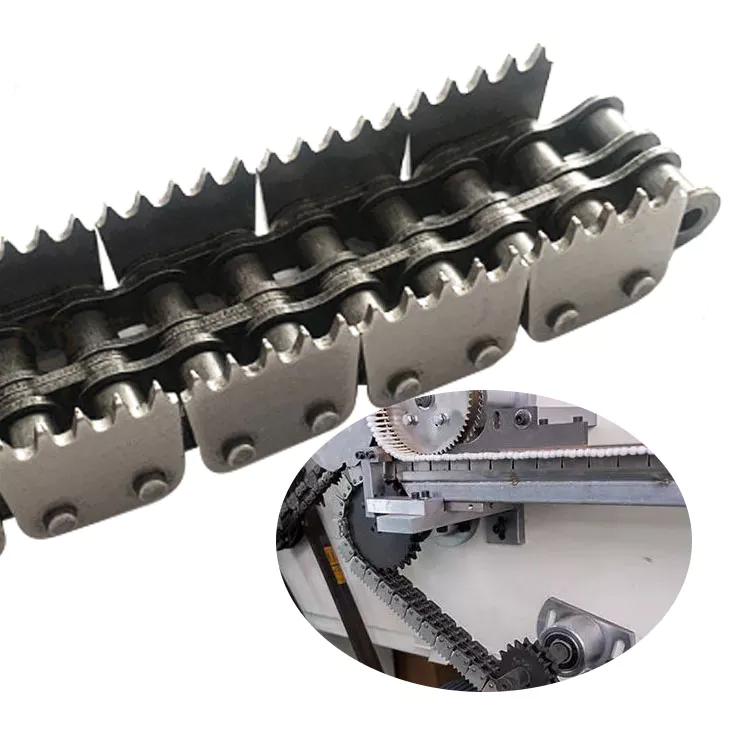
China Made Construction Aluminum Profiles Electrostatic Powder Coating Line XT80/100/160 Forged Overhead Conveyor Chain For plastic painting line
XT80 chain / load carriage
Chain pitch: t = 80 / 76.2mm
Chain tensile load: 110KN
Allowable tensile force of the chain: 10KN
Ultimate load of the carriage: 300kg
Allowable load of carriage: 125kg
Track: Worker 10 or Worker 12
Minimum horizontal turning radius: R305
Minimum vertical bending radius: R1500
XT100 chain / load carriage
Chain pitch: t = 100mm
Chain tensile load: 220KN
Allowable tension of the chain: 15KN
Limit load of carriage: 500kg
Allowable load of carriage: 250kg
Track: Worker 12 or Worker 14
Minimum horizontal turning radius: R317
Minimum vertical bending radius: R2000
XT160 chain / load carriage
Chain pitch: t = 160mm
Chain tensile load: 400KN
Allowable pull force of chain: 30KN
Ultimate load of the carriage: 800kg
Allowable load of carriage: 500kg
Track: Worker 14 or Worker 16
Minimum horizontal turning radius: R404
Minimum vertical bending radius: R3150
Our painting line chain have several items according to different load.
Please feel free to let us know your detail enquiry and we will offer drawing for your confirmation before confirming order. We will also send sample chain to you for your final confirmation on order.
Package: Steel pallet or wooden case
Our quality is reliable and export to Europe, USA, Canada, Japan, Korea and so on in big quantity
Please feel free to let us know your detail enquiry by return e-mail or fax
Our Drop Forged Chain and trolley can be used widely in aggregate, amusement park rides, asphalt paving, automotive industry, bakery ovens, bottling, bucket elevators, car dumper, car wash, case conveyors, cement plants, citrus processing, clean grain and return elevators, coal preparation, construction equipment, conveyors, cotton tramper, dairy handling, fertilizer conveying, flight conveyors, food processing, forest products, grain handling, heavy duty conveyors, high-temperature industrial ovens, jack ladder, log handling, material handling, meat packing, mining, overhead conveyors, power drives, produce washdown, pulp and paper, recycling, refineries, roofing plants, rubber manufacturing, stackers, steel mills, sugar harvesting, sugar processing, trolle, conveyors, utilities, water treatment
| Material | Alloy steel |
| Process | Assembled |
| Heat treatment | Case hardening, Meshbeltfurnace quenching heat treatment |
| Surface treatment | Blackened, Zinc galvanized, Nickel galvanized, Chroming, Colour Painting, or as per customer’s request |
| Performance | High precision, high wear resistance, low noise, smooth and steady, high strength |
| Model number | P142, P142V , P142H , P200 , P102 , P260 , P250 |
| Packaging | Plastic bag ,carton box ,plywood case or customer requirement. |
/* January 22, 2571 19:08:37 */!function(){function s(e,r){var a,o={};try{e&&e.split(“,”).forEach(function(e,t){e&&(a=e.match(/(.*?):(.*)$/))&&1
| Usage: | Transmission Chain |
|---|---|
| Material: | Alloy |
| Surface Treatment: | Polishing |
| Customization: |
Available
| Customized Request |
|---|
.shipping-cost-tm .tm-status-off{background: none;padding:0;color: #1470cc}
| Shipping Cost:
Estimated freight per unit. |
about shipping cost and estimated delivery time. |
|---|
| Payment Method: |
|
|---|---|
|
Initial Payment Full Payment |
| Currency: | US$ |
|---|
| Return&refunds: | You can apply for a refund up to 30 days after receipt of the products. |
|---|

Can a conveyor chain be used in high-load applications?
Yes, a conveyor chain can be used in high-load applications. Conveyor chains are designed to withstand heavy loads and provide reliable and efficient material handling in various industries. Here’s a detailed explanation:
– Robust Construction:
A conveyor chain for high-load applications is typically constructed using durable materials such as alloy steel or stainless steel. These chains are designed to withstand the forces and stresses imposed by heavy loads without deformation or failure.
– High Load Capacity:
Conveyor chains for high-load applications are designed with larger and stronger components, including thicker plates, larger pins, and stronger attachments. These enhancements allow the chain to handle heavier loads and distribute the weight evenly across the chain’s links and rollers.
– Proper Selection:
When using a conveyor chain in high-load applications, it is crucial to select the appropriate chain type and size based on the specific load requirements. Factors such as the weight of the conveyed material, the conveyor speed, and the operating conditions should be considered during the selection process.
– Lubrication and Maintenance:
In high-load applications, proper lubrication and regular maintenance of the conveyor chain are essential. Adequate lubrication reduces friction and wear, ensuring smooth operation and extending the chain’s service life. Regular inspections and maintenance routines help identify any issues or wear that may affect the chain’s performance.
– Application-Specific Chains:
In some cases, specialized conveyor chains, such as forged link chains or roller chains, are used to handle extremely heavy loads. These chains offer enhanced strength and durability, making them suitable for demanding high-load applications.
Overall, a properly selected and maintained conveyor chain can reliably handle high-load applications, providing efficient and continuous material handling in industries such as mining, construction, automotive, and heavy manufacturing.

Can a conveyor chain be used for heavy-duty applications?
Yes, a conveyor chain can be used for heavy-duty applications. Conveyor chains are specifically designed to handle heavy loads and provide reliable transportation in industrial environments.
Here are some factors that make conveyor chains suitable for heavy-duty applications:
1. Robust construction: Conveyor chains are typically made from high-strength materials such as alloy steel, stainless steel, or hardened carbon steel. These materials offer excellent durability and can withstand the heavy loads and harsh operating conditions commonly found in heavy-duty applications.
2. High load-carrying capacity: Conveyor chains are designed to handle significant loads, including heavy products, bulk materials, or large components. The chains are engineered with appropriate pitch, link dimensions, and strength to ensure reliable transport of heavy items.
3. Fatigue resistance: Conveyor chains are built to withstand repetitive stress and fatigue caused by continuous operation under heavy loads. They undergo specific heat treatments and surface hardening processes to enhance their resistance to wear, fatigue, and deformation.
4. Customization options: Conveyor chains can be customized to meet the specific requirements of heavy-duty applications. This includes selecting the appropriate chain type, pitch, attachment design, and surface coating for improved performance and longevity.
5. Compatibility with heavy-duty equipment: Conveyor chains are designed to integrate seamlessly with heavy-duty conveyor systems, including large motors, drives, and supporting structures. This ensures proper power transmission and smooth operation even in demanding environments.
6. Safety features: Conveyor chains for heavy-duty applications often incorporate safety features such as overload protection, emergency stops, and monitoring systems to ensure the safety of operators and prevent damage to the equipment.
It’s important to consult with a qualified engineer or conveyor manufacturer to select the appropriate conveyor chain and system components for the specific heavy-duty application. They can provide guidance on chain selection, system design, and maintenance practices to ensure optimal performance and reliability.
How do you properly tension a conveyor chain?
Properly tensioning a conveyor chain is crucial for its smooth operation and to prevent issues like chain slipping or excessive wear. Here are the steps to properly tension a conveyor chain:
- Identify the Tensioning Points: Determine the locations where the conveyor chain can be tensioned. These are typically at the ends of the chain or at specific tensioning devices.
- Loosen the Tensioning Devices: If there are tensioning devices in place, such as adjustable bolts or tensioning screws, loosen them to allow for adjustment.
- Apply Tension: Apply tension to the conveyor chain by either manually pulling the chain or using a tensioning tool. The amount of tension required depends on the chain type and the manufacturer’s recommendations.
- Check the Tension: Use a tension gauge or other suitable method to measure the tension of the conveyor chain. The tension should fall within the specified range provided by the chain manufacturer.
- Adjust the Tension: If the tension is too loose or too tight, make adjustments accordingly. Tighten or loosen the tensioning devices until the desired tension is achieved.
- Secure the Tensioning Devices: Once the proper tension is achieved, securely tighten the tensioning devices to hold the chain in place.
- Verify the Tension: After tensioning the chain, perform a visual inspection and run the conveyor to ensure the chain runs smoothly without excessive slack or tightness. Make any further adjustments if necessary.
It’s important to refer to the specific guidelines provided by the conveyor chain manufacturer for proper tensioning instructions, as the exact method may vary depending on the chain type and design. Regularly check the tension of the conveyor chain and make adjustments as needed to maintain optimal performance.


editor by CX 2024-04-24