Product Description
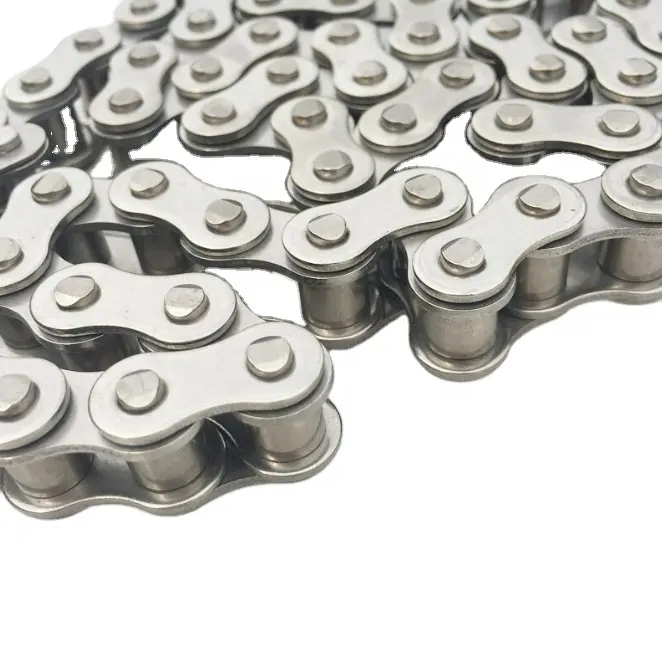
ISO/ANSI/DIN Standard Short Pitch Precision Stainless Steel Hardware Transmission Motorcycle Industrial Roller Chain
Product Description
1. Material: Stainless Steel 304 & 316 / Alloy Carbon Steel
2. Surface Treatment: Shot peening / Zinc-plated / Nickel-plated / Dacromet-plated
3. Chain No:
35SS-1, 40SS-1, 50SS-1, 60SS-1, 80SS-1, 100SS-1, 120SS-1, 140SS-1;
35SS-2, 40SS-2, 50SS-2, 60SS-2, 80SS-2, 100SS-2, 120SS-2, 140SS-2;
35SS-3, 40SS-3, 50SS-3, 60SS-3, 80SS-3, 100SS-3, 120SS-3, 140SS-3;
4. Application: Stainless Steel Chains are used in so many industries, such as machine manufacturing, food machine, etc. Also are suitable for high and low temperature conditions.
5. Characteristic:
1. The chain can be used on the both sides of multi-axle transmission.
2. Easy installation and replacement.
3. It can obtain larger reduction ratio.
4. The roller chain has good elasticity, high strength and each hinge part has lubricating oil, so it can be stored easliy. Thus, compared with the rigid contact tooth, it has good cushioning and vibration absorbing ability.
| Product name | Stainless Steel Roller Chain From China |
| Materials Available | 1. Stainless Steel: SS304, SS316, etc |
| 2. Alloy Steel: 45Mn, 42CrMo, 20CrMo, etc | |
| 3. OEM according to your request | |
| Surface Treatment | Shot peening, Blackening, Oxygenation, Polishing, Zinc-plated, Nickel-plated, Anodized, etc. |
| Characteristic | Fire Resistant, Oil Resistant, Heat Resistant |
| Design criterion | ISO DIN ANSI & Customer’s Drawing |
| Size | Customer’s Drawing & ISO standard |
| Package | Wooden Case / Container and pallet, or made-to-order |
| Certificate | ISO9001: 2008 |
| Advantage | First quality, Best service, Competitive price, Fast delivery |
| Delivery Time | 20 days for samples. 45 days for official order. |
Detailed Photos
View more products,please click here…
Company Profile
| Usage: | Transmission Chain |
|---|---|
| Material: | Stainless steel |
| Structure: | Roller Chain |
| 40-1: | 1/2" |
| 50-1: | 5/8" |
| 60-1: | 3/4" |
| Samples: |
US$ 0/Meter
1 Meter(Min.Order) | |
|---|
| Customization: |
Available
| Customized Request |
|---|
How does the choice of chain tensioner affect the performance of a transmission chain?
The choice of chain tensioner plays a critical role in ensuring the optimal performance of a transmission chain. Here’s a detailed answer to the question:
1. Proper Chain Engagement: The chain tensioner helps maintain the correct tension in the transmission chain, ensuring proper engagement between the chain and the sprockets. This is essential for effective power transmission and smooth operation.
2. Chain Slack Control: A properly selected chain tensioner helps control chain slack, which is the amount of looseness in the chain. Excessive chain slack can lead to chain jumping, misalignment, and increased wear, while insufficient slack can cause excessive tension, leading to accelerated chain and sprocket wear.
3. Noise and Vibration Reduction: The use of an appropriate chain tensioner helps minimize noise and vibration in the transmission system. It helps dampen the impact forces and vibrations caused by the chain’s motion, resulting in quieter operation and improved overall system performance.
4. Extended Chain Life: By maintaining the proper tension, the chain tensioner helps prevent premature wear and elongation of the transmission chain. This contributes to the chain’s longevity, reducing the frequency of chain replacements and lowering maintenance costs.
5. Compensation for Wear and Stretch: As a transmission chain wears over time, it may experience elongation or stretch. The chain tensioner compensates for this elongation by adjusting the tension, ensuring the chain remains properly tensioned and engaged with the sprockets. This helps maintain consistent performance and prevents skipping or disengagement.
6. Adaptability to Variable Conditions: Some chain tensioners offer the ability to adjust the tension dynamically, accommodating variations in operating conditions such as temperature fluctuations or load changes. This flexibility ensures optimal chain performance and compensates for the effects of thermal expansion or contraction.
It’s crucial to select a chain tensioner that is compatible with the specific transmission chain and application requirements. Consider factors such as chain size, tension adjustment range, environmental conditions, and load variations when choosing a chain tensioner. Regular inspection and maintenance of the tensioner are also essential to ensure its proper functioning and prolong the life of the transmission chain.
Can transmission chains be used in renewable energy systems?
Yes, transmission chains can be used in renewable energy systems. Here’s a detailed answer to the question:
Renewable energy systems, such as wind turbines and solar power plants, often require the efficient transfer of mechanical power from the energy source to the generator or other components. Transmission chains play a vital role in this power transmission process.
In wind turbines, transmission chains are commonly used in the pitch control system. The pitch control mechanism adjusts the angle of the turbine blades to optimize their performance based on wind conditions. Transmission chains provide a reliable and robust method for transmitting the necessary power from the pitch motor to the blade adjustment mechanism.
In solar power plants, transmission chains are used in solar tracking systems. These systems allow solar panels or mirrors to track the sun’s movement throughout the day, maximizing the amount of sunlight captured and improving the overall efficiency of the solar power generation. Transmission chains facilitate the precise movement required for solar tracking, ensuring accurate alignment and optimal energy capture.
Transmission chains used in renewable energy systems need to be durable, reliable, and capable of withstanding the environmental conditions typically encountered in these applications. They may require specific features such as corrosion resistance, high strength, and the ability to operate in a wide range of temperatures.
Overall, transmission chains offer an efficient and effective solution for power transmission in renewable energy systems. Their versatility, reliability, and ability to handle various loads and speeds make them suitable for use in wind turbines, solar tracking systems, and other renewable energy applications.
How do you choose the right transmission chain for a specific application?
Choosing the right transmission chain for a specific application is crucial to ensure optimal performance and longevity. Here are the key factors to consider when selecting a transmission chain:
- Load Capacity: Determine the maximum load that the chain will need to transmit. This includes both the static and dynamic loads. Ensure that the selected chain has a sufficient load capacity to handle the application requirements.
- Speed and RPM: Consider the operating speed and rotational speed of the chain. Higher speeds may require chains with improved fatigue resistance and lubrication capabilities.
- Environment: Evaluate the environmental conditions in which the chain will operate. Factors such as temperature, moisture, dust, chemicals, and corrosive agents can impact chain performance. Choose a chain that is resistant to the specific environmental conditions.
- Alignment and Tension: Ensure proper alignment and tensioning of the chain. Misalignment and improper tension can lead to premature wear and failure. Select a chain that allows for proper adjustment and maintains optimal tension during operation.
- Maintenance: Consider the maintenance requirements of the chain. Some chains may require regular lubrication, while others may be self-lubricating or maintenance-free. Evaluate the available resources and the desired level of maintenance for the application.
- Compatibility: Ensure compatibility between the chain and other components in the transmission system, such as sprockets or gears. The chain should match the tooth profile and pitch of the mating components.
- Manufacturer’s Recommendations: Consult the manufacturer’s guidelines and recommendations for selecting the appropriate chain for specific applications. Manufacturers often provide detailed specifications, load charts, and application guidelines for their chains.
By considering these factors and consulting with chain manufacturers or industry experts, you can choose the right transmission chain that meets the specific requirements of your application, ensuring reliable and efficient operation.


editor by CX 2023-11-06