Product Description
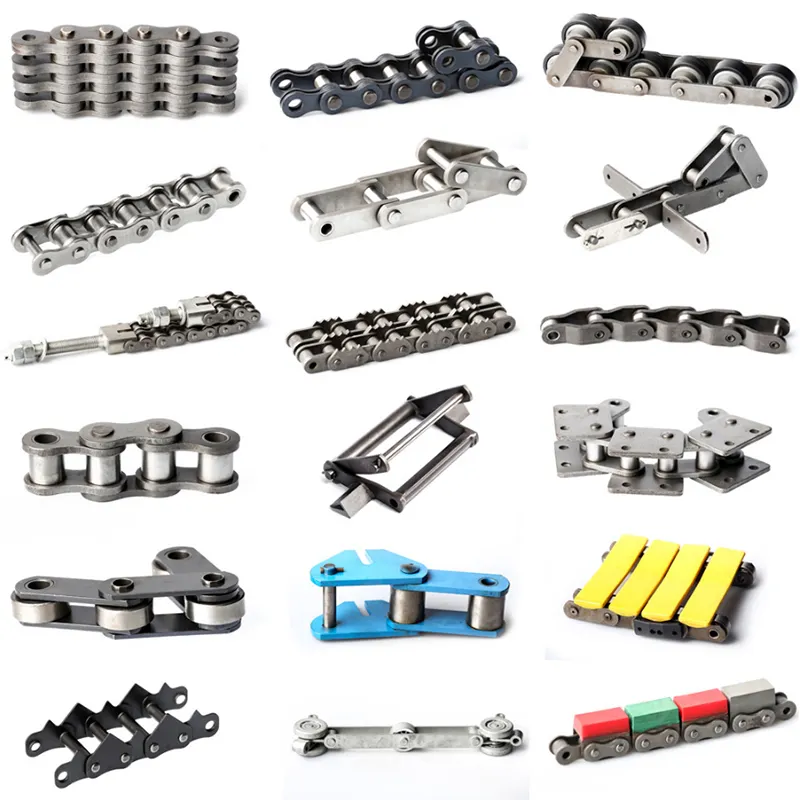
Stainless Steel Transmission Chain, Stainless Steel Roller Chain, Stainless Steel Conveyor chain, Stainless steel chains for bottle conveyor line which is used on bottle filling conveyor lines, other standard ss chain or special ss chain(SS304 chains, SS316 chains, SS316L chains, SS conveyor chains, SS304 conveyor chain, SS316 conveyor chain) all available
We have special technolodgy to arrange more hardness on SS chains plate as per the request of famous chains factory in Europe
We have many OEM chain factory customer from Europe and our stainless steel chain quality is similar to the A quality in the world
We are professional supplier of chains:
1. Bicycle chain: 408, 410, 415
2. Motorcycle chain: 04C, 25H, 06C, T3, 270H, 415H, 420, 420L, 425, 428, 428H, 520,
525, 530
3. ASA roller chain: 35, 40, 41, 50, 60, 60H, 80, 80H, 100, 120, 140, 160, 200, 240
(Catalog)
4. Chain (British standard): 05-B, 06-B, 08-B, 10-B, 12-B, 16-B, 20-B, 24-B, 28-B,
32-B, 40-B (Catalog)
5. Large pitch chains: 100, 100H, 120, 120H, 140, 140H, 160, 160H, 180, 200, 240
6. Extend-pitch precision roller chain: 208A, 208B, 210A, 210B, 212A, 212B, 216A,
216B, 220A, 220B, 224A, 224B, 228B, 232B
7. Roller chains for beer buntline conveyor: CK-70S, CK-100S, CK-100SA, CK-100SC, CK-133XA,
CK-140X, CK-140XA, CK-150X, CK-150S, CK-154X, CK-155X, CK-155XA, CK-160X, CK-160XA, CK-160XB, CK-160XC, CK-165X, CK-165XA, CK-169, CK-180X, CK-180XA, CK-200S, CW-102, CW-127
8. Implement roller chains for conveyors: 81X, 81XH, 81XHH, CA550, CA555, CA620
9. Multi strand sizes available; Up to 5 strands, for select size standard attachment
Available
10. Chains from 04b~16b are with spring clips, others are riveted; Cottered design
Is available for size 80 to 240
11. Stainless steel chain and nickel plated chains is available; Special design also available
(i. E., oven conveyor) and we can produce as per material your requests, usually stainless steel chain material is SS304, if you need SS316 or SS316L etc. It is available too
Our conveyor chains are as following items:
Short pitch, double pitch conveyor roller chain:
1)European standard short pitch roller conveyor accessories: A1 – WSK2
2)European Standard Short Pitch Hollow Pin Chains and accessories: 08BHP – 12BHP
3)European standard short pitch bending roller conveyor: 08BSB, 10BSB, 4)12BSB
4)European standard double pitch conveyor chain: C208B – C232BL
5)American Standard Short pitch conveyor chain attachments: A1 – WSK2
6)American Standard Short Pitch Hollow Pin Chain: 40HP – 80HP
7)American Standard short pitch bending roller conveyor: 35SB – 80SB
8)American Standard Double pitch conveyor roller: C2040 – C2162H
9)American Standard Double pitch conveyor roller attachment: A1 – WSK2
10)American standard double pitch hollow pin chain: C2040HP – C2082HP
11)American Standard Double pitch conveyor roller scoliosis: C2040SB, C2050SB, C2060SB
12)American standard double pitch conveyor roller Plastic Large: C2042D – C2102HD
13)American Standard controllable beat conveyor (speed chain): C2030VR – C2080VR
14)American Standard side-mounted conveyor roller (short pitch double pitch): 40PSR – 100PSR; C2040PSR – C2100PRS
15)American Standard overhead plastic roller conveyor chains (short pitch, double pitch and long pitch): 40TR – 100TR; C2040TR – C2100TR
/* January 22, 2571 19:08:37 */!function(){function s(e,r){var a,o={};try{e&&e.split(“,”).forEach(function(e,t){e&&(a=e.match(/(.*?):(.*)$/))&&1
| Material: | Alloy |
|---|---|
| Structure: | Roller Chain |
| Surface Treatment: | Polishing |
| Chain Size: | 1/2"*11/128" |
| Feature: | Fire Resistant, Oil Resistant, Heat Resistant |
| Marerial: | Ss304, Ss316 |
| Customization: |
Available
| Customized Request |
|---|
How does the length of a transmission chain impact its performance?
The length of a transmission chain plays a significant role in its overall performance and functionality. Here’s a detailed explanation:
1. Proper Fit and Function: The length of a transmission chain needs to be carefully selected to ensure it fits and functions correctly within the designated system. If the chain is too short, it may not be able to reach the sprockets or pulleys properly, leading to ineffective power transmission and potential chain slippage. On the other hand, if the chain is too long, it may sag, create excessive tension, or cause interference with other components, resulting in inefficient operation or premature wear.
2. Tension and Slack Control: The length of a transmission chain affects the tension and slack control within the system. A properly tensioned chain ensures optimal power transmission, reduces backlash, and minimizes the risk of chain derailment. The chain length must be adjusted to maintain the appropriate tension throughout the operating cycle, considering factors such as load variations, temperature changes, and system dynamics.
3. Flexibility and Bending Requirements: The length of a transmission chain influences its flexibility and bending characteristics. Longer chains may have a higher degree of flexibility, allowing them to navigate complex paths or accommodate greater distances between sprockets or pulleys. However, excessive chain length can lead to excessive bending, resulting in increased friction, wear, and potential premature failure.
4. Sprocket Interactions: The length of the transmission chain affects its interaction with the sprockets or pulleys. The number of chain links determines the engagement between the chain and the teeth of the sprockets. Proper length ensures smooth engagement, minimal tooth wear, and efficient power transfer. Incorrect chain length can cause misalignment, increased noise, and accelerated sprocket or chain wear.
5. System Efficiency and Performance: The length of a transmission chain directly impacts the overall efficiency and performance of the system. A properly sized chain ensures optimum power transmission, minimal energy losses, and reliable operation. By selecting the appropriate chain length, system designers can maximize efficiency, minimize wear, and optimize the lifespan of both the chain and related components.
When selecting the length of a transmission chain, it’s crucial to consider the specific requirements of the application, including the distance between sprockets or pulleys, the desired tension, and the expected load conditions. Consulting with chain manufacturers or industry experts can provide valuable guidance in determining the appropriate chain length for optimal performance and longevity.
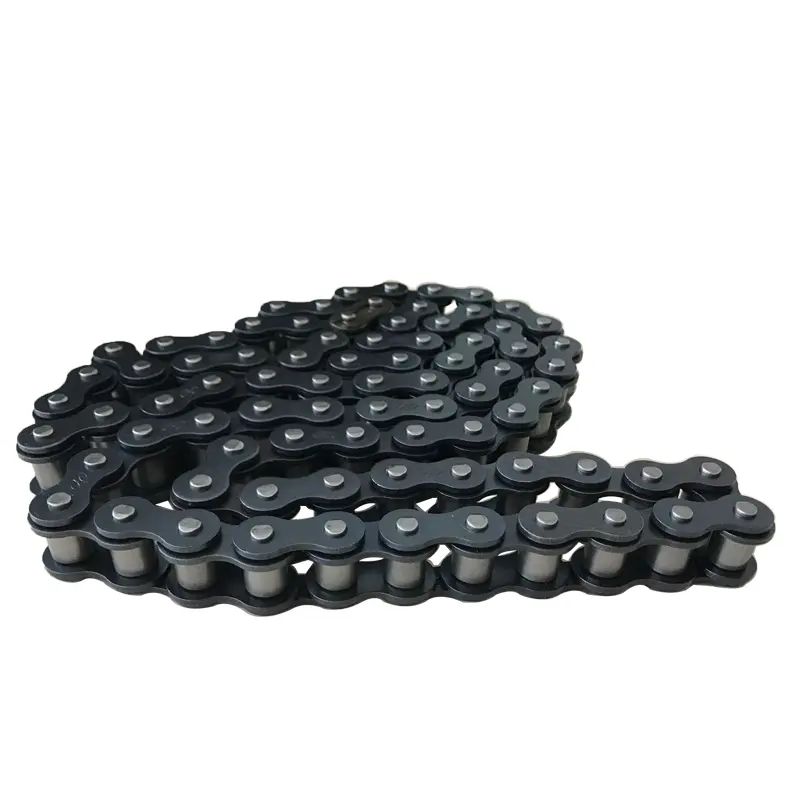
How does the speed of rotation affect the choice of transmission chain?
The speed of rotation is an important factor to consider when selecting a transmission chain for a specific application. Here’s a detailed answer to the question:
1. Fatigue and Wear: The speed of rotation directly affects the fatigue and wear characteristics of a transmission chain. Higher rotational speeds result in increased cyclic loading and wear on the chain’s components. Therefore, it is crucial to choose a chain that is designed to handle the anticipated speed and associated fatigue stresses.
2. Lubrication and Cooling: Faster rotational speeds generate more heat due to friction between the chain and the sprockets. Adequate lubrication is essential to minimize friction, reduce heat buildup, and maintain the chain’s performance and longevity. Additionally, some high-speed applications may require additional cooling mechanisms to dissipate heat effectively.
3. Centrifugal Forces: As the rotational speed increases, centrifugal forces become more significant. These forces can affect the chain’s stability, tension, and overall performance. Chains designed for high-speed applications are engineered to withstand the increased centrifugal forces and maintain proper tension during operation.
4. Dynamic Balance: High-speed rotation may introduce dynamic imbalances in the transmission system, leading to vibrations and decreased system efficiency. Special attention should be given to selecting a transmission chain with proper dynamic balance characteristics to minimize vibrations and ensure smooth operation.
5. Material and Design: Chains for high-speed applications often require specific materials and design features to accommodate the increased rotational forces and maintain reliability. High-strength alloys, precise manufacturing tolerances, and advanced surface treatments may be employed to enhance the chain’s performance and durability at high speeds.
When selecting a transmission chain, it is crucial to consider the manufacturer’s recommendations and specifications regarding maximum allowable speeds. Factors such as the application’s operational requirements, anticipated rotational speed, load, and environmental conditions should all be taken into account to ensure the chosen chain is suitable for the specific high-speed application.
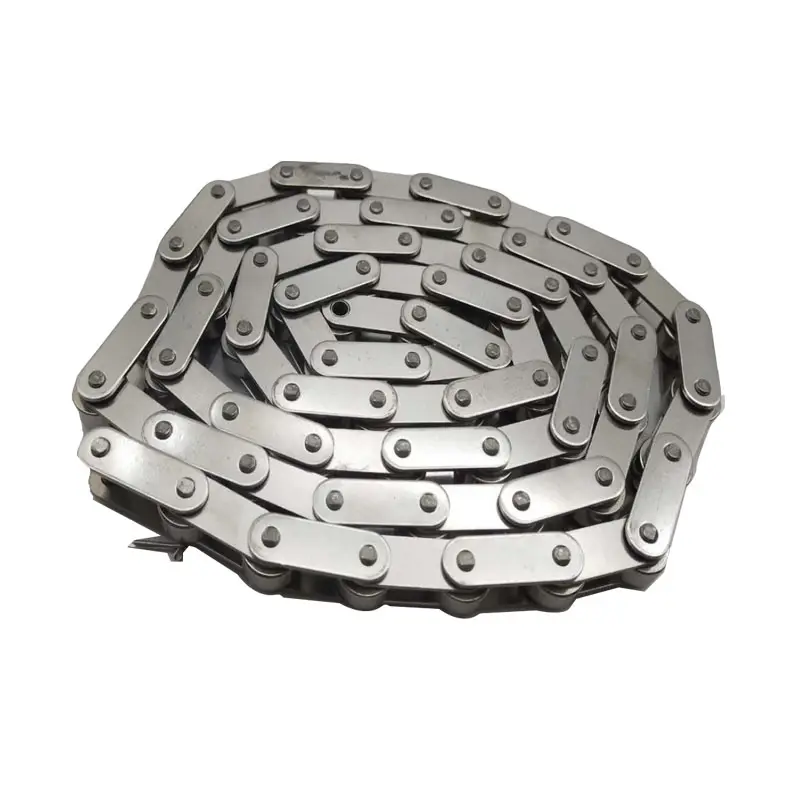
How do roller chains differ from other types of transmission chains?
Roller chains, also known as roller link chains, are a commonly used type of transmission chain that distinguishes itself from other chains in several ways:
- Design: Roller chains consist of inner and outer plates, pins, bushings, and rollers. The rollers, which are free to rotate, help reduce friction and wear, resulting in smoother and more efficient power transmission.
- Wide Application: Roller chains are versatile and widely used in various industries, including automotive, industrial machinery, agricultural equipment, and conveyor systems.
- High Load Capacity: Roller chains are designed to withstand high loads and offer excellent tensile strength, making them suitable for applications that require heavy-duty performance.
- Efficiency: Roller chains are known for their high efficiency in transmitting power. The roller design minimizes friction, resulting in less energy loss and improved overall efficiency.
- Cost-Effectiveness: Roller chains are relatively cost-effective compared to some other specialized transmission chains, making them a popular choice in many applications.
While roller chains have their advantages, it’s important to note that different types of transmission chains may be more suitable for specific applications. Factors such as load capacity, speed, noise level, and environmental conditions should be considered when selecting the appropriate transmission chain for a particular application.


editor by CX 2024-04-15