Product Description
Roller chain is a power transmisssion component.It is composed by 4 parts.They are plate,roller,bush and pin.
The materials are as follow:
Plate:40Mn,45Mn,40Cr.
Roller:10#,20#,45#,40Cr.
Bush:10#,20#.
Pin:20CrMnMo,30CrMnTi,40Cr.
Roller chains are widely used for general industrial applications.They are available in simplex, duplex and triplex with riveted or cottered.
We provides a significant roller chain advantage for hundreds of applications coping with operating conditions that are hot or cold, wet or dry, dusty or requiring cleanliness and all of these solutions combine excellent wear resistance and fatigue resistance with a long, reliable working life.
Product Description
Roller chain:
Roller chain or bush roller chain is the type of chain drive most commonly used for transmission of mechanical power on many kinds of domestic, industrial and agricultural machinery, including conveyors, wire- and tube-drawing machines, printing presses, cars, motorcycles, and bicycles. It consists of a series of short cylindrical rollers held together by side links. It is driven by a toothed wheel called a sprocket. It is a simple, reliable, and efficient means of power transmiss
| Our Main product Series | |||
| Roller Chains | Conveyor Chain | Agricultural Chain | Special chains |
| Short pitch precision roller chain(A series) | Lumber conveyor chain | S type steel agricultural chains | Forged chain |
| Short pitch precision roller chain(B series) | M-series conveyor chain | CA type steel agricultural chains | Side bow chain |
| Double pitch roller chain | MT series conveyor chain | A type steel agricultural chains | Sewage treatment chain |
| Hollow pin chain | MC series conveyor chain | ZGS38 Combine harvester chains | Sharp top chain |
| Heavy type chain | FV series conveyor chain | Self-lubrication chain | |
| Straight plate chain | Accumulation chain | Extended pin chain | |
| Flat-top chain | Spike chain | ||
| Chain attachment | |||
European Standard Roller Chains
1. BS/DIN Standard Short Pitch Power Transmission Roller Chains: 03B-48B
2. BS/DIN Standard Short Pitch High Performance Roller Chain
(all parts made of special alloy steel, with CHINAMFG seamless bushes and wide waist linkplates)
3. BS/DIN Standard Short Pitch Self-Lubricating Roller Chains (Maintenance Free Chains)
4. BS/DIN Standard Marine Engine Roller Chains (Marine Engine Chain): 32BM-72BMBS/DIN Standard Short Pitch Straight Linkplate Roller Chains: C08B-C48B
5. BS/DIN Standard Short Pitch Bushed Chains (Rollerless)
6. BS/DIN Standard Double Pitch Transmission Roller Chains: 208B-232BL
American Standard Roller Chains
1. ANSI Standard Short Pitch Power Transmission Roller Chains (and Bushed Chains as well): 25-240
2. ANSI Standard Short Pitch High Performance Roller Chain
(all parts made of special alloy steel, with CHINAMFG seamless bushes and wide waist linkplates)
3. ANSI Standard Short Pitch Straight Linkplate Roller Chains: C40-C240
4. ANSI Standard Short Pitch Heavy Duty Roller Chains: 60H-240H
5. T Series Super Roller Chains: T40-T140
6. HT Series Super Roller Chains: HT60-HT140
7. CHINAMFG Series Super Roller Chains: SHT80-SHT140
8. ANSI Standard Short Pitch Bushed Chains (Rollerless)
9. Roller Chains for Chain Couplings: 4012-12571
10. ANSI Standard Double Pitch Transmission Roller Chains: A2040-A2120
/* January 22, 2571 19:08:37 */!function(){function s(e,r){var a,o={};try{e&&e.split(“,”).forEach(function(e,t){e&&(a=e.match(/(.*?):(.*)$/))&&1
| Standard or Nonstandard: | Standard |
|---|---|
| Application: | Textile Machinery, Garment Machinery, Conveyer Equipment, Packaging Machinery, Electric Cars, Motorcycle, Food Machinery, Marine, Mining Equipment, Agricultural Machinery, Car |
| Surface Treatment: | Nickel Plating |
| Samples: |
US$ 10/Piece
1 Piece(Min.Order) | Order Sample |
|---|
| Customization: |
Available
| Customized Request |
|---|
.shipping-cost-tm .tm-status-off{background: none;padding:0;color: #1470cc}
|
Shipping Cost:
Estimated freight per unit. |
about shipping cost and estimated delivery time. |
|---|
| Payment Method: |
|
|---|---|
|
Initial Payment Full Payment |
| Currency: | US$ |
|---|
| Return&refunds: | You can apply for a refund up to 30 days after receipt of the products. |
|---|
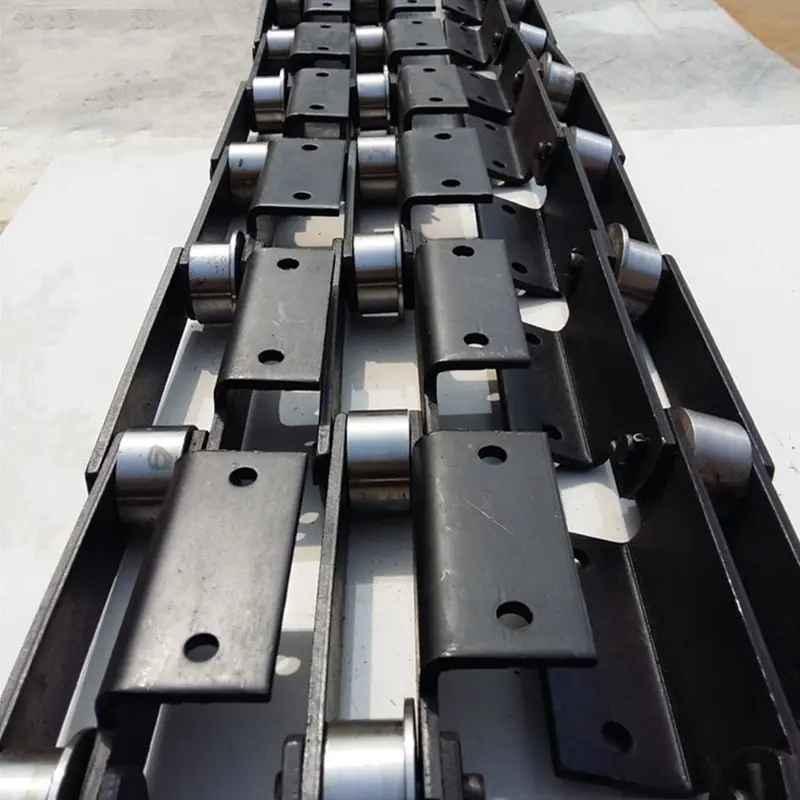
How does the choice of chain attachment type affect the versatility of a transmission chain?
The choice of chain attachment type has a significant impact on the versatility and functionality of a transmission chain. Here’s a detailed answer to the question:
The attachment type refers to the specific design or configuration of the links or plates at the ends of the transmission chain. Different attachment types are available to accommodate various applications, equipment, and industry requirements. The selection of the right attachment type affects the chain’s versatility in the following ways:
1. Connection and Compatibility: The chain attachment type determines how the chain connects and interacts with other components in the system. It should be compatible with the equipment, sprockets, gears, or other mechanisms to ensure proper functioning and power transmission. Different attachment types may be required for different machinery or applications, such as conveyors, elevators, or industrial machinery.
2. Load Capacity and Strength: The attachment type influences the load capacity and strength of the transmission chain. Some attachment designs provide increased load-bearing capacity, allowing the chain to handle heavy loads or withstand high-torque applications. By choosing the appropriate attachment type, the chain’s versatility can be enhanced to suit a wide range of load requirements.
3. Flexibility and Adaptability: Certain attachment types offer greater flexibility and adaptability in terms of accommodating variations in equipment design or layout. They may allow for easier adjustment, tensioning, or lengthening of the chain to fit specific requirements. This flexibility enables the chain to be more versatile and adaptable to different configurations or changes in the operating environment.
4. Specific Application Requirements: Depending on the application, specific chain attachment types may be necessary to meet industry standards, safety regulations, or operational needs. For example, certain industries may require specialized attachments to ensure proper alignment, positioning, or engagement with specific components or materials. Choosing the appropriate attachment type ensures compliance with these requirements, enhancing the chain’s versatility for specific applications.
5. Easy Maintenance and Replacement: The choice of attachment type can also impact the ease of maintenance and replacement of the transmission chain. Some attachment designs allow for quick and convenient disassembly or replacement of damaged or worn-out chain links or plates. This facilitates efficient maintenance and reduces downtime, contributing to the overall versatility and reliability of the chain.
When selecting a transmission chain, it’s crucial to consider the specific attachment type required for the intended application. Factors such as load capacity, compatibility with equipment, ease of maintenance, and industry standards should be considered to ensure optimal versatility and performance of the transmission chain.
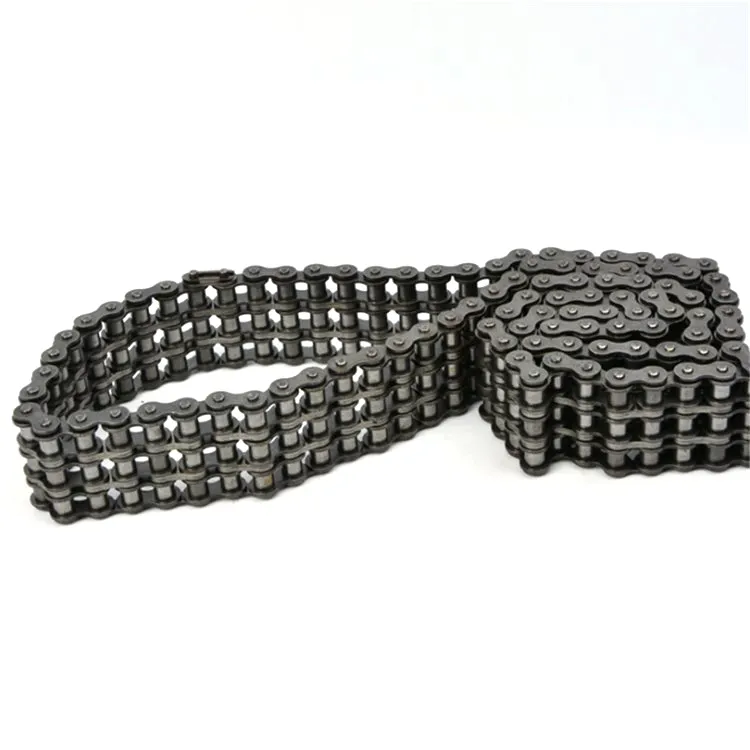
What are the advantages of using a flame-retardant transmission chain?
Flame-retardant transmission chains offer specific benefits in certain applications where fire safety is a concern. Here’s a detailed answer to the question:
1. Fire Protection: The primary advantage of using a flame-retardant transmission chain is enhanced fire protection. These chains are designed with materials and coatings that have high resistance to ignition and flame spread. In the event of a fire, they help to minimize the risk of the chain contributing to the spread of flames.
2. Safety: Flame-retardant transmission chains contribute to overall safety in environments where fire hazards are present. By reducing the flammability of the chain, they help prevent the chain from igniting or sustaining a fire, protecting personnel and property.
3. Compliance with Fire Regulations: In industries or applications where fire safety regulations are stringent, using flame-retardant transmission chains ensures compliance with these requirements. It helps to meet the necessary standards and regulations for fire prevention and protection.
4. Extended Escape Time: In situations where personnel may need to evacuate quickly during a fire, flame-retardant transmission chains can provide valuable additional time for safe evacuation. By resisting ignition and flame propagation, they help maintain structural integrity and delay the spread of fire.
5. Property Protection: Flame-retardant transmission chains help protect valuable equipment, machinery, and assets from fire damage. By reducing the risk of the chain catching fire, they minimize the potential for equipment failure and subsequent loss or damage.
It’s important to note that flame-retardant transmission chains may have specific design considerations and limitations. They are typically used in applications where fire safety is critical, such as in transportation systems, aerospace, mining, and other industries where the risk of fire is high. Selecting the appropriate flame-retardant chain requires considering the specific requirements of the application and ensuring compliance with relevant fire safety standards and regulations.
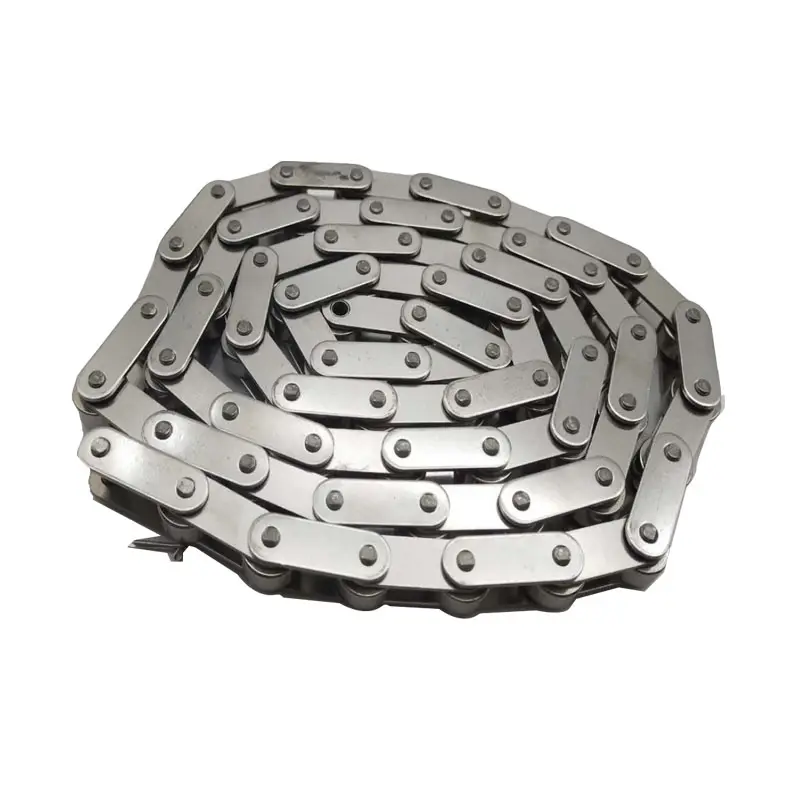
How do roller chains differ from other types of transmission chains?
Roller chains, also known as roller link chains, are a commonly used type of transmission chain that distinguishes itself from other chains in several ways:
- Design: Roller chains consist of inner and outer plates, pins, bushings, and rollers. The rollers, which are free to rotate, help reduce friction and wear, resulting in smoother and more efficient power transmission.
- Wide Application: Roller chains are versatile and widely used in various industries, including automotive, industrial machinery, agricultural equipment, and conveyor systems.
- High Load Capacity: Roller chains are designed to withstand high loads and offer excellent tensile strength, making them suitable for applications that require heavy-duty performance.
- Efficiency: Roller chains are known for their high efficiency in transmitting power. The roller design minimizes friction, resulting in less energy loss and improved overall efficiency.
- Cost-Effectiveness: Roller chains are relatively cost-effective compared to some other specialized transmission chains, making them a popular choice in many applications.
While roller chains have their advantages, it’s important to note that different types of transmission chains may be more suitable for specific applications. Factors such as load capacity, speed, noise level, and environmental conditions should be considered when selecting the appropriate transmission chain for a particular application.


editor by CX 2024-04-19