Product Description
These chains used in a variety of industries including manufacturing, assembly, and packaging, for example, cosmetics, foodstuffs, paper, eletrical and Electronic sectors, mechanical, chemical and automotive industry.
Max conveyor length per drive until 25m
Operating temperature -20¯ +60º C
Allowed max speed ca 50m/min
Packing: 1M 26PCS
Min curve radius: 150mm
Chain Width:83mm
Chain Pitch:38mm
| Chain Type | Plate Width | Working Load(max) | Sideflex Radius(min) | Backflex Radius(min) | Weight | ||||
| mm | inch | N(21ºC) | IBF(21ºC) | mm | inch | mm | inch | kg/m | |
| 83-1 | 83 | 3.25 | 2100 | 472 | 150 | 5.90 | 40 | 1.57 | 1.35 |
HangZhou CHINAMFG Conveyor Equipment Co.,Ltd. is specialized in manufacturing all kinds of Plastic Tabletop Chains, Modular Plastic Belts and Conveyor Components and our products have been applied in many industries. With professional engineers, we can meet your demand with specific solutions.
With the idea of innovation, CHINAMFG has been developing a variety of new products. Our aim is to meet your various requirement with leading solutions. The range of our products as well as production scale are leading the industry. As the professional manufacturer, our products are applied in a variety of industries, such as the food processing of meat, seafood, bakery, fruit and vegetable as well as beverage and dairy products. They also play an important role in the industry of pharmacy, chemistry, battery, paper and tire production etc.
Since CHINAMFG was established, we are trying our best to satisfy every customer’s requirement. We have been supplying some CHINAMFG companies such as ZheJiang ASG group, Wahaha, Mengniu, Yurun, Coca Cola, Tsingtao beer, Hayao Group etc.
The company has been qualified with ISO 9001 quality system. The production strictly complies with the standard and procedures of ISO 9001, which ensures good product quality. An increasing number of customers start to use our products because of Tuoxin’s advanced facilities, rich experience, efficient management and excellent sales team. CHINAMFG has not only gained good reputation in domestic market, but also exported products to Southeast Asia, Japan, Russia, Australia, Newzealand, Germany and other countries.
CHINAMFG has been always keeping our vision in mind, which is “Satisfy customer with reasonable price, reliable quality and timely delivery.
We believe that satisfying our customer is the basis of the company’s sustainable development. CHINAMFG is willing to cooperate with you and achieve mutual benefits.
Any enquiries from customers are welcome.
/* March 10, 2571 17:59:20 */!function(){function s(e,r){var a,o={};try{e&&e.split(“,”).forEach(function(e,t){e&&(a=e.match(/(.*?):(.*)$/))&&1
| Usage: | Transportation Chain |
|---|---|
| Material: | Plastic |
| Surface Treatment: | Polishing |
| Feature: | Heat Resistant |
| Chain Size: | 1/2"*3/32" |
| Structure: | Top Chain |
| Customization: |
Available
| Customized Request |
|---|

How do you ensure proper tensioning and alignment of a conveyor chain?
Proper tensioning and alignment are essential for the efficient and reliable operation of a conveyor chain. Here are the steps to ensure correct tensioning and alignment:
1. Initial Installation:
– Ensure that the conveyor frame and supports are properly aligned and leveled before installing the chain. Any misalignment or unevenness can lead to tensioning and alignment issues.
– Follow the manufacturer’s guidelines and specifications for chain installation. This includes proper placement of sprockets, tensioners, and guides.
2. Tensioning:
– Adjust the tension of the chain to the manufacturer’s recommended specifications. Proper tension prevents excessive sagging or tightness, reducing wear and extending the chain’s life.
– Use tensioning devices, such as adjustable take-up units or tensioning screws, to achieve the desired tension. Refer to the manufacturer’s guidelines for the appropriate method of tensioning for your specific conveyor chain.
– Regularly check and adjust the tension as needed. Factors such as chain wear, load variations, and temperature changes can affect the chain’s tension over time.
3. Alignment:
– Check the alignment of the chain with respect to the sprockets and guides. Misalignment can cause uneven wear, increased friction, and premature failure of the chain.
– Inspect the alignment by visually examining the chain’s path along the sprockets and guides. It should run smoothly without any signs of rubbing or excessive deviation.
– Use alignment tools, such as laser alignment devices or straightedges, to accurately assess and correct any misalignment. Adjust the position of sprockets, guides, and supports as necessary.
4. Regular Maintenance:
– Implement a scheduled maintenance program to regularly inspect and maintain proper tensioning and alignment of the conveyor chain.
– Monitor the chain’s performance, including wear patterns, noise levels, and power consumption, as indicators of potential tensioning or alignment issues.
– Keep the chain clean and free from debris or contaminants that can affect its movement and alignment.
By following these steps and regularly monitoring the tensioning and alignment of the conveyor chain, you can ensure smooth and reliable operation, minimize chain wear, and reduce the risk of unexpected failures.
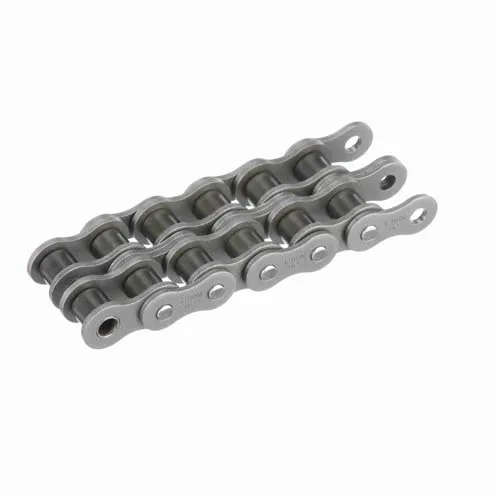
What are the benefits of using stainless steel conveyor chains?
Stainless steel conveyor chains offer several advantages over other types of chains. Here are some of the key benefits:
1. Corrosion Resistance: Stainless steel is highly resistant to corrosion, making it suitable for applications in harsh environments or industries where frequent washdowns or exposure to moisture is required. It does not rust or corrode like other metals, ensuring a longer lifespan and reliable performance.
2. Strength and Durability: Stainless steel chains are known for their high strength and durability. They can withstand heavy loads, high temperatures, and abrasive materials without deformation or breakage. This makes them ideal for heavy-duty applications where reliability and longevity are crucial.
3. Hygienic and Sanitary: Stainless steel is a non-porous material that is easy to clean and maintain. It is resistant to bacteria, mold, and other contaminants, making it suitable for industries with strict hygiene requirements such as food processing, pharmaceuticals, and medical devices. Stainless steel chains can be thoroughly cleaned and sanitized, reducing the risk of product contamination.
4. Temperature Resistance: Stainless steel chains can withstand a wide range of temperatures, both high and low. They exhibit excellent heat resistance, allowing them to maintain their strength and performance even in extreme temperature conditions.
5. Aesthetic Appeal: Stainless steel chains have a sleek and polished appearance, adding a professional and aesthetic touch to the conveyor system. They are commonly used in industries where visual appeal and brand representation are important, such as retail or luxury goods.
6. Chemical Resistance: Stainless steel is resistant to various chemicals, including acids, alkalis, and solvents. This makes it suitable for applications where contact with corrosive substances is likely.
7. Compatibility with High-Speed Applications: Stainless steel chains can withstand high-speed operations without compromising their structural integrity or performance. They maintain their stability and accuracy even at elevated speeds.
Overall, stainless steel conveyor chains offer corrosion resistance, strength, durability, hygienic properties, temperature resistance, aesthetic appeal, chemical resistance, and compatibility with high-speed applications. These benefits make them a preferred choice in industries such as food and beverage, pharmaceuticals, automotive, and manufacturing, where reliability, cleanliness, and performance are essential.
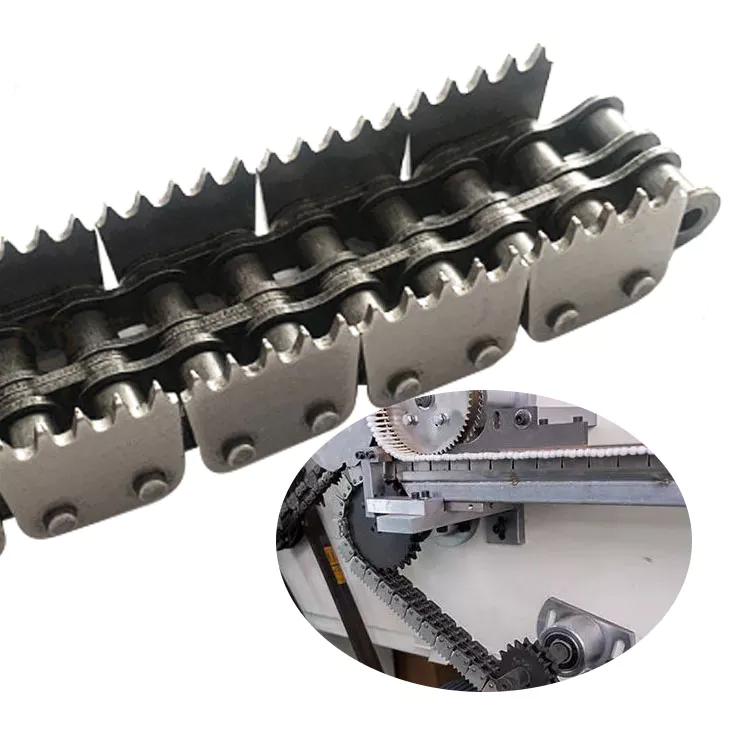
How do you properly tension a conveyor chain?
Properly tensioning a conveyor chain is crucial for its smooth operation and to prevent issues like chain slipping or excessive wear. Here are the steps to properly tension a conveyor chain:
- Identify the Tensioning Points: Determine the locations where the conveyor chain can be tensioned. These are typically at the ends of the chain or at specific tensioning devices.
- Loosen the Tensioning Devices: If there are tensioning devices in place, such as adjustable bolts or tensioning screws, loosen them to allow for adjustment.
- Apply Tension: Apply tension to the conveyor chain by either manually pulling the chain or using a tensioning tool. The amount of tension required depends on the chain type and the manufacturer’s recommendations.
- Check the Tension: Use a tension gauge or other suitable method to measure the tension of the conveyor chain. The tension should fall within the specified range provided by the chain manufacturer.
- Adjust the Tension: If the tension is too loose or too tight, make adjustments accordingly. Tighten or loosen the tensioning devices until the desired tension is achieved.
- Secure the Tensioning Devices: Once the proper tension is achieved, securely tighten the tensioning devices to hold the chain in place.
- Verify the Tension: After tensioning the chain, perform a visual inspection and run the conveyor to ensure the chain runs smoothly without excessive slack or tightness. Make any further adjustments if necessary.
It’s important to refer to the specific guidelines provided by the conveyor chain manufacturer for proper tensioning instructions, as the exact method may vary depending on the chain type and design. Regularly check the tension of the conveyor chain and make adjustments as needed to maintain optimal performance.


editor by CX 2024-01-11