Product Description
Detailed Photos
Product Description
| Chain Pitch | 200/206 | 200/206 | 240/250 | 240/250 | 300 |
| Single point(kg) | ≤35 | ≤40 | ≤50 | ≤55 | ≤100 |
| Chain weight(kg/m) | 5.2 | 6.2 | 6.5 | 7.3 | 13 |
| Tension load(KN) | 3 | 3 | 5 | 5 | 10 |
| Breaking load(KN) | ≥30 | ≥30 | ≥50 | ≥50 | ≥100 |
| Fit for Working temperature(ºC) | ≤280 | ≤280 | ≤280 | ≤280 | ≤280 |
| Speed(m/min) | 0.26-6.1 | 0.26-6.1 |
0.26-6.1 | 0.26-6.1 | 0.26-6.1 |
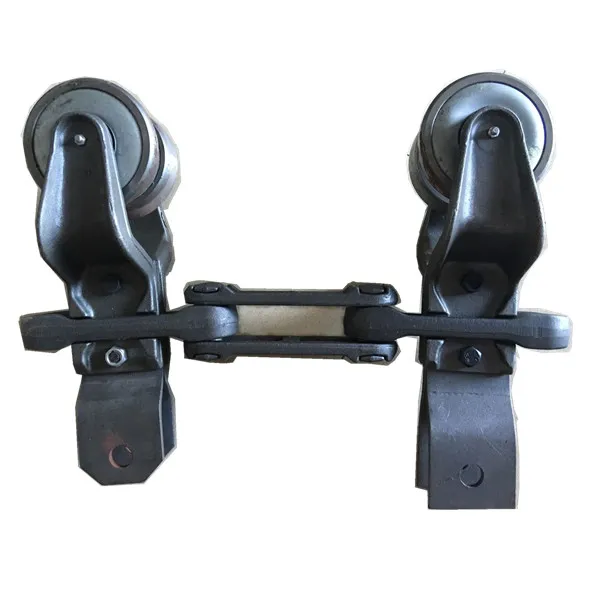
The overhead conveyor components including drop forged rivetless chain, drop forged overhead trolley, drive chain, trolley attachment, side link pusher dog, rollers turn roller, enclosed track chain, free carrier trolley and so on.
We can also supply other conveyor and transmission parts to fit our customer’s specific needs, including conveyor chain, stainless steel chain, cast chain, drop forged scraper chain, forged loop chain, bi-planar conveyor chain, sprockets, bearings, forged gear, special shaft, outboard roller assembly, conveyor roller, special brass parts and so on.
Main sizes are P101.6 Chain, P101.6H Chain, P142 chain, P142H Chain, P200 chain, P260 Chain and so on.
Our drop forged rivetless chain are most competitive and are of high quality. There are many items available. Please feel free to contact us.
FAQ
Q1: Are you trading company or manufacturer ?
A: We are factory.
Q2: How long is your delivery time and shipment?
1.Sample Lead-times: generally 30 workdays.
2.Production Lead-times: 60 workdays after getting your deposit.
Q3. What is your terms of payment?
A: T/T 30% as deposit, and 70% before delivery.
We’ll show you the photos of the products and packages before you pay the balance.
Q4: What is your advantages?
1. Manufacturer,the most competitive price and good quality.
2. Perfect technical engineers give you the best support.
3. OEM is available.
4. Rich stock and quick delivery.
Q5. If you can’t find the product on our website,what do you next?
Please send us inquiry with product pictures and drawings by email or other ways and we’ll check
/* January 22, 2571 19:08:37 */!function(){function s(e,r){var a,o={};try{e&&e.split(“,”).forEach(function(e,t){e&&(a=e.match(/(.*?):(.*)$/))&&1
| Material: | Alloy |
|---|---|
| Structure: | Roller Chain |
| Surface Treatment: | Polishing |
| Customization: |
Available
| Customized Request |
|---|
.shipping-cost-tm .tm-status-off{background: none;padding:0;color: #1470cc}
|
Shipping Cost:
Estimated freight per unit. |
about shipping cost and estimated delivery time. |
|---|
| Payment Method: |
|
|---|---|
|
Initial Payment Full Payment |
| Currency: | US$ |
|---|
| Return&refunds: | You can apply for a refund up to 30 days after receipt of the products. |
|---|
How do you calculate the required horsepower for a conveyor chain drive?
The calculation of required horsepower for a conveyor chain drive involves considering various factors related to the conveyor system and the specific application. Here is a step-by-step process:
1. Determine the Total Resistance:
– Calculate the total resistance that the conveyor chain needs to overcome during operation. This includes the resistance due to the load being conveyed, frictional losses, elevation changes, and any other resistances in the system.
2. Convert the Resistance to Equivalent Inertia:
– Convert the total resistance to an equivalent inertia by multiplying it by the square of the chain speed.
3. Calculate the Total Inertia:
– Determine the total inertia of the system by considering the inertia of all the rotating components, such as the conveyor chain, sprockets, and any other driven elements.
4. Determine the Required Torque:
– Calculate the required torque by multiplying the total inertia by the desired acceleration or deceleration rate.
5. Convert Torque to Horsepower:
– Convert the required torque to horsepower by dividing it by the motor speed (in RPM) and multiplying by a conversion factor.
6. Consider Safety Factors and Efficiency:
– Apply safety factors to the calculated horsepower to account for variations, contingencies, and future growth.
– Consider the efficiency of the drive system, including the motor, gearbox, and other transmission components, to ensure accurate power transmission.
It’s important to note that the above calculation method provides an estimate of the required horsepower. Consulting with conveyor system manufacturers, engineers, or industry-specific guidelines is recommended for precise calculations and to ensure the selected conveyor chain drive meets the application requirements.

What are the benefits of using a roller conveyor chain?
A roller conveyor chain offers several advantages in material handling and transportation applications. Here are some of the benefits:
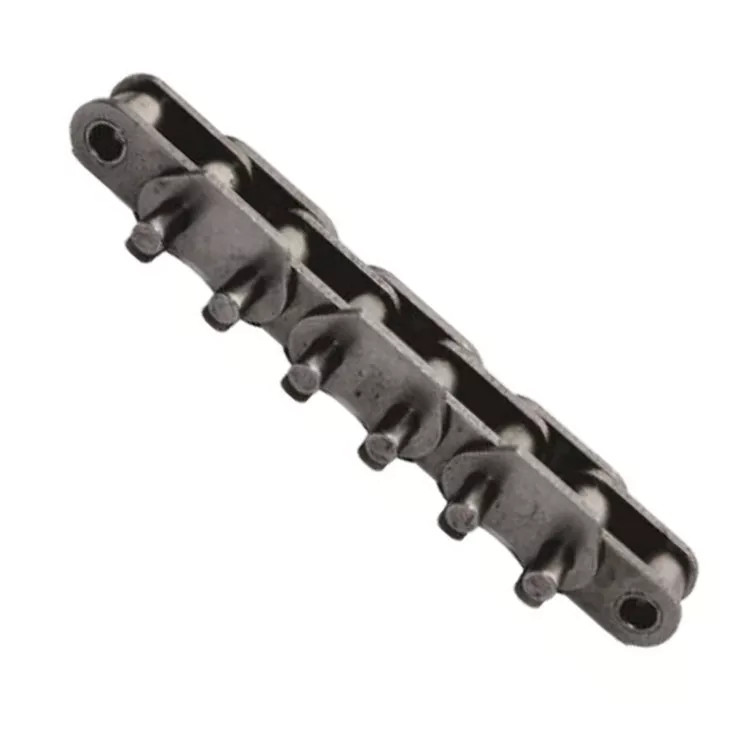
1. Efficient transportation: Roller conveyor chains are designed to smoothly and efficiently transport various types of goods and materials. The rollers provide low-friction movement, reducing the effort required to move the load along the conveyor.
2. Versatility: Roller conveyor chains are versatile and can handle a wide range of products, from small and lightweight items to heavy and bulky loads. They are commonly used in industries such as manufacturing, distribution, logistics, and warehouses.
3. Durability: Roller conveyor chains are typically made from robust materials such as steel, which provides excellent durability and longevity. They can withstand heavy loads, repetitive use, and harsh working environments.
4. Flexibility: Roller conveyor chains can be configured in various layouts to accommodate different space requirements and material flow patterns. They can be straight, curved, inclined, or declined to optimize the flow of goods within the facility.
5. Easy accumulation: Roller conveyor chains allow for efficient accumulation of products without causing damage or jamming. The rollers can be designed with specific spacing and configurations to enable controlled accumulation and release of items along the conveyor line.
6. Minimal maintenance: With proper maintenance and lubrication, roller conveyor chains require minimal upkeep. The design of the chain and rollers reduces the accumulation of debris, making them easier to clean and maintain.
7. Smooth and quiet operation: The use of rollers in the conveyor chain ensures smooth and quiet operation, reducing noise levels in the workplace. This creates a more comfortable and productive working environment.
8. Enhanced safety: Roller conveyor chains are designed with safety in mind. They can be equipped with various safety features such as guards, sensors, and emergency stop mechanisms to ensure the well-being of operators and prevent accidents.
By utilizing a roller conveyor chain, businesses can benefit from improved efficiency, increased durability, flexibility in material handling, and enhanced safety in their operations.
Can a conveyor chain be repaired or does it need to be replaced entirely?
In general, conveyor chains can be repaired in certain cases, but there are instances where replacement is necessary. Here are some considerations:
- Minor Damage: If the conveyor chain has minor damage, such as a broken link or a damaged pin, it may be possible to repair it by replacing the damaged components.
- Significant Wear: If the chain has significant wear, such as elongation or excessive corrosion, it may be more cost-effective to replace the entire chain rather than attempting repairs.
- Critical Components: Some conveyor chains have critical components that cannot be repaired, such as welded attachments or specialized features. In such cases, replacement is usually the only option.
- Manufacturer’s Recommendations: It’s important to consult the manufacturer’s recommendations regarding chain repairability. They can provide specific guidelines on when repair is feasible and when replacement is necessary.
Before deciding whether to repair or replace a conveyor chain, it’s recommended to assess the extent of damage, consider the overall condition of the chain, and evaluate the cost-effectiveness of each option. It’s always advisable to consult with a qualified professional or the chain manufacturer to determine the best course of action.


editor by CX 2024-04-13