Product Description
Welcome to visit Xihu (West Lake) Dis. CHINAMFG mechanical (chain )factory .
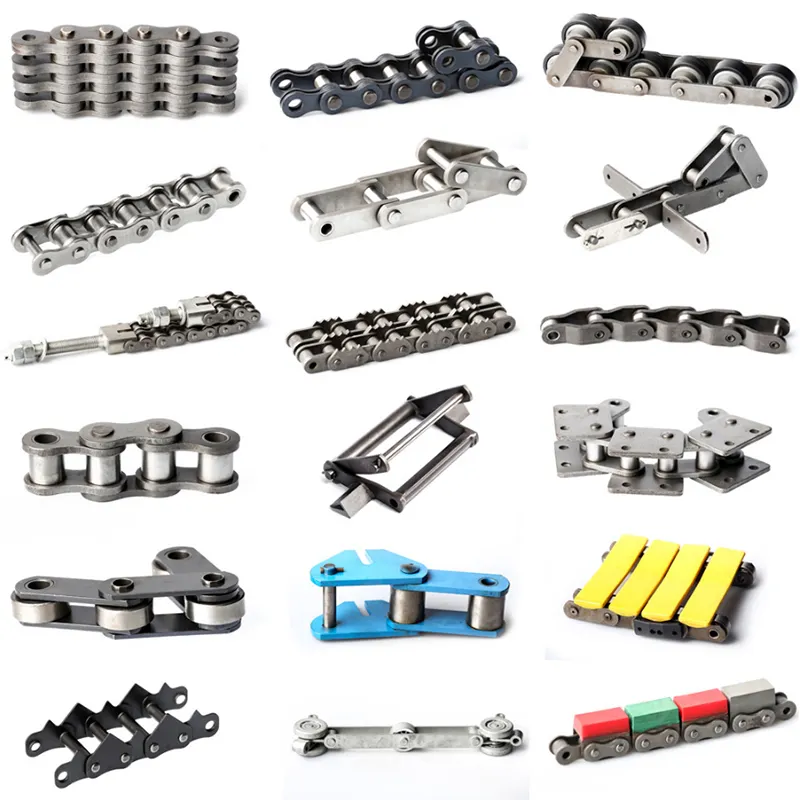
We produce a wide range power transmission products. Such as roller chains and leaf chains, conveyor chains, drive chains, agricultural chains .
Also we can supply all kinds of industrial sprockets, chain couplings.
Established in year of 2000. With over 20 years history of specializing in the roller chains producing. With stable and good quality. We now have gained customer’s high praise from at home and abroad.
Our manufacturing plant and workshop area is over 10000 square CHINAMFG and with staff is about 70. We are the middle scale factory in China.
Our chain quality can match with GB,DIN,ASA,ANSI,JIS standard.and have gain the ISO9001 Certificate.
Till now, except for the domestic market, we have exported many chains to USA, CANADA,COLOMBIA,BRAZIL,ARGENTINA,POLAND, ITALY,SPAIN AND SO ON.
1.Standards: ISO /DIN /ANSI/GB/JIS/ASA
2. Model: 06C-35-240, 04B-48B Simplex, Duplex, Triplex AND ACCORDING TO CUSTOMER’S REQUIREMENTS
3. Materials: Carbon steel 40Mn,# 10 FOR THE ROLLER AND BUSH,40CR FOR THE PIN
4. All spare parts of chains are heat treated(quenching and tempering) and controlled in a reasonable tolerance range and suitable for the industry standard.
5. Tensile strength: more higher than the standard about 15%
6. Certificate of Quality: ISO 9001
7. Good lubrication with excellent grease.
8. Color: Self color and shot peen.
9.Can match with sprockets freely
| we are CHINAMFG chain factory from CHINA. |
| We make roller chains over 20 years. main ASA chains: — main DIN chains:06b-08b-10b-12b-16b-20b-24b-32b main motorcycle chains: H 520 520H 530 Our quality: middle level and good and stable. Follow up XIHU (WEST LAKE) DIS.HUA standard We also exported many industrial sprockets together with our chains. We mainly exported chains to South America AND Europe. |
/* January 22, 2571 19:08:37 */!function(){function s(e,r){var a,o={};try{e&&e.split(“,”).forEach(function(e,t){e&&(a=e.match(/(.*?):(.*)$/))&&1
| Standard or Nonstandard: | Standard |
|---|---|
| Application: | Textile Machinery, Garment Machinery, Conveyer Equipment, Packaging Machinery, Electric Cars, Motorcycle, Food Machinery, Marine, Mining Equipment, Agricultural Machinery, Car |
| Surface Treatment: | Polishing |
| Structure: | Roller Chain |
| Material: | Carbon Steel |
| Type: | Short Pitch Chain |
| Samples: |
US$ 1/Meter
1 Meter(Min.Order) | |
|---|
| Customization: |
Available
| Customized Request |
|---|
How does the length of a transmission chain impact its performance?
The length of a transmission chain plays a significant role in its overall performance and functionality. Here’s a detailed explanation:
1. Proper Fit and Function: The length of a transmission chain needs to be carefully selected to ensure it fits and functions correctly within the designated system. If the chain is too short, it may not be able to reach the sprockets or pulleys properly, leading to ineffective power transmission and potential chain slippage. On the other hand, if the chain is too long, it may sag, create excessive tension, or cause interference with other components, resulting in inefficient operation or premature wear.
2. Tension and Slack Control: The length of a transmission chain affects the tension and slack control within the system. A properly tensioned chain ensures optimal power transmission, reduces backlash, and minimizes the risk of chain derailment. The chain length must be adjusted to maintain the appropriate tension throughout the operating cycle, considering factors such as load variations, temperature changes, and system dynamics.
3. Flexibility and Bending Requirements: The length of a transmission chain influences its flexibility and bending characteristics. Longer chains may have a higher degree of flexibility, allowing them to navigate complex paths or accommodate greater distances between sprockets or pulleys. However, excessive chain length can lead to excessive bending, resulting in increased friction, wear, and potential premature failure.
4. Sprocket Interactions: The length of the transmission chain affects its interaction with the sprockets or pulleys. The number of chain links determines the engagement between the chain and the teeth of the sprockets. Proper length ensures smooth engagement, minimal tooth wear, and efficient power transfer. Incorrect chain length can cause misalignment, increased noise, and accelerated sprocket or chain wear.
5. System Efficiency and Performance: The length of a transmission chain directly impacts the overall efficiency and performance of the system. A properly sized chain ensures optimum power transmission, minimal energy losses, and reliable operation. By selecting the appropriate chain length, system designers can maximize efficiency, minimize wear, and optimize the lifespan of both the chain and related components.
When selecting the length of a transmission chain, it’s crucial to consider the specific requirements of the application, including the distance between sprockets or pulleys, the desired tension, and the expected load conditions. Consulting with chain manufacturers or industry experts can provide valuable guidance in determining the appropriate chain length for optimal performance and longevity.

How does the choice of lubrication method impact the performance of a transmission chain?
The choice of lubrication method plays a crucial role in the performance and longevity of a transmission chain. Here’s a detailed answer to the question:
1. Reduced Friction and Wear: Proper lubrication ensures a thin film of lubricant between the moving parts of the transmission chain, reducing friction and minimizing wear. This helps to maintain the integrity of the chain’s components, such as pins, rollers, and bushings, by preventing metal-to-metal contact and reducing surface damage.
2. Heat Dissipation: Lubrication helps in dissipating heat generated during the operation of the transmission chain. By reducing friction and providing a cooling effect, the lubricant helps to prevent overheating, which can lead to premature wear, deformation, or failure of the chain.
3. Corrosion Protection: Lubricants often contain additives that offer corrosion protection to the transmission chain. These additives create a protective barrier against moisture, chemicals, and other corrosive elements, preventing rust formation and maintaining the chain’s performance in corrosive environments.
4. Noise Reduction: Adequate lubrication reduces the noise generated by the movement of the transmission chain. The lubricant acts as a cushion between the contacting surfaces, dampening vibrations and minimizing the noise levels produced during operation. This contributes to a quieter and smoother chain operation.
5. Extended Lifespan: Proper lubrication helps to extend the lifespan of the transmission chain. By reducing friction, wear, and the accumulation of debris, lubrication minimizes the stress on the chain’s components, resulting in improved durability and reduced likelihood of premature failure.
6. Operational Efficiency: A well-lubricated transmission chain operates with higher efficiency. With reduced friction, the chain experiences less power loss, enabling more effective power transmission. This leads to improved overall system efficiency, reduced energy consumption, and lower operating costs.
7. Contamination Prevention: Lubrication acts as a barrier, preventing contaminants, such as dust, dirt, and debris, from entering the chain’s components. This helps to maintain the cleanliness of the chain, reducing the risk of abrasive wear and preserving the integrity of its parts.
It’s important to consider the specific operating conditions, such as temperature, speed, load, and environment, when selecting the lubrication method for a transmission chain. Factors such as the viscosity, temperature range, and compatibility of the lubricant with the chain material should be taken into account to ensure optimal lubrication performance.

What are the key components of a transmission chain?
A transmission chain consists of several key components that work together to transmit power and motion efficiently. The main components of a transmission chain include:
- Inner Plates: These are flat metal plates with holes or slots for connecting the other components of the chain.
- Outer Plates: Similar to inner plates, outer plates provide additional strength and support to the chain.
- Pins: The pins hold the inner and outer plates together, creating a flexible link between them. They play a crucial role in maintaining the integrity and functionality of the chain.
- Bushings: Bushings are cylindrical components that fit into the holes of the inner and outer plates. They provide a smooth surface for the chain to rotate around the pins.
- Rollers: Rollers are cylindrical elements that fit between the inner plates and the bushings. They reduce friction and enable smooth movement as the chain engages with the sprockets.
- Solid Bushings (optional): In some transmission chains, solid bushings may be used instead of bushings with holes. Solid bushings provide additional strength and stability to the chain.
- Sprockets: Sprockets are toothed wheels that engage with the rollers of the transmission chain. They transfer power and motion to the chain, enabling it to drive various machinery and equipment.
These components work together to form a continuous loop that transmits power from the driving sprocket to the driven sprocket, allowing the chain to transfer rotational motion and drive various mechanical systems.


editor by CX 2024-05-02