Product Description
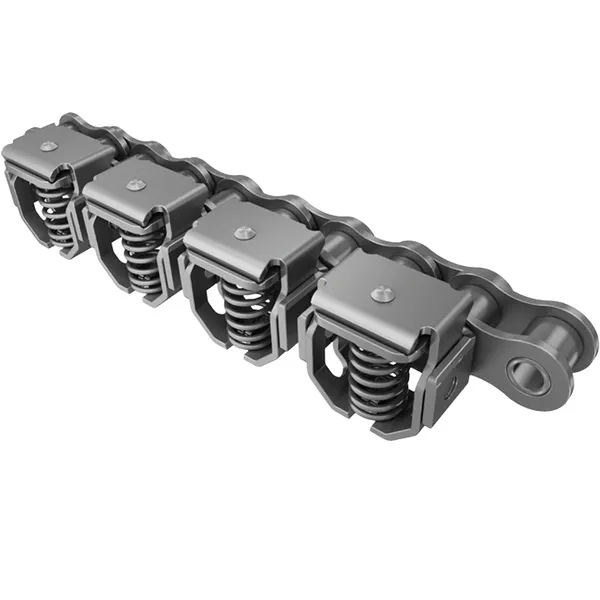
These chains used in a variety of industries including manufacturing, assembly, and packaging, for example, cosmetics, foodstuffs, paper, eletrical and Electronic sectors, mechanical, chemical and automotive industry.
Max conveyor length per drive until 25m
Operating temperature -20¯ +60º C
Allowed max speed ca 50m/min
Packing: 1M 26PCS
Min curve radius: 150mm
Chain Width:83mm
Chain Pitch:38mm
| Chain Type | Plate Width | Working Load(max) | Sideflex Radius(min) | Backflex Radius(min) | Weight | ||||
| mm | inch | N(21ºC) | IBF(21ºC) | mm | inch | mm | inch | kg/m | |
| 83-1 | 83 | 3.25 | 2100 | 472 | 150 | 5.90 | 40 | 1.57 | 1.35 |
HangZhou CHINAMFG Conveyor Equipment Co.,Ltd. is specialized in manufacturing all kinds of Plastic Tabletop Chains, Modular Plastic Belts and Conveyor Components and our products have been applied in many industries. With professional engineers, we can meet your demand with specific solutions.
With the idea of innovation, CHINAMFG has been developing a variety of new products. Our aim is to meet your various requirement with leading solutions. The range of our products as well as production scale are leading the industry. As the professional manufacturer, our products are applied in a variety of industries, such as the food processing of meat, seafood, bakery, fruit and vegetable as well as beverage and dairy products. They also play an important role in the industry of pharmacy, chemistry, battery, paper and tire production etc.
Since CHINAMFG was established, we are trying our best to satisfy every customer’s requirement. We have been supplying some CHINAMFG companies such as ZheJiang ASG group, Wahaha, Mengniu, Yurun, Coca Cola, Tsingtao beer, Hayao Group etc.
The company has been qualified with ISO 9001 quality system. The production strictly complies with the standard and procedures of ISO 9001, which ensures good product quality. An increasing number of customers start to use our products because of Tuoxin’s advanced facilities, rich experience, efficient management and excellent sales team. CHINAMFG has not only gained good reputation in domestic market, but also exported products to Southeast Asia, Japan, Russia, Australia, Newzealand, Germany and other countries.
CHINAMFG has been always keeping our vision in mind, which is “Satisfy customer with reasonable price, reliable quality and timely delivery.
We believe that satisfying our customer is the basis of the company’s sustainable development. CHINAMFG is willing to cooperate with you and achieve mutual benefits.
Any enquiries from customers are welcome.
/* January 22, 2571 19:08:37 */!function(){function s(e,r){var a,o={};try{e&&e.split(“,”).forEach(function(e,t){e&&(a=e.match(/(.*?):(.*)$/))&&1
| Usage: | Transportation Chain |
|---|---|
| Material: | Plastic |
| Surface Treatment: | Polishing |
| Feature: | Heat Resistant |
| Chain Size: | 1/2"*3/32" |
| Structure: | Top Chain |
| Customization: |
Available
| Customized Request |
|---|
What are the benefits of using a self-lubricating conveyor chain?
Self-lubricating conveyor chains offer several advantages over traditional lubricated chains. Here are some key benefits:
1. Reduced Maintenance: Self-lubricating chains eliminate the need for regular lubrication, reducing the time and effort required for maintenance. This is particularly beneficial in applications where access to the chain is difficult or time-consuming.
2. Cost Savings: By eliminating the need for external lubrication, self-lubricating chains can help reduce lubrication costs over the lifetime of the chain. This includes the cost of lubricants, as well as the labor and equipment required for lubrication maintenance.
3. Clean and Environmentally Friendly: Self-lubricating chains do not require external lubricants, resulting in a cleaner working environment. There is no risk of lubricant spills or contamination of the surrounding area, making them ideal for applications that require strict cleanliness standards, such as food processing or pharmaceutical industries.
4. Extended Chain Life: Self-lubricating chains are designed with built-in lubrication systems that provide a continuous and controlled supply of lubricant to the chain components. This helps reduce friction, wear, and heat generation, resulting in longer chain life and improved performance.
5. Improved Reliability: With consistent and reliable lubrication, self-lubricating chains maintain optimal performance and minimize the risk of chain failure or breakdown. They are less susceptible to premature wear, elongation, and corrosion, ensuring a more reliable and efficient conveyor system.
It’s important to note that the specific benefits of self-lubricating chains may vary depending on the manufacturer and the design of the chain. It’s recommended to consult with the chain manufacturer or an industry expert to understand the suitability and advantages of self-lubricating chains for a particular application.

How do you calculate the power requirements for a conveyor chain?
Calculating the power requirements for a conveyor chain involves considering various factors. Here’s a step-by-step process:
1. Determine the total weight to be transported: Measure or estimate the total weight of the material or product that will be carried by the conveyor chain. This includes the weight of the product itself, any packaging, and additional loads.
2. Determine the speed of the conveyor: Determine the desired speed at which the conveyor chain will operate. This is typically measured in feet per minute (FPM) or meters per second (m/s).
3. Calculate the required capacity: Multiply the total weight by the desired speed to determine the required capacity of the conveyor system. This will give you the weight per unit of time (e.g., pounds per minute or kilograms per hour).
4. Consider the conveyor’s design factors: Take into account various design factors such as the type and pitch of the conveyor chain, the coefficient of friction between the chain and the conveyor components, and any incline or decline angles of the conveyor system. These factors affect the power requirements.
5. Determine the required power: Use the following formula to calculate the power requirements:
Power (in horsepower) = (Capacity × Friction Factor) ÷ (33,000 × Efficiency)
Where:
– Capacity is the weight per unit of time (from step 3)
– Friction Factor is the ratio of chain tension to chain weight, taking into account the design factors
– 33,000 is a conversion factor to convert the units to horsepower
– Efficiency is the overall efficiency of the conveyor system, typically expressed as a decimal value (e.g., 0.95 for 95% efficiency)
6. Select a suitable motor: Based on the calculated power requirements, select a motor that can provide the necessary power to drive the conveyor chain. Consider factors such as motor type, motor efficiency, and overload capacity.
It’s important to note that the power requirements may vary depending on specific conveyor system designs and operating conditions. Consulting with a qualified engineer or conveyor manufacturer is recommended to ensure accurate calculations and proper motor selection.
What is a conveyor chain and how does it work?
A conveyor chain is a type of mechanical chain specifically designed for use in conveyor systems. It is composed of a series of interconnected links that form a continuous chain loop. The links are typically made of metal and are joined together through pins or other connecting elements.
Conveyor chains work by transferring power and motion from the driving mechanism, such as a motor or sprocket, to the conveyor system to move materials or products along a predetermined path. The chain is placed on a track or guide rails, and as it moves, it carries the load placed on it.
The operation of a conveyor chain involves the following steps:
- Power transmission:
The driving mechanism transfers rotational power to the conveyor chain, typically through a motor and sprockets. The motor provides the necessary torque to drive the chain.
- Traction and motion:
As the driving mechanism rotates the sprockets, the teeth of the sprockets engage with the links of the conveyor chain. This interaction creates traction, causing the chain to move along the desired path.
- Load carrying:
The load to be transported is placed on the conveyor chain. The load can be in the form of products, materials, or other items. As the chain moves, it carries the load along the conveyor system, allowing for efficient transportation or handling.
- Support and guidance:
The conveyor chain is supported and guided by various components, such as guide rails, rollers, or wear strips. These components ensure the proper alignment and smooth movement of the chain along the conveyor system.
Conveyor chains are commonly used in industries such as manufacturing, logistics, packaging, and material handling. They offer a reliable and efficient method for moving products or materials in a controlled and automated manner.


editor by CX 2024-04-04