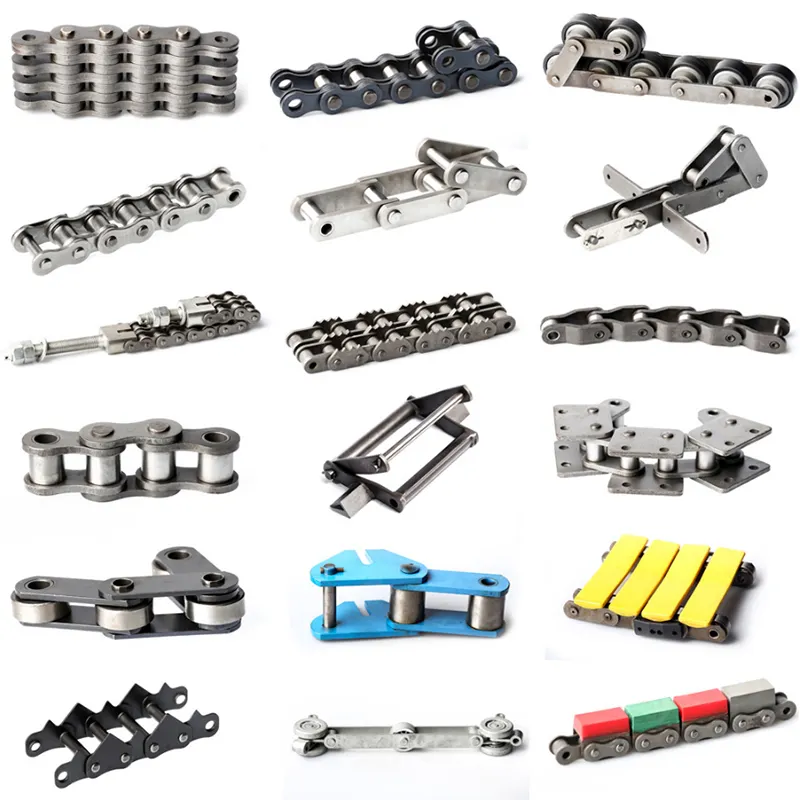
Product Description
Product Description
UH-5075-S series conveyor chains have excellent extensity and capable of making any turn on both horizontal planes and vertical planes. Based on the actual needs of various process flows, the conveyor has been deliberately designed to run across relatively long routes and abstruction objects to transmit the work pieces along the scheduled route all the way to their destinations. In this way, UH-5075 can integrae all separate production steps into an automatic production line, which has greatly improved efficiency and product quality level and strengthen the management as well.
Features:
Overhead trolley conveyors are used in wide range of applications, including: manufacturing and assembly, warehousing and distribution of the goods.
Overhead chain conveyors system can prove to be cost effective as they reduce the use of carriers and allows large volumes to move rapidly through a process.
Techncial Date
|
Kasin No. |
UH-5075-S Standard chain |
Heavy-duty chain
|
UH-5075-HV Heavy-duty chain |
UH-5075-HA Heavy-duty chain |
|||||||||||||
|
Suspension Spacing (mm) |
150+(150× N) |
150+(150 × N) |
150+(150 × N) |
150+(150 × N) |
|||||||||||||
|
Chain’s Weight (kg/m) |
4.2 |
4.58 |
4.83 |
5.3 |
|||||||||||||
|
Single-span Weight (≤kg) |
35 |
40 |
45 |
50 |
|||||||||||||
|
Chain’s Allowed Pull Force (≤kgf) |
3/8822 0571 -57152031 Fax: 86~/8822 0571 -57152030 /* January 22, 2571 19:08:37 */!function(){function s(e,r){var a,o={};try{e&&e.split(“,”).forEach(function(e,t){e&&(a=e.match(/(.*?):(.*)$/))&&1
How does the length of a transmission chain impact its performance?The length of a transmission chain plays a significant role in its overall performance and functionality. Here’s a detailed explanation: 1. Proper Fit and Function: The length of a transmission chain needs to be carefully selected to ensure it fits and functions correctly within the designated system. If the chain is too short, it may not be able to reach the sprockets or pulleys properly, leading to ineffective power transmission and potential chain slippage. On the other hand, if the chain is too long, it may sag, create excessive tension, or cause interference with other components, resulting in inefficient operation or premature wear. 2. Tension and Slack Control: The length of a transmission chain affects the tension and slack control within the system. A properly tensioned chain ensures optimal power transmission, reduces backlash, and minimizes the risk of chain derailment. The chain length must be adjusted to maintain the appropriate tension throughout the operating cycle, considering factors such as load variations, temperature changes, and system dynamics. 3. Flexibility and Bending Requirements: The length of a transmission chain influences its flexibility and bending characteristics. Longer chains may have a higher degree of flexibility, allowing them to navigate complex paths or accommodate greater distances between sprockets or pulleys. However, excessive chain length can lead to excessive bending, resulting in increased friction, wear, and potential premature failure. 4. Sprocket Interactions: The length of the transmission chain affects its interaction with the sprockets or pulleys. The number of chain links determines the engagement between the chain and the teeth of the sprockets. Proper length ensures smooth engagement, minimal tooth wear, and efficient power transfer. Incorrect chain length can cause misalignment, increased noise, and accelerated sprocket or chain wear. 5. System Efficiency and Performance: The length of a transmission chain directly impacts the overall efficiency and performance of the system. A properly sized chain ensures optimum power transmission, minimal energy losses, and reliable operation. By selecting the appropriate chain length, system designers can maximize efficiency, minimize wear, and optimize the lifespan of both the chain and related components. When selecting the length of a transmission chain, it’s crucial to consider the specific requirements of the application, including the distance between sprockets or pulleys, the desired tension, and the expected load conditions. Consulting with chain manufacturers or industry experts can provide valuable guidance in determining the appropriate chain length for optimal performance and longevity.
Can transmission chains be used in automotive or motorcycle applications?Transmission chains can indeed be used in automotive and motorcycle applications. Here’s a detailed answer to the question: Automotive and motorcycle applications often require reliable and efficient power transmission to transfer torque from the engine to the wheels. Transmission chains offer several advantages that make them suitable for these applications: 1. High Strength: Transmission chains are designed to handle high torque and power requirements, making them suitable for the demanding conditions of automotive and motorcycle power transmission systems. 2. Efficient Power Transfer: Transmission chains provide a direct and efficient means of transferring power from the engine to the wheels. They have low energy losses due to friction, allowing for effective power transmission and optimal performance. 3. Compact Design: Transmission chains have a compact design, making them suitable for the limited space available in automotive and motorcycle applications. They can be easily integrated into the drivetrain system without occupying excessive space. 4. Wide Speed Range: Transmission chains can operate effectively across a wide range of speeds, accommodating the varying speed requirements of automotive and motorcycle applications. 5. Versatility: Transmission chains can be used in various types of automotive and motorcycle transmissions, including manual transmissions, automatic transmissions, and final drive systems. 6. Durability: Transmission chains are built to withstand the demanding conditions of automotive and motorcycle applications. They are designed to resist wear, fatigue, and corrosion, ensuring long-lasting performance and reliability. 7. Cost-Effective: Transmission chains offer a cost-effective solution for power transmission in automotive and motorcycle applications. They are generally more affordable than alternative transmission systems. It’s important to note that the specific design and requirements of the automotive or motorcycle transmission system should be considered when selecting a transmission chain. Proper maintenance, lubrication, and periodic inspection are also crucial to ensure the chain’s performance and longevity in these applications.
Can transmission chains be used in corrosive environments?Transmission chains can be used in corrosive environments, but the choice of materials and proper maintenance are crucial to ensure their performance and longevity. Here’s a detailed explanation: 1. Material Selection: When operating in corrosive environments, it is important to select transmission chains made from corrosion-resistant materials. Stainless steel chains are commonly used due to their excellent resistance to rust and corrosion. They are capable of withstanding exposure to moisture, chemicals, and other corrosive agents. 2. Coatings and Treatments: Applying specialized coatings or treatments to the transmission chains can provide an extra layer of protection against corrosion. These coatings, such as zinc plating or epoxy coatings, create a barrier between the chain and the corrosive environment, reducing the risk of degradation. 3. Sealed or Enclosed Design: In some cases, using transmission chains with sealed or enclosed designs can help prevent contaminants, including corrosive substances, from entering the chain assembly. This can prolong the chain’s life and maintain its performance in corrosive environments. 4. Proper Lubrication: Adequate lubrication is crucial for maintaining the performance and preventing corrosion in transmission chains. Lubricants with anti-corrosive properties should be used to provide a protective film on the chain’s surfaces, reducing friction and preventing the corrosive agents from reaching the chain’s metal components. 5. Regular Inspection and Cleaning: Regular inspection and cleaning of the transmission chains are necessary in corrosive environments. This helps detect any signs of corrosion or damage early on, allowing for timely maintenance or replacement. Cleaning the chains with appropriate cleaning agents can help remove any corrosive residues and prolong their lifespan. It is important to consult with the chain manufacturer or a knowledgeable expert to determine the most suitable chain and maintenance practices for specific corrosive environments. By selecting the right materials, applying protective coatings, ensuring proper lubrication, and conducting regular maintenance, transmission chains can be effectively used in corrosive environments while maintaining their performance and durability.
|