Product Description
Product Description
| Item Name | Agricultural Roller Chains | Model | Standard |
| Row | / | Application | Machinery Parts |
| Suiface Treament | netural/sand-blasted/shot-peening | Certification | ISO, ANSI, DIN, BS |
| Packing | Packaged in boxes and wooden cases, or packaged in reels and then on pallets | Port | Any sea port or airport in china |
Agricultural chains, also known as farm machinery chains, are specifically designed for use in
agricultural equipment and machinery. These chains are used to transmit power from the tractor
to various attachments, such as plows, cultivators, and harvesters.
Agricultural chains are made from high-quality materials that are resistant to wear and corrosion.
They are designed to withstand the harsh conditions of the farm, including exposure to dirt, dust,
and debris. These chains are available in a variety of sizes and configurations to fit different
types of farm machinery.
In addition to their strength and durability, agricultural chains are also designed to provide smooth
and efficient power transmission. This helps to increase the productivity of the equipment and
reduce downtime for maintenance and repairs.
Overall, agricultural chains play a critical role in the operation of farm machinery, ensuring that
farmers can efficiently and effectively carry out their work.
Other Products
Company Profile
Packaging & Shipping
After Sales Service
Contact us
/* January 22, 2571 19:08:37 */!function(){function s(e,r){var a,o={};try{e&&e.split(“,”).forEach(function(e,t){e&&(a=e.match(/(.*?):(.*)$/))&&1
| Standard or Nonstandard: | Standard |
|---|---|
| Application: | Textile Machinery, Garment Machinery, Conveyer Equipment, Packaging Machinery, Electric Cars, Motorcycle |
| Surface Treatment: | Netural/Sand-Blasted/Shot-Peening |
| Structure: | Roller Chain |
| Material: | Carbon Steel |
| Type: | Short Pitch Chain |
| Samples: |
US$ 3.45/Meter
1 Meter(Min.Order) | |
|---|
| Customization: |
Available
| Customized Request |
|---|
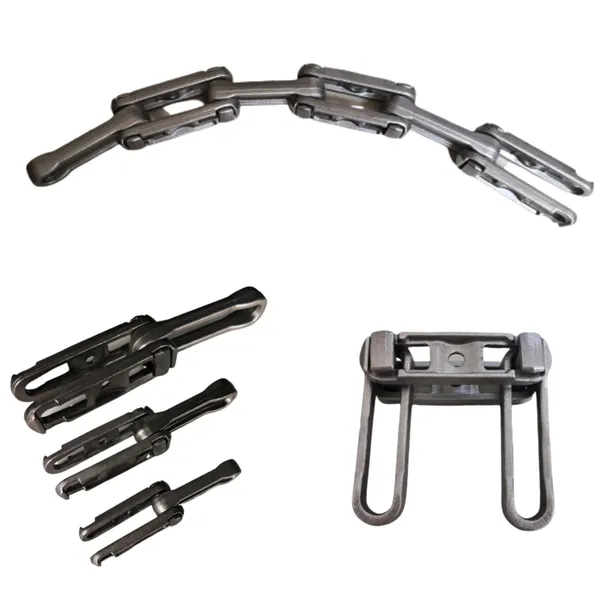
Can a conveyor chain be used in cleanroom environments?
Yes, conveyor chains can be used in cleanroom environments with proper selection and design considerations. Cleanroom environments require stringent control of airborne particles, such as dust, microbes, and contaminants, to maintain high levels of cleanliness. Here are some factors to consider when using a conveyor chain in a cleanroom:
1. Material Selection:
– Choose a conveyor chain made from materials that are compatible with cleanroom requirements. Stainless steel, plastic, or special coatings are commonly used for their clean and non-contaminating properties.
– Avoid materials that generate excessive particles or contaminants, such as certain types of lubricants or chain coatings.
2. Design Considerations:
– Design the conveyor chain system to minimize particle generation. This includes smooth surfaces, rounded edges, and avoiding areas that can trap or accumulate particles.
– Use sealed or enclosed chain designs to prevent the release of lubricants or contaminants.
– Consider the integration of additional features, such as covers or guards, to further protect the chain and prevent particle ingress.
3. Cleaning and Maintenance:
– Establish a cleaning and maintenance protocol specific to the cleanroom environment. This may include regular cleaning and sanitization procedures to maintain cleanliness standards.
– Use cleaning agents and procedures that are approved for cleanroom use and do not introduce contaminants.
– Regularly inspect the conveyor chain system for any signs of wear, damage, or contamination. Promptly address any issues to ensure the chain’s reliability and cleanliness.
4. Compliance with Cleanroom Standards:
– Ensure that the conveyor chain system meets the cleanliness and particle generation requirements of the specific cleanroom standards or classifications in which it will be used.
– Comply with relevant industry guidelines and regulations, such as ISO standards, when selecting and using conveyor chains in cleanroom environments.
By considering these factors and implementing proper material selection, design considerations, cleaning protocols, and compliance with cleanroom standards, a conveyor chain can be effectively used in cleanroom environments while maintaining the required cleanliness levels.
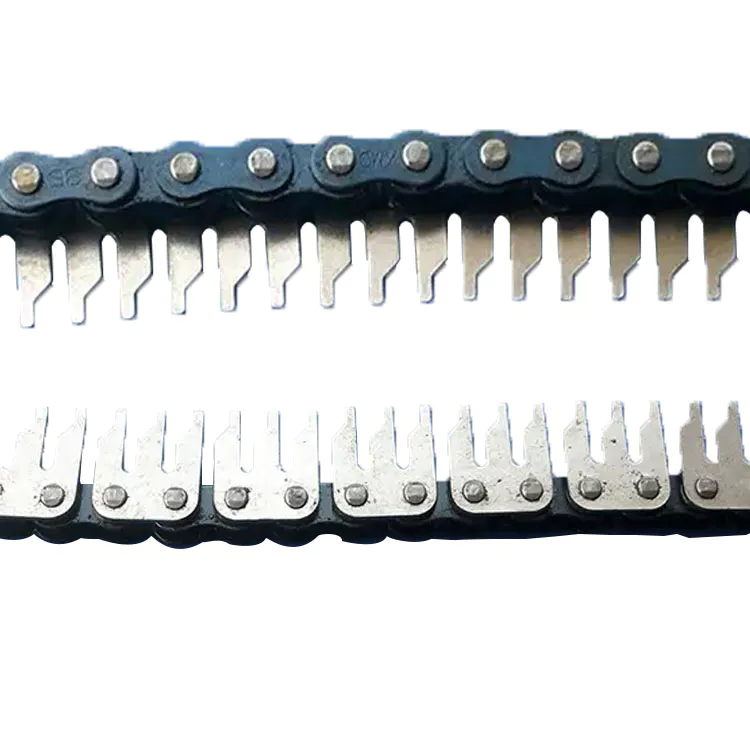
Can a conveyor chain be used in food processing applications?
Yes, a conveyor chain can be used in food processing applications. Conveyor chains play a crucial role in the efficient and hygienic handling of food products throughout the production process. Here are some key points to consider:
1. Food-Grade Materials: Conveyor chains used in food processing applications are typically made from food-grade materials such as stainless steel or plastic. These materials are corrosion-resistant, easy to clean, and comply with food safety regulations.
2. Hygiene Considerations: Food processing environments require high standards of hygiene. Conveyor chains designed for food applications incorporate features such as smooth surfaces, open link designs, and easy disassembly for thorough cleaning. They may also have specialized coatings or treatments to prevent bacterial growth.
3. Sanitary Design: Conveyor chains for food processing applications are designed with minimal crevices or joints to prevent food particles from getting trapped. They may have self-draining capabilities to remove excess fluids or debris.
4. Product Integrity: Conveyor chains in food processing applications ensure gentle handling of delicate food products to avoid damage or contamination. They can be equipped with accessories like cleats, side guards, or modular belt systems to securely hold and transport items of various shapes and sizes.
5. High Temperature and Washdown Capabilities: Some food processing applications require conveyor chains to withstand high temperatures during cooking, baking, or sterilization processes. Specialized chains with heat-resistant materials or coatings are available. Additionally, conveyor chains used in food processing should be capable of withstanding frequent washdowns and cleaning with water or cleaning agents.
6. Compliance with Standards: Conveyor chains used in food processing applications must comply with industry-specific standards such as FDA (Food and Drug Administration) regulations, HACCP (Hazard Analysis Critical Control Point) guidelines, and other food safety certifications.
When selecting a conveyor chain for food processing applications, it is important to consider the specific requirements of the production line, including the type of food being handled, the operating conditions, and the necessary sanitary standards. Proper maintenance and regular cleaning protocols should also be implemented to ensure food safety and product integrity.
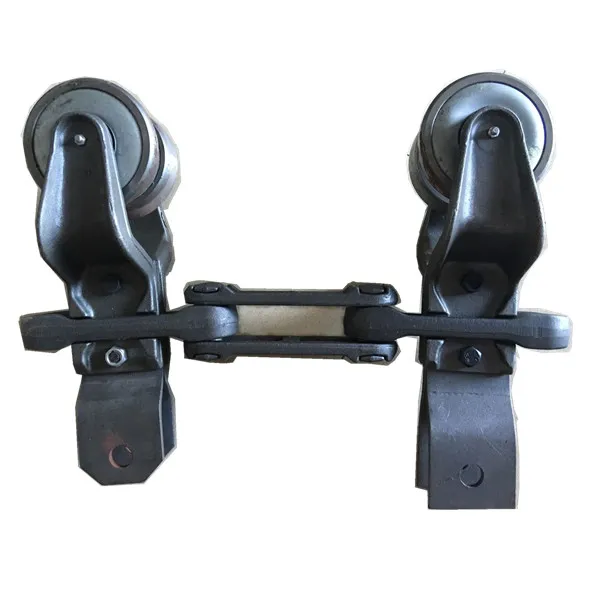
What lubrication is recommended for conveyor chains?
Choosing the right lubrication for conveyor chains is crucial for maintaining their performance and extending their lifespan. Here are some commonly recommended lubricants:
- Chain Oil: Chain oil is specifically designed for lubricating conveyor chains. It provides excellent lubrication, reduces friction, and helps prevent wear and corrosion. Chain oils come in various viscosities to suit different operating conditions.
- Synthetic Lubricants: Synthetic lubricants, such as synthetic oils and greases, offer enhanced performance and durability. They have excellent temperature stability, high resistance to oxidation and degradation, and superior lubricating properties. Synthetic lubricants are suitable for applications with high temperatures, heavy loads, or extreme operating conditions.
- Food-Grade Lubricants: For conveyor chains used in food processing or other industries with strict hygiene requirements, food-grade lubricants are recommended. These lubricants are formulated to be safe for incidental food contact and comply with relevant regulations and standards.
- Dry Film Lubricants: In certain applications where liquid lubricants are not suitable, such as dusty or dirty environments, dry film lubricants can be used. These lubricants form a protective coating on the chain surfaces, reducing friction and preventing wear.
When selecting a lubricant, consider the operating conditions, such as temperature, speed, load, and environmental factors. Consult the manufacturer’s recommendations and guidelines to ensure you choose the appropriate lubrication product for your specific conveyor chain. Regularly monitor the lubrication levels and reapply as needed to maintain optimal chain performance.


editor by CX 2024-05-09