Product Description
Transmission Roller Chain Sprocket
We are main supplier of all kind of industry sprocket, industrial chain sprocket, chain sprockets, wheel, sprockets wheel, sprocket, motorcycle wheel, special sprockets, agricultural sprocket, auto sprocket, car sprocket, agricultural sprocket, truck sprocket, stainless steel sprocket, crank wheel, double sprockets and so on. OEM customer welcomed!
Our sprocket is produced by CNC machines and quality well controlled
Each kind of standard sprocket product
1. Rang of products
03/04/05B/06B/08B/10B/12B/16B/20B/24B/28B/32B
25/35/40/41/50/60/80/100/120/140/160/180/200/240
2. Max. Processing diameter: ø =1450mm
The series of finished-bore sprockets
1. Rang of product
06B/08B/10B/12B/16B/20B/
35/40/41//50/60/80/100/120/140/160
2. Max. Processing diameter: ø =1450mm
Taper bore sprocket of BTL serie
1. Rang of product
06B/08B/10B/12B/16B/20B
35/40/41//50/60/80/100/120/140/160
2. Max. Processing diameter: ø =1450mm.
Max. Coordinated taper bush: 8065
Taper bore sprocket of QTL serie
1. Rang of products
35/40/41//50/60/80/100/120/140/160/200
2. Max. Processing diameter: ø =1450mm.
Max. Coordinated QD cover: N
STL taper bore sprocket
1. Rang of product
35/40/41//50/60/80/100/120/140/160/200
2. Max. Processing diameter: ø =1450mm.
Max. Coordinated Browning cover: U2
Molten sprocket wheel
1. Rang of product
06B/08B/10B/12B/16B/20B/24B(technological-bore & BTL taper bore)
We feel honoured to offer made to order product.
2. Max. Processing diameter: ø =1450mm. Max. Coordinated taper
Bush: 5050
3. Max. Weight of the casting 2000kg.
Coarse pitch conveyor sprockets
1. Rang of product
P50/P75/P100/P50.8
BTL taper bore sprocket of standard series
1. Rang of product
06B/08B/10B/12B/16B/20B
35/40/50/60/80/100/120/140/160
Flat-top conveyor sprocket
1. Rang of product
P 1/2″
Idle gear
1. Rang of products
06B/08B/10B/12B/16B
35/40/41/50/60/80
Worm wheels &Worms
1. Rang of product( Module M1M3, Pressure angle20°
2. Rang of product( diametral pitch 4DP16PD,
Pressure angle14.5°
Cylindrical spur gears
1. Rang of product( Module M1M6, Pressure angle20° Pierce
2. Rang of product( diametral pitch 4DP16PD, Pressure angle20° /14.5° . CZPT taper bore
Straight bevel gear
1. Rang of product( Module M1.5M5, Pressure angle20° Pierce
2. Rang of product( diametral pitch 4DP16PD, Pressure angle20° /14.5° CZPT taper bore
| Standard Or Nonstandard: | Standard |
|---|---|
| Application: | Machinery, Agricultural Machinery, Industry |
| Hardness: | Hardened |
| Manufacturing Method: | Cut Gear |
| Toothed Portion Shape: | Spur Gear |
| Material: | Alloy Steel |
| Samples: |
US$ 60/Piece
1 Piece(Min.Order) | |
|---|
| Customization: |
Available
| Customized Request |
|---|
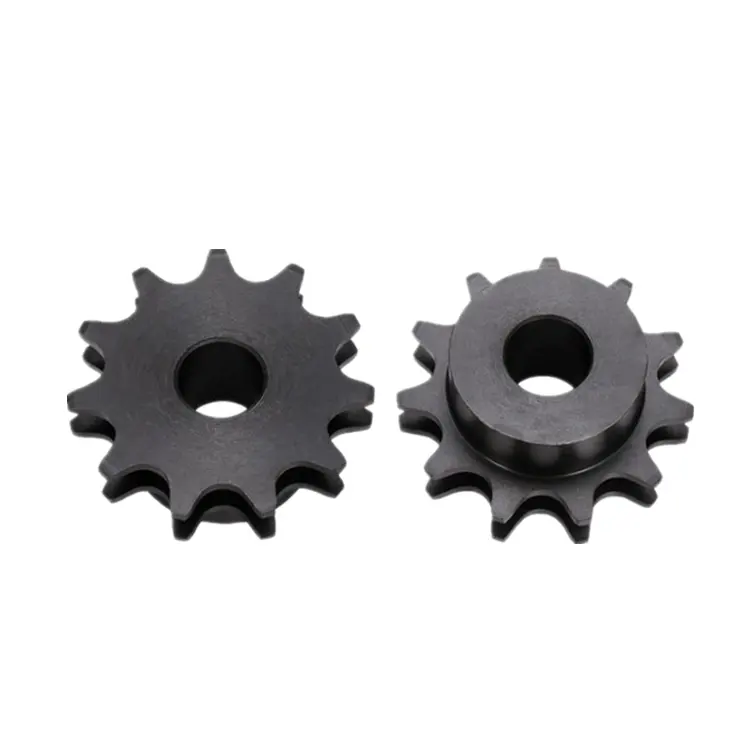
wheel sprocket System in Heavy Machinery and Industrial Equipment
Yes, a wheel sprocket system is commonly used in heavy machinery and industrial equipment for power transmission and motion control. The wheel sprocket configuration is a versatile and efficient method of transmitting rotational force between two shafts.
In heavy machinery and industrial equipment, the wheel is typically attached to one shaft, while the sprocket is mounted on another shaft. A chain or a toothed belt is wrapped around the wheel sprocket, connecting them. When the wheel is rotated, the chain or belt engages with the sprocket, causing the sprocket and the connected shaft to rotate as well. This mechanism allows the transfer of power from one shaft to the other, enabling various components and parts of the machinery to function.
Common applications of the wheel sprocket system in heavy machinery include:
- Construction Machinery: Wheel loaders, excavators, cranes, and other construction equipment often use wheel sprocket systems for efficient power transmission in various moving parts.
- Material Handling Equipment: Forklifts, conveyor systems, and other material handling equipment utilize wheel sprocket configurations to move goods and materials smoothly and reliably.
- Mining Equipment: Mining machinery, such as drilling rigs and conveyors, often incorporate wheel sprocket assemblies for power transmission in challenging environments.
- Agricultural Machinery: Tractors, combines, and other agricultural equipment use wheel sprocket systems to drive various components like wheels and harvesting mechanisms.
- Industrial Robotics: Robots and automated systems in manufacturing often utilize wheel sprocket setups for precise motion control and efficient power transmission.
One of the key advantages of the wheel sprocket system is its ability to handle heavy loads and transmit power over long distances. It is a reliable and cost-effective method of power transmission in various industrial settings. However, proper maintenance and alignment are crucial to ensuring the system’s optimal performance and longevity.
Overall, the wheel sprocket system is a widely used and effective power transmission solution in heavy machinery and industrial equipment, offering versatility and efficiency in a range of applications.
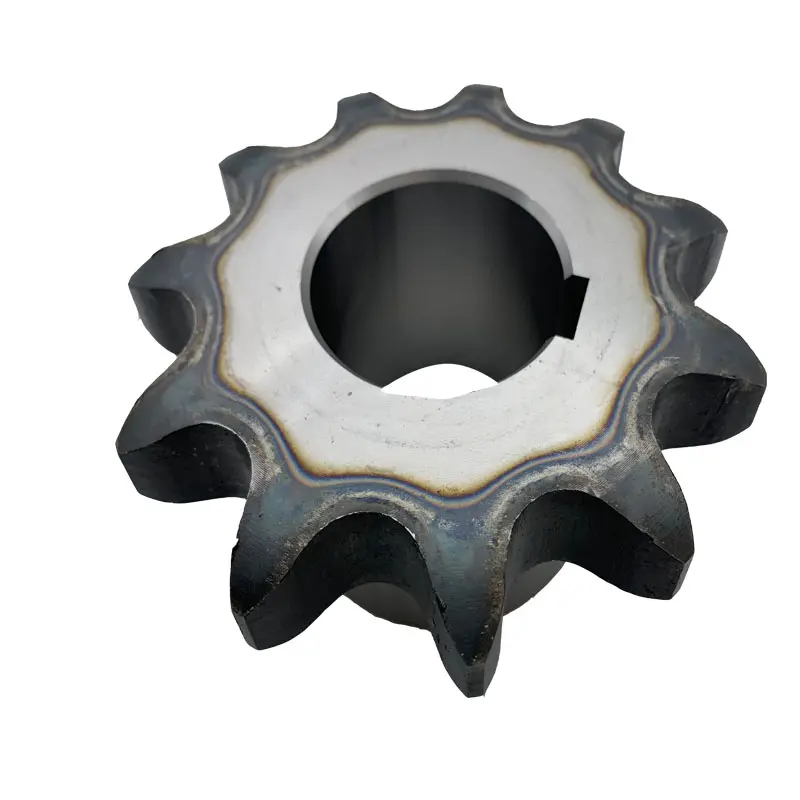
Load-Carrying Capacities of wheel sprocket Combinations
The load-carrying capacity of a wheel sprocket assembly depends on various factors, including the material, size, and design of both the wheel sprocket. Here are some common types of wheel sprocket combinations and their load-carrying capacities:
- Steel Wheel with Steel Sprocket: This combination offers high load-carrying capacity and is commonly used in heavy-duty applications. Steel wheels can handle substantial loads, and when paired with steel sprockets, the assembly can withstand even higher forces.
- Nylon Wheel with Steel Sprocket: Nylon wheels are known for their lightweight and durable nature. When combined with steel sprockets, they provide a good load-carrying capacity while reducing the overall weight of the assembly.
- Polyurethane Wheel with Steel Sprocket: Polyurethane wheels offer excellent wear resistance and are suitable for medium to heavy loads. When paired with steel sprockets, this combination can handle moderate to high load capacities.
- Rubber Wheel with Cast Iron Sprocket: Rubber wheels are known for their shock-absorbing properties and are often used in applications requiring vibration dampening. When used with cast iron sprockets, this combination can handle medium loads.
- Plastic Wheel with Plastic Sprocket: This combination is suitable for light-duty applications where lower loads are expected. Plastic wheels and sprockets are often used in applications that require low friction and quiet operation.
- Custom wheel sprocket Combinations: In some cases, custom wheel sprocket combinations are designed to meet specific load-carrying requirements. These combinations can be tailored to suit the application’s unique demands.
It’s important to note that load-carrying capacities also depend on other factors, such as the type of bearing used in the wheel, the shaft material, and the overall design of the mechanical system. Engineers should carefully consider the intended application, operating conditions, and safety factors when selecting the appropriate wheel sprocket combination to ensure optimal performance and longevity of the system.

Choosing the Right Size of Sprocket to Match a Wheel
Choosing the correct size of sprocket to match a wheel is essential for ensuring efficient power transmission and proper functionality of a mechanical system. Here are the steps to help you choose the right size of sprocket:
1. Determine the Pitch Diameter of the Wheel:
Measure the diameter of the wheel from the center to the point where the teeth of the sprocket will engage with the wheel. This measurement is known as the pitch diameter of the wheel.
2. Identify the Desired Gear Ratio:
Determine the gear ratio you want to achieve for your application. The gear ratio is the ratio of the number of teeth on the sprocket to the number of teeth on the wheel and determines the speed and torque output.
3. Calculate the Number of Teeth on the Sprocket:
Once you have the pitch diameter of the wheel and the desired gear ratio, you can calculate the number of teeth on the sprocket using the formula:
Number of Teeth on Sprocket = (Desired Gear Ratio) * (Number of Teeth on Wheel)
4. Select a Standard Sprocket Size:
Based on the calculated number of teeth on the sprocket, choose a standard sprocket size that comes closest to the calculated value. Sprockets are available in various tooth counts, and you may need to choose the nearest size available.
5. Consider Chain Compatibility:
If you are using a chain drive system, ensure that the selected sprocket is compatible with the chain you plan to use. The chain pitch (distance between the centers of adjacent roller pins) should match the pitch of the sprocket.
6. Verify Center Distance:
Check that the center distance between the wheel and the sprocket is appropriate for your application. The center distance is the distance between the centers of the wheel and the sprocket and should be set to achieve the desired tension and alignment of the chain or belt.
7. Consider the Material and Tooth Profile:
Select a sprocket material suitable for your application, such as steel, stainless steel, or plastic, based on factors like load, environment, and operating conditions. Additionally, consider the tooth profile (standard or custom) to ensure smooth engagement with the chain or belt.
By following these steps and considering the specific requirements of your machinery and mechanical system, you can choose the right size of sprocket to match your wheel and achieve optimal performance and longevity of the system.


editor by CX 2023-12-06