Product Description
Product Description
A taper bushing sprocket is a common sprocket that differs from a normal sprocket in its nested tapered bushing for easy installation and removal. It adopts a tapered bushing to keep the chain in a stable position, thereby improving the transmission efficiency and wear resistance of the sprocket.
Product Parameters
| product | high precision Taper Bushing Sprocket |
| bore | pilot bore ,taper bore , finished bore and special bore |
| material | stainless steal / steel / iron / brass / bronze / aluminum /as requirement |
| surface treatment | Oxide black, Galvanized, Nickel plated, Chrome plated, Sandblasting, Painted and so on |
| heat treatment | High frequency quenching and so on |
| processing | CNC machining, punch,turning, milling, drilling, grinding, broaching, welding and assembly |
| certificate | ISO 9001 , SGS |
| products available | gear , sprocket , timing pulley , v-belt pulley , coupling , shaft , expansion sleeve ,taper bushing |
| package | brown paper ,oiled paper , carton box ,wooden box ,as requirement |
| advantage | Quality first Service superior , Advanced equipment,Experienced workers,Perfect testing equipment |
| lead time | within 15 days samples. 30-45days offcial order |
workshop & equipment
Application Field
Our Advantages
1 . Prioritized Quality
2 .Integrity-based Management
3 .Service Orientation
4 .150+ advanced equipment
5 .10000+ square meter factory area
6 .200+ outstanding employees
7 .90% employees have more than 10 year- working experience in our factory
8 .36 technical staff
9 .certificate ISO 9001 , SGS
10 . Customization support
11 .After-sales support
Production process
shipping
sample orders delivery time:
10-15 working days as usual
15-20 working days in busy season
large order leading time :
30-40 working days as usual
FAQ
1. why should you buy products from us not from other suppliers?
We are a decade year-experience manufacturer on making the gear, specializing in manufacturing varieties of gears, such as helical gear ,bevel gear ,spur gear and grinding gear, gear shaft, timing pulley, rack, , timing pulley and other transmission parts .
2. what services can we provide?
Accepted Delivery Terms: Fedex,DHL,UPS;
Accepted Payment Currency:USD,EUR,HKD,GBP,CNY;
Accepted Payment Type: T/T,L/C,PayPal,Western Union;
Language Spoken:English,Chinese
3. how can we guarantee quality?
1 .Always a pre-production sample before mass production;
2 .Always final Inspection before shipment;
3 .We have high-precision CNC gear grinding machine, high-speed CNC gear hobbing machine, CNC gear shaping machine, CNC lathe, CNC machining center, various grinding machines, universal gear measuring instrument, heat treatment and other advanced processing equipment.
4 . We have a group of experienced technical workers, more than 90% of the workers have more than 10 years of work experience in this factory, can accurately control the manufacturing of products and customer needs. We regularly train our employees to ensure that we can produce high-precision and high-quality products that are more in line with our customers’ needs.
| Standard Or Nonstandard: | Standard |
|---|---|
| Application: | Motor, Electric Cars, Motorcycle, Machinery, Marine, Toy, Agricultural Machinery, Car |
| Hardness: | Hardened Tooth Surface |
| Manufacturing Method: | Rolling Gear |
| Toothed Portion Shape: | Spur Gear |
| Material: | Stainless Steel |
| Samples: |
US$ 10/Piece
1 Piece(Min.Order) | |
|---|
| Customization: |
Available
| Customized Request |
|---|
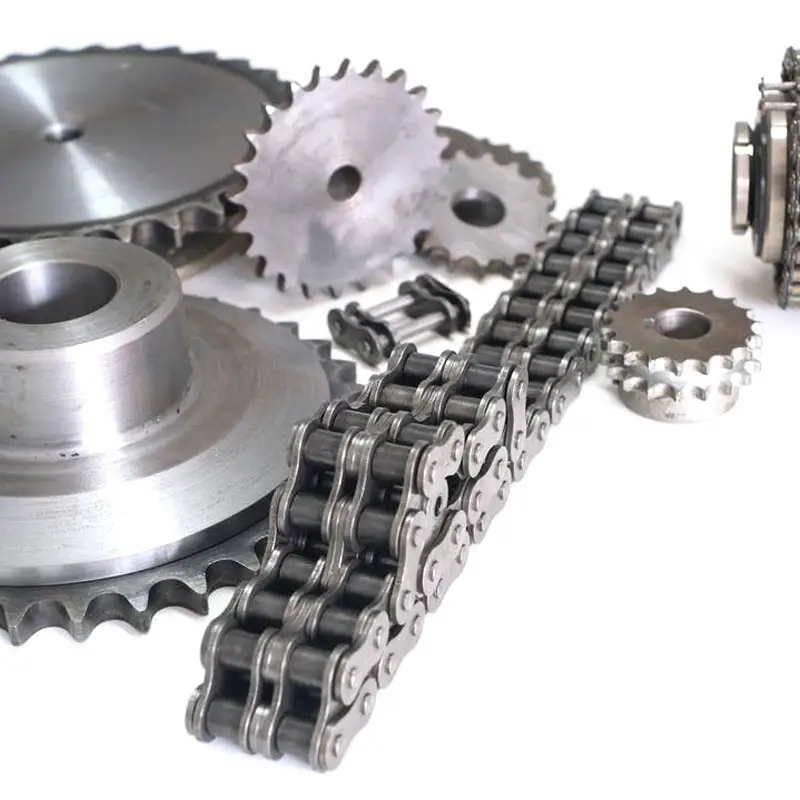
What are the Maintenance Requirements for a wheel sprocket Assembly?
Proper maintenance of the wheel sprocket assembly is essential to ensure its optimal performance and longevity. Here are some maintenance tips:
- Regular Cleaning: Keep the wheel sprocket assembly clean from dirt, debris, and grime. Regularly wipe down the sprockets and chain to prevent buildup, which can lead to accelerated wear.
- Lubrication: Apply a suitable lubricant to the chain and sprockets to reduce friction and wear. Lubrication also helps in maintaining smooth operation and preventing corrosion. However, avoid over-lubrication, as excessive grease can attract more dirt.
- Chain Tension: Check the tension of the chain regularly. A loose chain can result in slippage and damage to the sprockets, while an overly tight chain can increase wear and strain on the components. Adjust the chain tension as per the manufacturer’s guidelines.
- Inspection: Periodically inspect the sprockets and chain for signs of wear, damage, or elongation. Replace any worn-out or damaged components promptly to avoid further issues.
- Alignment: Ensure proper alignment of the sprockets and wheels. Misalignment can lead to uneven wear and reduced efficiency. Adjust the alignment as needed to maintain smooth power transmission.
- Replace Worn Parts: Over time, sprockets and chains will wear out due to regular use. Replace worn sprockets or chains with new ones from reputable suppliers to maintain optimal performance.
- Environmental Considerations: In certain applications, exposure to harsh environments or extreme temperatures may require more frequent maintenance and inspection.
By following these maintenance practices, you can extend the lifespan of the wheel sprocket assembly and ensure reliable operation in various applications.
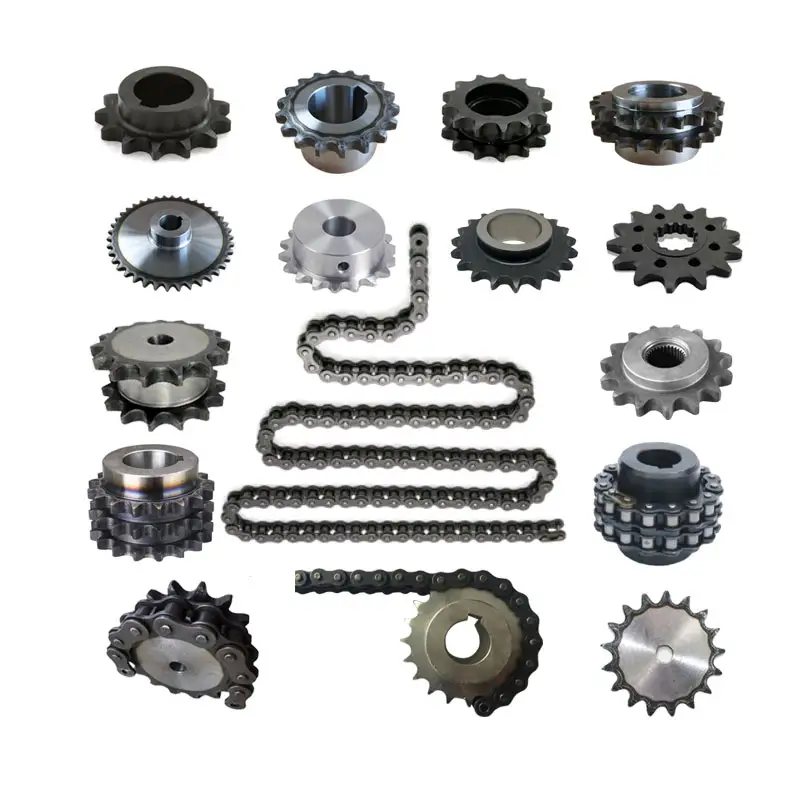
Noise and Vibration in wheel sprocket Configurations
In a wheel sprocket configuration, noise and vibration levels can vary depending on several factors:
- Quality of Components: The quality of the wheel sprocket components can significantly impact noise and vibration. Well-manufactured and precisely engineered components tend to produce less noise and vibration.
- Lubrication: Proper lubrication of the sprocket teeth and chain or belt can reduce friction, which in turn helps minimize noise and vibration.
- Alignment: Correct alignment between the wheel sprocket is crucial. Misalignment can lead to increased noise and vibration as the components may not mesh smoothly.
- Tension: Maintaining the appropriate tension in the chain or belt is essential. Insufficient tension can cause the chain to slap against the sprocket teeth, resulting in noise and vibration.
- Speed and Load: Higher speeds and heavier loads can lead to increased noise and vibration levels in the system.
- Wear and Damage: Worn-out or damaged components can create irregularities in motion, leading to increased noise and vibration.
To reduce noise and vibration in a wheel sprocket setup:
- Use high-quality components from reputable suppliers.
- Ensure proper lubrication with appropriate lubricants.
- Regularly inspect and maintain the system to detect any misalignment, wear, or damage.
- Follow manufacturer guidelines for chain or belt tensioning.
- Consider using vibration-damping materials or mounting methods if necessary.
Minimizing noise and vibration not only improves the comfort and safety of the machinery but also extends the life of the components by reducing wear and fatigue.
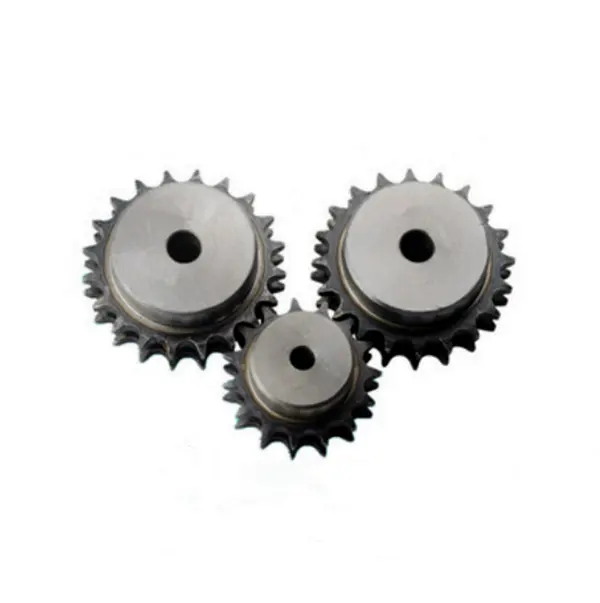
Working Principle of a wheel sprocket System
In a wheel sprocket system, the sprocket is a toothed wheel that meshes with a chain or a belt to transmit rotational motion and power from one component to another. The working principle can be explained in the following steps:
1. Power Input:
The system begins with a power input source, such as an electric motor or an engine, that generates rotational motion or torque.
2. Sprocket and Chain/Belt:
The power is transferred to the sprocket, which is mounted on a shaft. The sprocket has teeth that fit into the gaps of the chain or engage with the teeth of the belt.
3. Chain/Belt Movement:
As the sprocket rotates, it pulls the chain or belt along with it due to the engagement between the teeth. This movement is transmitted to the connected component, which could be another sprocket, a wheel, or any other part of the machinery.
4. Power Output:
The rotational motion or power is then delivered to the connected component, which performs a specific function depending on the application. For example, the power could be used to drive a conveyor belt, rotate the wheels of a vehicle, or operate various industrial machines.
5. Speed and Torque:
The size of the sprocket and the number of teeth, along with the size of the chain or belt, determine the speed and torque ratio between the input and output components. Changing the size of the sprocket or using different-sized sprockets in the system can alter the speed and torque characteristics of the machinery.
6. Efficiency and Maintenance:
Efficient power transmission relies on proper alignment and tension of the chain or belt with the sprocket. Regular maintenance, such as lubrication and inspection, is essential to ensure smooth operation and prevent premature wear or damage to the system.
The wheel sprocket system is widely used in various applications, including bicycles, motorcycles, industrial machinery, agricultural equipment, and more, where efficient power transmission and motion control are required.


editor by CX 2023-12-04