Product Description
Product Description
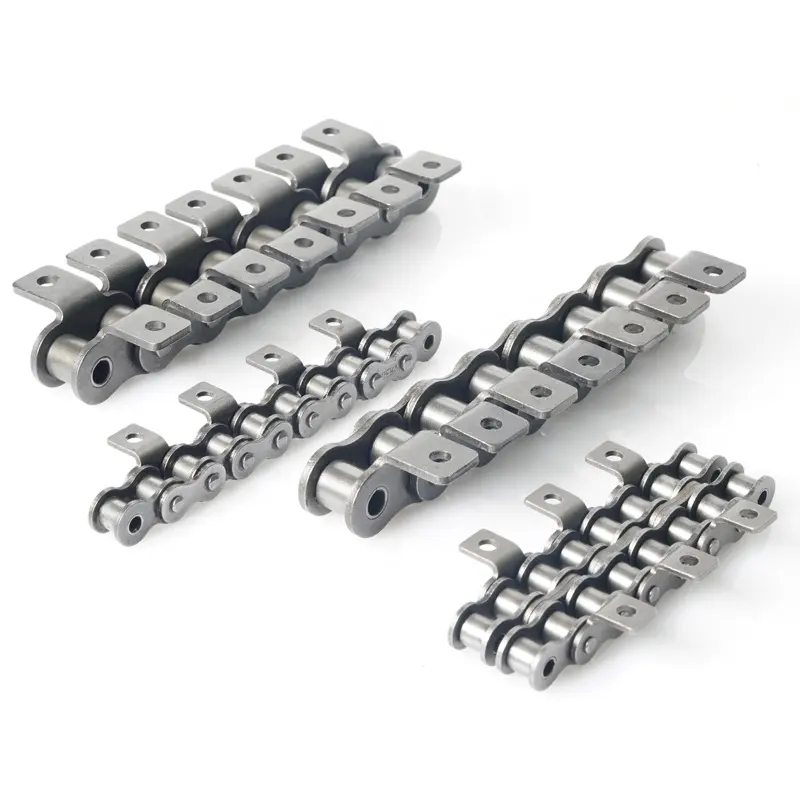
| Item Name | Agricultural Roller Chains | Model | Standard |
| Row | / | Application | Machinery Parts |
| Suiface Treament | netural/sand-blasted/shot-peening | Certification | ISO, ANSI, DIN, BS |
| Packing | Packaged in boxes and wooden cases, or packaged in reels and then on pallets | Port | Any sea port or airport in china |
Agricultural chains, also known as farm machinery chains, are specifically designed for use in
agricultural equipment and machinery. These chains are used to transmit power from the tractor
to various attachments, such as plows, cultivators, and harvesters.
Agricultural chains are made from high-quality materials that are resistant to wear and corrosion.
They are designed to withstand the harsh conditions of the farm, including exposure to dirt, dust,
and debris. These chains are available in a variety of sizes and configurations to fit different
types of farm machinery.
In addition to their strength and durability, agricultural chains are also designed to provide smooth
and efficient power transmission. This helps to increase the productivity of the equipment and
reduce downtime for maintenance and repairs.
Overall, agricultural chains play a critical role in the operation of farm machinery, ensuring that
farmers can efficiently and effectively carry out their work.
Other Products
Company Profile
Packaging & Shipping
After Sales Service
Contact us
| Standard or Nonstandard: | Standard |
|---|---|
| Application: | Textile Machinery, Garment Machinery, Conveyer Equipment, Packaging Machinery, Electric Cars, Motorcycle |
| Surface Treatment: | Netural/Sand-Blasted/Shot-Peening |
| Structure: | Roller Chain |
| Material: | Carbon Steel |
| Type: | Short Pitch Chain |
| Samples: |
US$ 3.45/Meter
1 Meter(Min.Order) | |
|---|
| Customization: |
Available
| Customized Request |
|---|

What are the advantages of using a high-speed transmission chain?
Using a high-speed transmission chain offers several advantages in various applications. Here’s a detailed answer to the question:
1. Efficient Power Transmission: High-speed transmission chains are specifically designed to handle increased rotational speeds while maintaining efficient power transmission. They allow for the transfer of power from the driving source to the driven components with minimal energy loss.
2. Increased Productivity: High-speed transmission chains enable faster operation, resulting in increased productivity. In applications where high-speed operation is crucial, such as production lines or automated systems, using a high-speed chain can significantly reduce cycle times and improve overall efficiency.
3. Reduced Downtime: The ability of high-speed transmission chains to handle increased speeds can contribute to reduced downtime. By maintaining smooth and reliable power transmission even at high rotational speeds, these chains help minimize the risk of chain failure or damage, thus reducing costly downtime for repairs or replacements.
4. Compact Design: High-speed transmission chains are often designed to be more compact and lightweight compared to standard chains. This allows for easier installation in space-constrained applications and reduces the overall weight of the system.
5. Precision and Accuracy: High-speed transmission chains are engineered to have minimal backlash and precise engagement, ensuring accurate positioning and movement. This is particularly important in applications that require precise control or synchronization, such as CNC machines, robotics, or high-speed printing presses.
6. Specialized Materials and Coatings: High-speed transmission chains may incorporate specialized materials and coatings to enhance their performance at higher speeds. These materials and coatings are designed to reduce friction, wear, and heat generation, improving the chain’s durability and extending its lifespan.
7. Customization Options: High-speed transmission chains can be customized to meet specific application requirements. This includes selecting the appropriate pitch size, material, and design features to ensure optimal performance and reliability at high speeds.
It’s important to consider the specific requirements of the application, including the desired speed range, load capacity, and environmental conditions when selecting a high-speed transmission chain. Consulting with experts or manufacturers can help determine the most suitable chain for achieving high-speed operation while maintaining reliability and performance.
Can transmission chains be used in renewable energy systems?
Yes, transmission chains can be used in renewable energy systems. Here’s a detailed answer to the question:
Renewable energy systems, such as wind turbines and solar power plants, often require the efficient transfer of mechanical power from the energy source to the generator or other components. Transmission chains play a vital role in this power transmission process.
In wind turbines, transmission chains are commonly used in the pitch control system. The pitch control mechanism adjusts the angle of the turbine blades to optimize their performance based on wind conditions. Transmission chains provide a reliable and robust method for transmitting the necessary power from the pitch motor to the blade adjustment mechanism.
In solar power plants, transmission chains are used in solar tracking systems. These systems allow solar panels or mirrors to track the sun’s movement throughout the day, maximizing the amount of sunlight captured and improving the overall efficiency of the solar power generation. Transmission chains facilitate the precise movement required for solar tracking, ensuring accurate alignment and optimal energy capture.
Transmission chains used in renewable energy systems need to be durable, reliable, and capable of withstanding the environmental conditions typically encountered in these applications. They may require specific features such as corrosion resistance, high strength, and the ability to operate in a wide range of temperatures.
Overall, transmission chains offer an efficient and effective solution for power transmission in renewable energy systems. Their versatility, reliability, and ability to handle various loads and speeds make them suitable for use in wind turbines, solar tracking systems, and other renewable energy applications.
What are the key components of a transmission chain?
A transmission chain consists of several key components that work together to transmit power and motion efficiently. The main components of a transmission chain include:
- Inner Plates: These are flat metal plates with holes or slots for connecting the other components of the chain.
- Outer Plates: Similar to inner plates, outer plates provide additional strength and support to the chain.
- Pins: The pins hold the inner and outer plates together, creating a flexible link between them. They play a crucial role in maintaining the integrity and functionality of the chain.
- Bushings: Bushings are cylindrical components that fit into the holes of the inner and outer plates. They provide a smooth surface for the chain to rotate around the pins.
- Rollers: Rollers are cylindrical elements that fit between the inner plates and the bushings. They reduce friction and enable smooth movement as the chain engages with the sprockets.
- Solid Bushings (optional): In some transmission chains, solid bushings may be used instead of bushings with holes. Solid bushings provide additional strength and stability to the chain.
- Sprockets: Sprockets are toothed wheels that engage with the rollers of the transmission chain. They transfer power and motion to the chain, enabling it to drive various machinery and equipment.
These components work together to form a continuous loop that transmits power from the driving sprocket to the driven sprocket, allowing the chain to transfer rotational motion and drive various mechanical systems.


editor by CX 2023-12-06