En décembre 2024, un responsable technique d'une aciérie de Pohang a commandé un jeu complet de pignons de remplacement pour deux entraînements de convoyeurs à chaîne. Les deux entraînements utilisaient des pignons à 25 dents. Le diamètre primitif indiqué sur la liste des pièces était identique : 203,2 mm pour les deux. Par souci d'efficacité, la commande a été regroupée auprès d'un fournisseur unique. À la réception des pignons, personne n'a remarqué que la moitié de la commande était de la série 94 et l'autre moitié de la série 95. Les pignons de la série 95 ont été installés sur l'entraînement équipé d'une chaîne de la série 94. En moins de 320 heures, la chaîne de cet entraînement s'est enrayée sur une dent sur quatre et a dû être mise hors service. Le coût total de cette erreur d'identification : remplacement de la chaîne, main-d'œuvre d'urgence, 18 heures d'arrêt imprévu et coût des pignons non conformes. Cet incident aurait pu être évité grâce à une simple mesure : le diamètre du corps de la chaîne déjà installée.
L'erreur de substitution des pignons des séries 94 et 95 (classe ingénieur) est la plus fréquente et la plus coûteuse en matière de maintenance des convoyeurs industriels. Comprendre la raison de l'incompatibilité de ces deux séries – et pas seulement constater leur incompatibilité – permet aux techniciens de maintenance d'identifier la série concernée en se basant uniquement sur la chaîne, sans avoir besoin de documentation ni de références.
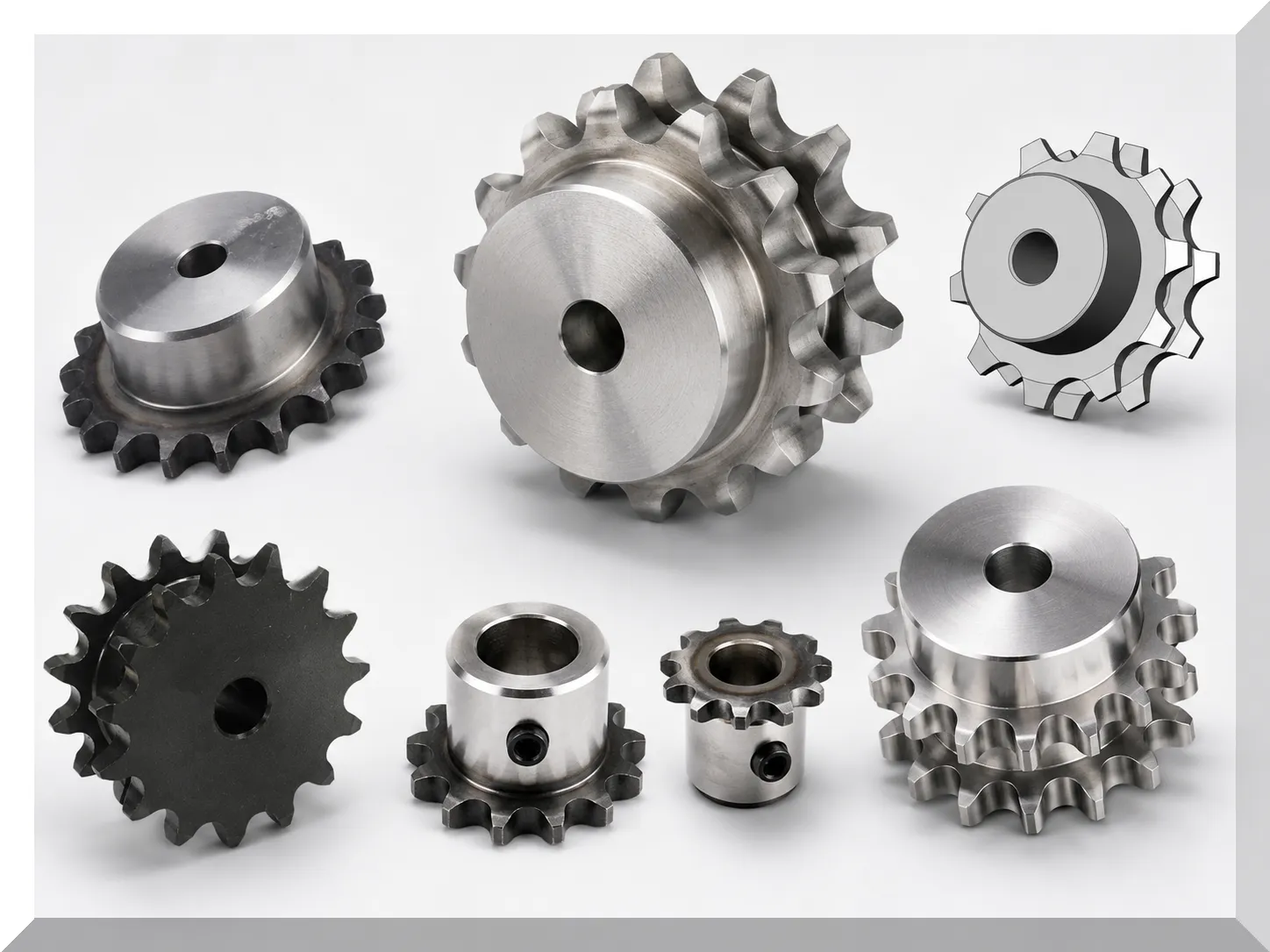
Chaîne de classes d'ingénieurs : la catégorie et ses sous-séries
La chaîne de classe ingénieur constitue une catégorie de produits distincte de la chaîne à rouleaux ANSI. Alors que la chaîne à rouleaux est principalement conçue pour la transmission de puissance de rotation à des vitesses moyennes à élevées, la chaîne de classe ingénieur est conçue pour supporter des charges de traînée importantes à basse vitesse : entraînements d’élévateurs à godets, convoyeurs à raclettes, convoyeurs à chaîne traînante et systèmes de manutention où la chaîne elle-même constitue l’élément de transport et non un simple lien entre deux pignons rotatifs.
La caractéristique structurelle déterminante des chaînes de classe ingénieur est le corps – l'ensemble composé de la bague et du rouleau – dont le diamètre, par rapport au pas, est nettement supérieur à celui des chaînes à rouleaux standard. Ce grand diamètre de corps offre trois avantages : une surface d'appui plus importante au niveau de la base de la dent du pignon (réduisant les contraintes de contact), une section d'alésage de l'axe plus grande (réduisant les contraintes sur l'axe en cas de chocs) et une surface extérieure plus robuste pour le contact avec les revêtements de goulotte et les rails de guidage dans les applications de convoyeurs à chaîne.

La norme ASME B29.10 (Chaînes en acier de classe ingénieur) définit plusieurs séries distinctes au sein de cette catégorie, chacune présentant une combinaison spécifique de pas et de diamètre de corps. Les séries les plus couramment utilisées dans les applications industrielles coréennes sont :
| Série | Pas (mm) | Diamètre du canon (mm) | Rapport baril/lancer | Charge de rupture minimale (kN, par brin) | Application principale |
|---|---|---|---|---|---|
| Série 55 | 41.3 | 25.4 | 0.615 | 71.2 | Tracteur agricole, usage modéré |
| Série 67 | 63.5 | 44.4 | 0.699 | 142.3 | Convoyeur à traînée lourd, ciment |
| Série 78 | 63.5 | 44.4 | 0.699 | 142.3 | Similaire à 67 — épaisseur de plaque différente |
| Série 81X | 63.5 | 44.4 | 0.699 | 178.0 | Convoyeurs à racleurs à charge élevée, exploitation minière |
| Série 94 | 101.6 | 57.1 | 0.562 | 356.0 | Élévateur à godets lourds, chevalement minier |
| Série 95 | 101.6 | 50.8 | 0.500 | 356.0 | Convoyeur à traînée, racleur, usage général |
| Série 132 | 152.4 | 88.9 | 0.583 | 667.0 | Convoyeur à traînée très lourd, échelle de laminoir à acier |
Différence dimensionnelle entre les modèles 94 et 95 : quelles sont les différences exactes et pourquoi sont-elles importantes ?
Pourquoi les catalogues affichent le même diamètre de cercle primitif — et pourquoi cela induit les acheteurs en erreur
L'erreur de substitution provient d'une coïncidence mathématique dans le calcul du diamètre primitif (DP). Le DP dépend uniquement du pas et du nombre de dents : DP = p / sin(180° / N). Les séries 94 et 95 ont le même pas (101,6 mm), donc, pour un nombre de dents donné, leurs diamètres primitifs sont parfaitement identiques. Un pignon de 25 dents de la série 94 et un pignon de 25 dents de la série 95 ont le même DP, d'environ 814,3 mm. Cette égalité de DP est clairement indiquée dans la plupart des tableaux des catalogues ; c'est d'ailleurs la seule dimension que la plupart des acheteurs comparent.
Ce que le tableau PD du catalogue ne présente pas, c'est la géométrie du profil de la dent, et plus précisément le rayon d'appui de la racine (ri), qui correspond à la surface d'engagement réelle du fourreau de la chaîne. Cette valeur n'est généralement pas imprimée dans les catalogues des distributeurs, car il s'agit d'une dimension dérivée que l'éditeur suppose que l'acheteur trouvera sur les plans techniques. Or, la plupart des responsables de la maintenance n'ont jamais accès à ces plans ; ils commandent en se basant sur le tableau du catalogue et supposent que la correspondance des dimensions PD implique une géométrie d'engagement identique.
Le rayon d'assise ri d'un pignon de série 94 est : ri = (d/2) + 0,006d + 0,003p, où d est le diamètre du barillet et p le pas. Pour la série 94 : ri = (57,1/2) + 0,006(57,1) + 0,003(101,6) = 28,55 + 0,343 + 0,305 = 29,20 mm. Pour la série 95 : ri = (50,8/2) + 0,006(50,8) + 0,003(101,6) = 25,40 + 0,305 + 0,305 = 26,01 mm. La différence de 3,19 mm dans le rayon d'appui signifie que les deux profils de dents sont géométriquement distincts — un cylindre qui s'appuie sur un rayon d'engagement de 29,20 mm sur un pignon de série 94 entrera en contact avec une dent de pignon de série 95 à un point fondamentalement différent sur la face de la dent.
ri = 29,20 mm
ri = 26,01 mm
Il s'agit de l'erreur d'engagement lorsqu'une série de pignons s'enclenche contre celle de l'autre.
Comment identifier la série que vous possédez : une seule mesure suffit
L'identification de la série de la chaîne ne nécessite qu'une seule mesure : le diamètre extérieur du manchon. Mesurez ce diamètre extérieur (l'élément cylindrique visible entre les maillons) à l'aide d'un pied à coulisse. Ne mesurez pas le diamètre de l'alésage du manchon ; mesurez la surface extérieure en contact avec la base de la dent du pignon. Mesurez trois ou quatre manchons à différents endroits de la chaîne pour vérifier la régularité des mesures.
| Diamètre du canon mesuré. | Série de chaînes | Pignon sur commande | Confirmer le terrain |
|---|---|---|---|
| 56,4–57,8 mm | Série 94 | Commandez uniquement le pignon de la série 94 | 101,6 mm (4 pouces) |
| 50,1–51,5 mm | Série 95 | Commandez uniquement le pignon de la série 95 | 101,6 mm (4 pouces) |
| 43,7–44,8 mm | Séries 81X / 67 / 78 | Vérifier la largeur de la plaque pour distinguer les sous-séries | 63,5 mm (2,5 pouces) |
| 24,8–25,7 mm | Série 55 | Commandez uniquement le pignon de la série 55 | 41,3 mm (1,63 pouce) |
| 87,7–89,8 mm | Série 132 | Commandez uniquement le pignon de la série 132. | 152,4 mm (6 pouces) |
Autres risques liés à la substitution de séries de classes d'ingénieurs au-delà de 94 vs 95
L'erreur 94 vs 95 est la plus fréquente, mais elle n'est pas la seule liée aux risques de substitution de classes d'ingénieurs. Trois autres paires méritent d'être prises en compte :
Série 67 contre série 81X. Les deux chaînes ont un pas de 63,5 mm et un diamètre de fourreau de 44,4 mm ; la mesure du fourreau ne permet donc pas de les distinguer. La différence réside dans l'épaisseur de la plaque de maillon et le diamètre de l'axe : la série 81XH possède une section de plaque nettement plus épaisse que la série 67. L'utilisation d'une chaîne de la série 67 sur des pignons de la série 81X (ou inversement) ne provoque pas immédiatement de problèmes d'engrènement, car le diamètre du fourreau est identique. Cependant, l'utilisation d'une chaîne de la série 67 dans une transmission dimensionnée pour la capacité de la série 81XH induit une sous-évaluation structurelle : la chaîne supporte des charges supérieures à son coefficient de sécurité de rupture publié, même si elle s'adapte physiquement au pignon. L'identification nécessite de mesurer l'épaisseur de la plaque de maillon et de la comparer aux valeurs publiées par la norme ASME B29.10 pour chaque série.
Chaîne à rouleaux lourds ANSI (#80H, #100H) vs classe ingénieur. Avec des pas respectifs de 25,4 mm et 31,75 mm, les chaînes ANSI de la série lourde présentent des diamètres de cylindre de 15,88 mm et 19,05 mm. Les chaînes de classe ingénieur commencent à un pas minimum de 41,3 mm. Il n'y a aucun chevauchement de pas entre les deux catégories ; la mesure du pas à elle seule élimine donc tout risque de substitution : les transmissions de classe ingénieur ne seront jamais compatibles avec une chaîne à rouleaux ANSI standard.

Chaîne propriétaire contre série ASME standard. Certains fabricants de convoyeurs lourds utilisent des chaînes propriétaires dont le pas correspond aux séries ASME, mais dont le diamètre du corps diffère des valeurs ASME publiées. Ce problème est fréquent sur les convoyeurs d'origine japonaise et allemande installés en Corée. Pour ces systèmes, le diamètre du corps doit être comparé au tableau ASME et au manuel des pièces du fabricant. Si la valeur mesurée ne correspond à aucune série ASME, la chaîne est probablement propriétaire et doit être commandée auprès du fabricant ou d'un fournisseur agréé.
Une procédure d'approvisionnement en quatre étapes qui empêche les commandes inter-séries
- Mesurez le diamètre du cylindre de la chaîne qui est actuellement dans la transmission. Utilisez un pied à coulisse externe ; mesurez à ±0,2 mm près. Cette mesure unique permet d’identifier la série. N’utilisez pas le pignon usé comme référence d’identification : comme expliqué précédemment, la géométrie des dents usées sur une transmission croisée n’est pas fiable pour l’identification de la série.
- Confirmer le pitch par la méthode des 10 maillons. Mesurez l'entraxe entre les axes de 10 maillons et divisez par 10. Pour les séries 94 et 95, vous devriez obtenir 101,6 mm. Si l'entraxe moyen mesuré diffère de 101,6 mm de plus de 3% (plus de 3,0 mm), la chaîne a atteint sa limite d'allongement et doit être remplacée en même temps que les pignons.
- Veuillez indiquer à la fois le diamètre du canon et la désignation de la série dans le bon de commande. Veuillez fournir au fournisseur les informations suivantes : désignation de la série (par exemple, « série 94 »), nombre de dents, diamètre d’alésage et diamètre du fourreau mesuré sur la chaîne. Le diamètre du fourreau permet de vérifier indépendamment que le pignon reçu est compatible avec la chaîne de la transmission, et non pas seulement que la désignation nominale de la série figurant dans un tableau de catalogue est correcte.
- À réception, vérifiez l'ajustement entre le canon et la racine de la dent avant l'installation. Placez le nouveau pignon à côté de la chaîne et insérez manuellement un embout cylindrique dans la base de la dent du pignon reçu. En exerçant une légère pression, l'embout doit s'insérer parfaitement et affleurer les faces des dents sans bouger ni dépasser. Si l'embout bouge sur les faces des dents ou dépasse du niveau du cercle de la pointe de la dent, le pignon n'est pas de la bonne série ; ne l'installez pas.
Où les systèmes de classe ingénieur des séries 94 et 95 sont spécifiés
Sidérurgie et traitement des métaux. La série 94 est la référence pour les entraînements d'élévateurs à godets de chevalement dans les hauts fourneaux. Ces entraînements permettent de soulever du coke, du minerai et de l'aggloméré dans de grands godets à basse vitesse et sous des charges très élevées. Le corps plus large de la série 94 offre la surface de contact nécessaire à un fonctionnement fiable, malgré la combinaison d'une charge de traction soutenue et des chocs liés au chargement des godets au niveau du sabot. Pignons d'élévateur à godets série 94 Pour ces applications, les dents doivent être commandées avec des certificats de dureté confirmés ; les dents cémentées sont la norme pour les services en aciérie.
Traitement du ciment et des minéraux. La série 95 est plus fréquemment utilisée dans les convoyeurs horizontaux à chaîne des cimenteries : convoyeurs d'entrée de four, alimentateurs à tablier des refroidisseurs de clinker et chaînes d'alimentation des broyeurs. Le corps plus petit de la série 95 la rend plus légère au mètre que la série 94 à pas égal, ce qui réduit la puissance d'entraînement requise pour les longs convoyeurs horizontaux à chaîne où le poids de la chaîne représente une part importante de la charge de traînée totale. À pas et nombre de dents identiques, une chaîne de la série 95 peut réduire la puissance d'entraînement du convoyeur de 8 à 121 TP3T par rapport à la série 94, au prix d'une surface de contact du corps légèrement inférieure. Ce compromis est acceptable pour les charges de traînée horizontales, mais pas pour les élévateurs à godets verticaux où la contrainte de contact du corps est prépondérante.
Exploitation minière et extraction de pierres. Ces deux séries sont utilisées dans les convoyeurs à chaîne souterrains des mines coréennes et d'Asie du Sud-Est. Le choix entre les deux dépend des normes de conception du bureau d'études : certaines sociétés d'ingénierie privilégient la série 94 pour tous leurs projets, quelle que soit l'application ; d'autres spécifient la série 95 par défaut pour les convoyeurs à chaîne. D'un point de vue structurel, aucune des deux approches n'est erronée si la chaîne est correctement dimensionnée pour la charge prévue. Le problème survient lorsque l'équipe de maintenance remplace des composants sans avoir accès aux spécifications techniques d'origine et commande uniquement par référence.
Foire aux questions
Commandez les pignons de classe Ingénieur avec confirmation de série avant usinage
Veuillez nous communiquer les dimensions du diamètre du fourreau de votre chaîne, le nombre de dents et les spécifications d'alésage. Nos ingénieurs vérifient la compatibilité du diamètre du fourreau avec la série de pignons avant toute commande de matériaux, évitant ainsi les erreurs de substitution entre les séries 94 et 95 dès la conception.
Éditeur : Cxm