Product Description
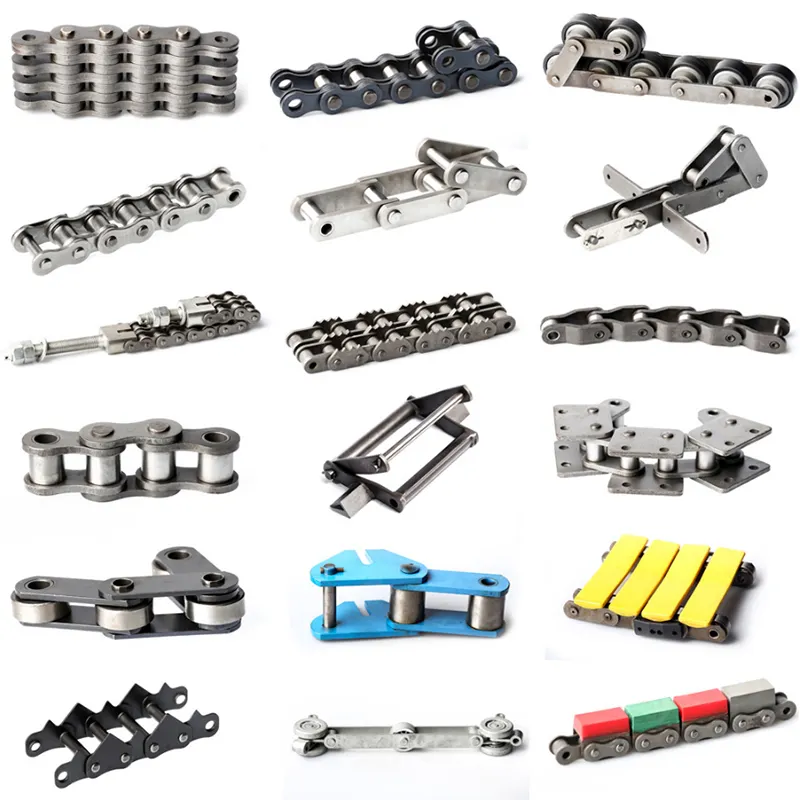
Products Collection
Product Description
One of the most compelling benefits of our QLP inverted tooth chain is its versatility and incredible durability. Whether you need a light-duty conveying or heavy-duty power transmission chain, the chain can be customised to meet your needs.
The chain is also corrosion-resistant. This means it can be used in harsh environments without worrying about rust or other types of damage. Its unique tooth shape reduces noise and vibration.
When you need a specific design, we can provide customised solutions based on what you need. Whether you require specific features, plans, materials, or specifications, our team can work to ensure you get a chain that fully meets your needs.
Are you looking for other chains?
Leave your message below, and feel free to contact us!
FAQ
| Question 1: Are you a Manufacturer or a Trading Company? |
| Answer: We are a 100% chain manufacturer with 23 years of experience |
| Question 2: What should I provide to get a quotation? |
| Answer: 1. Type of the chain (with photos if available) 2. Pitch of the chain 3. Width of the chain 4. Length and quantity of the chain 5. Other specific requirements |
| Question 3: How long is your manufacturing and delivery time? |
| Answer: Products are usually finished in 2 weeks, depending on the type and quantity. Also, please get in touch with us to check the delivery time to your destination. |
| Question 4: How long is your guaranteed time? |
| Answer: We offer a three-year guarantee if you purchase chains and matched sprockets together. If you need chains only, a one-year guarantee can also be confirmed. |
| Question 5: Trade terms and Payment terms? |
| Answer: We accept EXW, FOB, DDU, Door to Door. Payment terms, such as T/T, L/C, and Western Union, are acceptable. We also provide the service of Online Trading in this B2B platform. |
Company Profile
| Standard or Nonstandard: | Standard |
|---|---|
| Application: | Textile Machinery, Garment Machinery, Conveyer Equipment, Packaging Machinery, Food Machinery, Marine, Mining Equipment, Agricultural Machinery, Car |
| Structure: | Tooth Chain |
| Samples: |
US$ 100/Meter
1 Meter(Min.Order) | Order Sample |
|---|
| Customization: |
Available
| Customized Request |
|---|
.shipping-cost-tm .tm-status-off{background: none;padding:0;color: #1470cc}
|
Shipping Cost:
Estimated freight per unit. |
about shipping cost and estimated delivery time. |
|---|
| Payment Method: |
|
|---|---|
|
Initial Payment Full Payment |
| Currency: | US$ |
|---|
| Return&refunds: | You can apply for a refund up to 30 days after receipt of the products. |
|---|
Can transmission chains be used in construction or heavy equipment?
Yes, transmission chains are commonly used in construction and heavy equipment due to their durability and ability to handle high loads. Here’s a detailed answer to the question:
Construction and heavy equipment, such as excavators, bulldozers, cranes, and loaders, often rely on transmission chains to transmit power and motion between different components. These chains are designed to withstand the demanding conditions and heavy loads encountered in construction and earthmoving applications.
The primary advantages of using transmission chains in construction and heavy equipment include:
1. Load Capacity: Transmission chains are engineered to handle heavy loads and provide reliable power transmission in equipment that requires substantial force. They are designed to withstand the extreme stresses and strains associated with lifting, pulling, and pushing heavy materials.
2. Durability: Construction and heavy equipment operate in challenging environments with debris, dust, vibrations, and harsh weather conditions. Transmission chains are built to be robust and resistant to wear, corrosion, and fatigue, ensuring reliable operation and long service life in these demanding settings.
3. Versatility: Transmission chains are available in various sizes, configurations, and materials, allowing them to be tailored to specific equipment requirements. This versatility enables manufacturers to select the most suitable chain for different applications, ensuring optimal performance and efficiency.
4. Power Transmission: Construction and heavy equipment often require high torque and precise power transmission. Transmission chains excel in transmitting power from the engine or motor to various moving parts, such as wheels, tracks, and lifting mechanisms, allowing the equipment to perform its intended functions effectively.
5. Easy Maintenance: Transmission chains typically have a straightforward design, making them relatively easy to maintain. Regular inspection, lubrication, and tension adjustment are essential to ensure proper functioning and extend the chain’s lifespan. Proper maintenance practices can help minimize downtime and reduce overall equipment maintenance costs.
It’s important to note that while transmission chains are widely used in construction and heavy equipment, the specific application and operating conditions should be taken into consideration when selecting the appropriate chain type, size, and material. Consulting the equipment manufacturer’s guidelines and recommendations is crucial to ensure optimal performance and safety.

Can transmission chains be used in automotive or motorcycle applications?
Transmission chains can indeed be used in automotive and motorcycle applications. Here’s a detailed answer to the question:
Automotive and motorcycle applications often require reliable and efficient power transmission to transfer torque from the engine to the wheels. Transmission chains offer several advantages that make them suitable for these applications:
1. High Strength: Transmission chains are designed to handle high torque and power requirements, making them suitable for the demanding conditions of automotive and motorcycle power transmission systems.
2. Efficient Power Transfer: Transmission chains provide a direct and efficient means of transferring power from the engine to the wheels. They have low energy losses due to friction, allowing for effective power transmission and optimal performance.
3. Compact Design: Transmission chains have a compact design, making them suitable for the limited space available in automotive and motorcycle applications. They can be easily integrated into the drivetrain system without occupying excessive space.
4. Wide Speed Range: Transmission chains can operate effectively across a wide range of speeds, accommodating the varying speed requirements of automotive and motorcycle applications.
5. Versatility: Transmission chains can be used in various types of automotive and motorcycle transmissions, including manual transmissions, automatic transmissions, and final drive systems.
6. Durability: Transmission chains are built to withstand the demanding conditions of automotive and motorcycle applications. They are designed to resist wear, fatigue, and corrosion, ensuring long-lasting performance and reliability.
7. Cost-Effective: Transmission chains offer a cost-effective solution for power transmission in automotive and motorcycle applications. They are generally more affordable than alternative transmission systems.
It’s important to note that the specific design and requirements of the automotive or motorcycle transmission system should be considered when selecting a transmission chain. Proper maintenance, lubrication, and periodic inspection are also crucial to ensure the chain’s performance and longevity in these applications.
What are the different types of transmission chains available?
There are several types of transmission chains available, each designed to suit specific applications and operating conditions. Here are some common types:
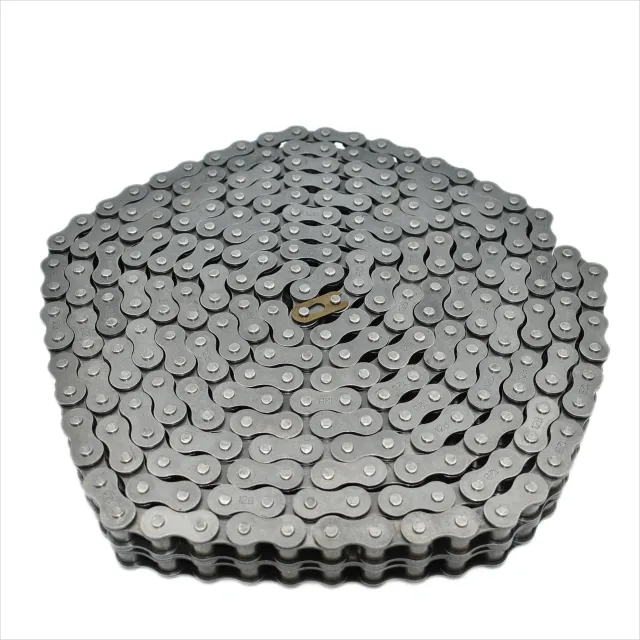
- Roller Chains: Roller chains are the most widely used type of transmission chains. They consist of inner and outer plates, pins, bushings, and rollers. The rollers help reduce friction and facilitate smooth motion.
- Silent Chains: Silent chains, also known as inverted-tooth chains or toothed chains, feature special tooth profiles that engage with corresponding sprockets. They are designed to minimize noise and vibration, making them suitable for applications requiring quiet operation.
- Leaf Chains: Leaf chains are constructed with interlocking links made of flat steel plates. They are known for their high tensile strength and resistance to fatigue, making them suitable for heavy-duty and high-load applications.
- Timing Chains: Timing chains are used in engines to synchronize the rotation of the camshaft and crankshaft. They have precise tooth profiles that engage with timing sprockets, ensuring accurate timing and efficient engine performance.
- Engineered Steel Chains: Engineered steel chains are highly specialized chains designed for specific industries and applications. They are often used in demanding environments such as mining, forestry, and material handling.
- Plastic Chains: Plastic chains are made of high-strength plastic materials, such as acetal or nylon. They offer benefits like corrosion resistance, lightweight design, and low noise operation. They are commonly used in food processing, packaging, and other industries with strict hygiene requirements.
These are just a few examples of transmission chain types. Depending on the specific application, there may be other specialized chains available to meet the unique requirements of different industries and machinery.
How do roller chains differ from other types of transmission chains?
Roller chains, also known as roller link chains, are a commonly used type of transmission chain that distinguishes itself from other chains in several ways:
- Design: Roller chains consist of inner and outer plates, pins, bushings, and rollers. The rollers, which are free to rotate, help reduce friction and wear, resulting in smoother and more efficient power transmission.
- Wide Application: Roller chains are versatile and widely used in various industries, including automotive, industrial machinery, agricultural equipment, and conveyor systems.
- High Load Capacity: Roller chains are designed to withstand high loads and offer excellent tensile strength, making them suitable for applications that require heavy-duty performance.
- Efficiency: Roller chains are known for their high efficiency in transmitting power. The roller design minimizes friction, resulting in less energy loss and improved overall efficiency.
- Cost-Effectiveness: Roller chains are relatively cost-effective compared to some other specialized transmission chains, making them a popular choice in many applications.
While roller chains have their advantages, it’s important to note that different types of transmission chains may be more suitable for specific applications. Factors such as load capacity, speed, noise level, and environmental conditions should be considered when selecting the appropriate transmission chain for a particular application.


editor by CX 2023-11-10