Product Description
Harvester Chains of Carton Steel (415S)
PRODUCT SHOW
PRODUCT DETAILS
Product Parameters
| Standard | GB, ISO, ANSI, DIN |
| Type | Standard A and standard B precision roller chain, conveyor chain; |
| special chain with accessories, welding chain, leaf chain and sprocket | |
| ANSI chain No. | 40,50,60,80,100,120,140,160,180,200,240; |
| C40,C50,C60,C80,C100,C120,C140,C160; | |
| DIN/ISO chain No. | 08A,10A,12A,16A,20A,24A,28A,32A,36A,40A,48A; |
| C08A,C10A,C12A,C16A,C20A,C24A,C28A,C32A; | |
| Application | Food processing, pharmaceutical and chemical industries, electronics, machinery; |
| household appliances, automotive manufacturing, metallurgy, sewage treatment | |
| Series | A series, B series |
More Products
Advantage
Certifications
DETAILS ABOUT CHINAMFG CHAIN
Exhibition
Workshop
Application
Packaging Details
Shipping
FAQ
1. Are you a manufacturer or trade Company?
We are a factory founded in 1997 with a trade team for international service.
2. What terms of payment do you usually use?
T/T 30% deposit and 70% against document, Western Union, L/C at sight
3. What is your lead time for your goods?
Normally 35 days after confirmed order. 30 days could be available in the low season for some items (during May to July), and 45 days during the new year and hot season ( Jan to March).
4. Samples
For customers who need sample confirmation before ordering, please bear in mind that the following policy will be adopted:
1) All samples are free of charge with a maximum value not exceeding USD 100.
2) The courier cost for the first-time sample sending will be charged by the consignee. We will send the samples with freight to be collected. So please inform your account with FedEx, UPS, DHL, or TNT so that we can proceed promptly.
3) The first-time courier cost will be totally deducted from the contract value of the trial cooperation.
| Usage: | Transmission Chain, Conveyor Chain, Agricultural Machine |
|---|---|
| Material: | Alloy/Carbon Steel |
| Surface Treatment: | Polishing |
| Feature: | Heat Resistant |
| Chain Size: | All Sizes |
| Structure: | Agricultural Machine |
| Customization: |
Available
| Customized Request |
|---|
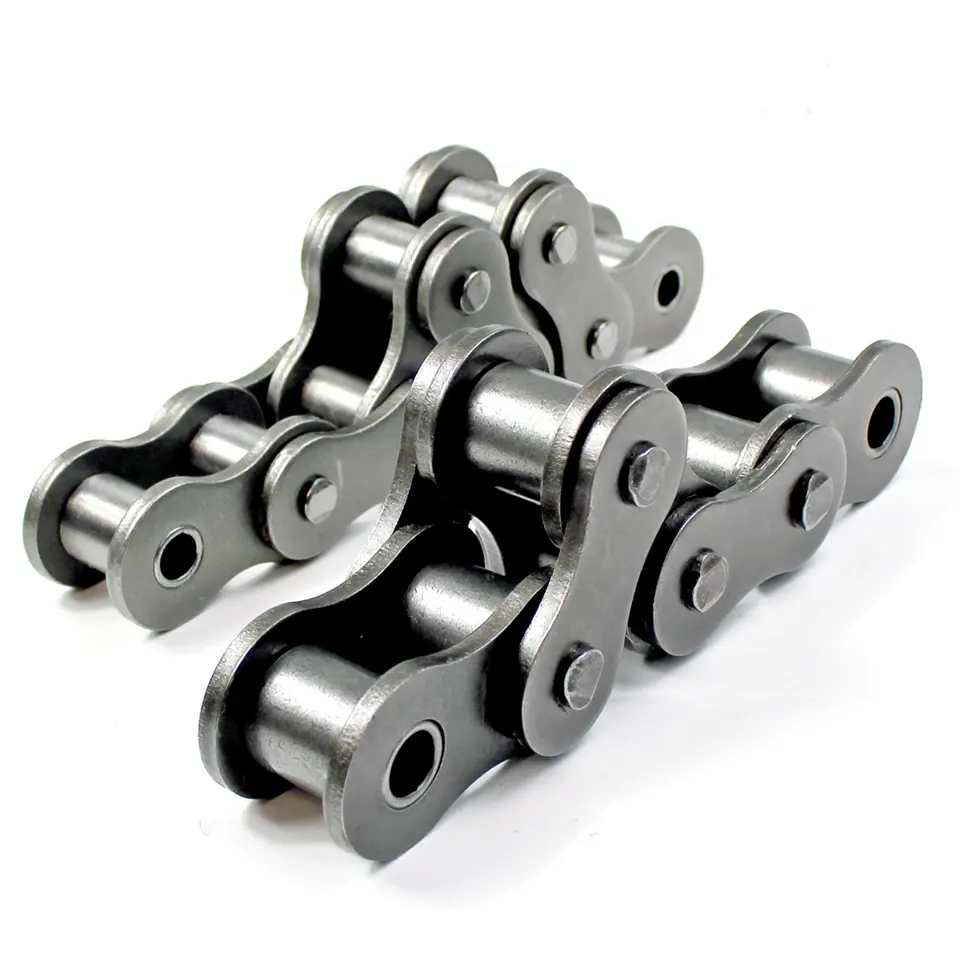
How does the weight of a transmission chain impact its installation and operation?
The weight of a transmission chain plays a significant role in its installation and operation. Here’s a detailed answer to the question:
1. Installation Process: The weight of a transmission chain can affect the ease and complexity of the installation process. Heavier chains may require additional manpower or equipment to lift and position them accurately. Installers need to consider the weight of the chain during handling and ensure proper safety measures are in place to prevent injuries or accidents.
2. System Design: The weight of the chain is a crucial factor in the overall design of the transmission system. It influences the selection of other components such as sprockets, bearings, and shafts. The system needs to be designed to handle the weight of the chain and transmit power effectively without excessive strain or wear.
3. Power Transmission Efficiency: The weight of the chain affects the overall mass of the system. Excessive weight can increase inertia and result in higher energy requirements for acceleration and deceleration. This can impact the efficiency of power transmission and result in increased energy consumption. It is important to strike a balance between chain weight and system performance to optimize energy efficiency.
4. Load Capacity: The weight of the chain is directly related to its load-carrying capacity. Heavier chains are typically designed to handle higher loads and transmit greater amounts of power. It is essential to choose a chain with an appropriate weight and load capacity that matches the requirements of the application to ensure safe and reliable operation.
5. Wear and Fatigue: The weight of the chain can contribute to wear and fatigue over time. Excessive weight or overloading can accelerate the wear process, leading to premature failure of the chain. Proper maintenance, lubrication, and regular inspection are necessary to mitigate the effects of wear and ensure the longevity of the chain.
6. Noise and Vibration: The weight of the chain can influence the noise and vibration levels during operation. Heavier chains may generate more noise and vibration, especially at higher speeds. Proper tensioning, alignment, and lubrication help minimize these effects and maintain smooth and quiet operation.
When considering the weight of a transmission chain, it is essential to balance factors such as installation requirements, system design, power transmission efficiency, load capacity, wear and fatigue, and noise and vibration levels. Selecting the right chain weight for the specific application ensures optimal performance, longevity, and overall system reliability.
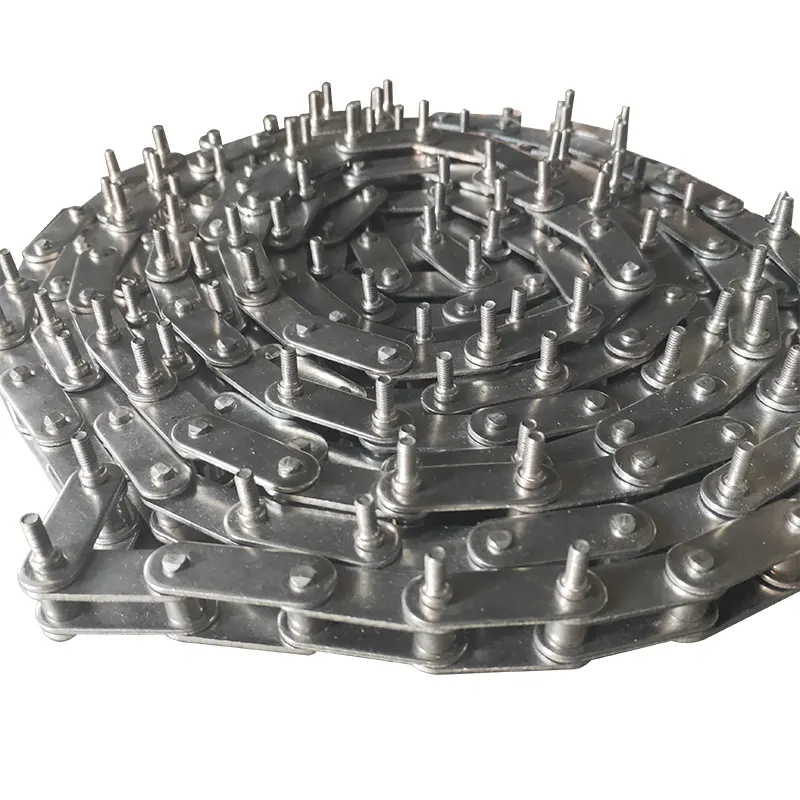
How does the choice of material impact the performance of a transmission chain?
The choice of material for a transmission chain plays a crucial role in its overall performance and durability. Here’s a detailed answer to the question:
1. Strength and Load Capacity: Different materials have varying levels of strength and load-carrying capacities. High-strength materials like alloy steel or stainless steel offer superior strength and can withstand heavy loads. The choice of a material with adequate strength ensures that the transmission chain can handle the required load without premature wear or failure.
2. Wear Resistance: The material used in the construction of a transmission chain affects its wear resistance. Some materials, such as hardened steel or certain alloys, have excellent wear resistance properties, allowing the chain to withstand abrasive conditions and prolong its lifespan. Choosing a material with good wear resistance reduces the need for frequent chain replacements and maintenance.
3. Corrosion Resistance: In environments where corrosion is a concern, such as outdoor or corrosive industrial settings, selecting a material with high corrosion resistance is essential. Stainless steel or specially coated chains offer excellent resistance to rust and corrosion, ensuring reliable performance and longevity even in harsh conditions.
4. Fatigue Strength: The material’s fatigue strength is crucial in applications where the transmission chain undergoes repeated cyclic loading. Fatigue failure can occur when a chain is subjected to continuous stress cycles, leading to cracks and eventual failure. Materials with high fatigue strength, such as specific alloys or heat-treated steels, are ideal for applications that require excellent fatigue resistance.
5. Temperature Resistance: The operating temperature of an application can impact the choice of material for a transmission chain. Some materials, such as heat-treated steels or specialized alloys, can withstand high-temperature environments without losing their mechanical properties. In contrast, certain plastics or polymers may be suitable for low-temperature applications. Choosing a material that can withstand the expected temperature range ensures optimal performance and prevents premature chain failure.
6. Cost Considerations: The choice of material also involves cost considerations. Some high-performance materials, such as stainless steel or specialized alloys, may have a higher initial cost compared to standard carbon steel chains. However, the increased performance, longevity, and reduced maintenance requirements provided by these materials may result in long-term cost savings.
It’s important to carefully assess the specific requirements of the application, including load capacity, environmental conditions, and operating parameters, when choosing the material for a transmission chain. Consulting with industry experts or manufacturers can help determine the most suitable material for optimal chain performance and longevity.
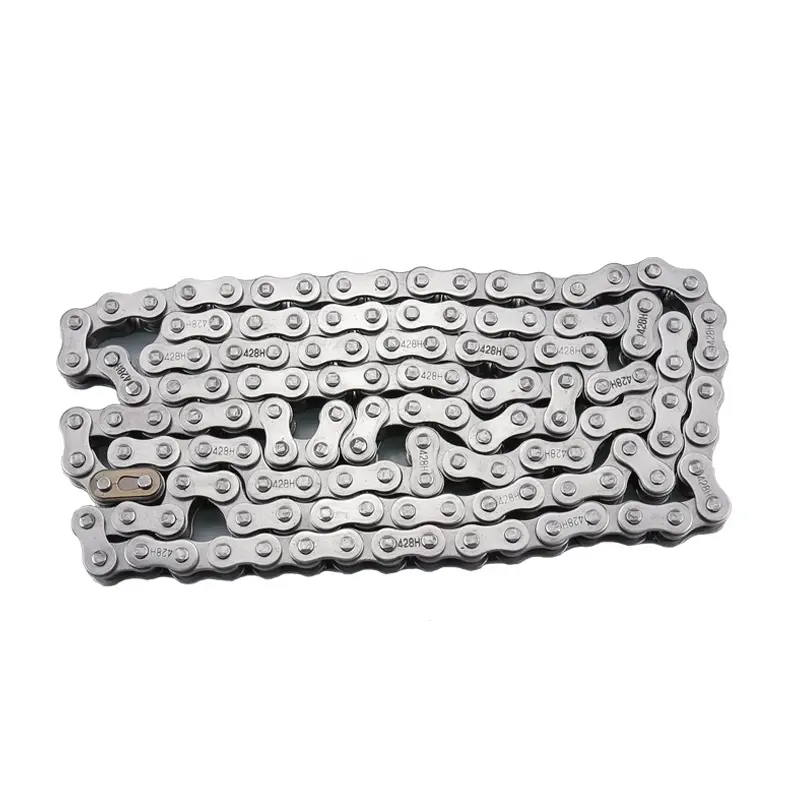
What are the common causes of failure in transmission chains?
Transmission chains are subject to various factors that can contribute to their failure over time. Here’s a detailed explanation:
1. Insufficient Lubrication: Inadequate or improper lubrication is one of the leading causes of chain failure. Insufficient lubrication can lead to increased friction, heat generation, and accelerated wear between the chain’s components, such as pins, bushings, and rollers.
2. Contamination: Contaminants like dirt, dust, debris, and moisture can enter the chain system, affecting its performance and causing accelerated wear. Contamination can hinder proper lubrication, increase friction, and cause corrosion, leading to chain failure.
3. Overloading: Applying excessive loads beyond the chain’s rated capacity can lead to overloading, which causes stress and deformation of the chain’s components. Overloading can result in chain elongation, accelerated wear, and ultimately, chain failure.
4. Misalignment: Improper alignment of the chain and sprockets can cause uneven distribution of forces, leading to localized wear and increased stress on certain areas of the chain. Misalignment can result from incorrect installation or wear and tear of sprockets, leading to premature chain failure.
5. Fatigue: Repeated cyclic loading and stress can cause fatigue in the chain, leading to cracks, fractures, and ultimately, chain failure. Fatigue failure is more likely to occur when the chain is subjected to high-speed or high-frequency applications.
6. Corrosion: Exposure to corrosive environments, such as high humidity, chemicals, or extreme temperatures, can cause corrosion on the chain’s components. Corrosion weakens the chain’s structural integrity, leading to premature failure.
7. Poor Maintenance: Inadequate maintenance practices, such as infrequent inspections, lack of lubrication, and neglecting to address potential issues, can contribute to chain failure. Regular maintenance, including lubrication, cleaning, and proper tensioning, is essential for the longevity and reliable performance of transmission chains.
It is important to address these factors to prevent chain failure. Proper lubrication, regular inspections, cleaning, and alignment checks are essential maintenance practices. Selecting the right chain for the application, following manufacturer guidelines, and adhering to industry standards can also help mitigate the risk of failure and ensure the optimal performance and longevity of transmission chains.


editor by CX 2023-11-08