Product Description
Grade 80 Alloy Steel Link Chain
* Alloy chain is designed and manufactured for superior performance and usage.
* It can easy withstand more abuse, abrasion resistance, greater load lifting per size.
* It is lighter to handle for operations.
* Material alloy steel, heat treated and proof tested.
* Safety factor 4: 1
* Tougher and more reliable for lifting application.
* Minimize downtime operation and more durable surpassed safety record.
* Finish: Available with self-coloured, black tempered, blue painted, and red painted.
* Permanently embossed with desired marking for easy identification and traceability.
* Standard: EN818-2.
| Product | Alloy Steel Chain |
| Standard | EN818-2, GB/T20652, GB/T12718, GB/T20946, DIN5685. |
| Size | 3mm-72mm |
| Material | Alloy steel / carbon steel / stainless steel |
| Strength Grade | G43, G63, G70, G80, G80, G100 |
| Elongation of Chain Breaking | ≥ 16% |
| Feature | It can withstand more abuse, abrasion resistance |
| Tougher and more reliable for lifting application | |
| Do 2.4 times of WLL manufacturing validation strength tensile test. | |
| Safety factor: Min. 4: 1 | |
| Long service life | |
| Finish | Self-colored, black tempered, electro galvanized, hot-dipped galvanized, painted. |
| Application | Overhead lifting, dragging, chain slings, etc |
| Packing List | Plywood reel / plastic reel / plastic drum / gunny bag / iron drum+plywood pallet / iron pallet |
| Delivery Time | 20~40 days |
Chain Details
Drawing and Data
| Chain dia. B (mm) |
Inside length T (mm) |
Inside width B1. (mm) |
Outside width B2. (mm) |
Working load (t) |
Breaking load (t) |
Weight (kg/m) |
| 3 | 9 | 3.8 | 10.7 | 0.36 | 14.1 | 0.21 |
| 4 | 12 | 5 | 14.3 | 0.63 | 25.1 | 0.35 |
| 5 | 15 | 6.3 | 16.5 | 1 | 3.16 | 0.5 |
| 6 | 18 | 7.5 | 20 | 1.44 | 4.56 | 0.8 |
| 6.3 | 19.8 | 8.2 | 20.8 | 1.6 | 5 | 0.84 |
| 7 | 21 | 9 | 24.5 | 1.92 | 6 | 1.1 |
| 7.1 | 21.3 | 9 | 24.5 | 2 | 6.32 | 1.15 |
| 8 | 24 | 10 | 28 | 2.5 | 8 | 1.4 |
| 9 | 27 | 11 | 31.5 | 3.15 | 10.2 | 1.82 |
| 10 | 30 | 12.5 | 35 | 4 | 12.8 | 2.2 |
| 11 | 33 | 12.6 | 36.5 | 4.2 | 15.2 | 2.33 |
| 12 | 36 | 15 | 42 | 4.6 | 18.4 | 3.1 |
| 13 | 39 | 16.3 | 46 | 5.3 | 21.2 | 3.7 |
| 14 | 42 | 18 | 49 | 6.3 | 25.2 | 4.13 |
| 15 | 46 | 20 | 52 | 7 | 28 | 5.17 |
| 16 | 48 | 20 | 56 | 8 | 32 | 5.63 |
| 18 | 54 | 23 | 63 | 10 | 40 | 6.85 |
| 19 | 57 | 23.7 | 63.2 | 11.3 | 45.2 | 7.8 |
| 20 | 60 | 25 | 70 | 12.5 | 50 | 8.6 |
| 22 | 66 | 28 | 77 | 15.3 | 61.2 | 11 |
| 24 | 72 | 32 | 82 | 18 | 72 | 12.8 |
| 26 | 78 | 35 | 91 | 21.3 | 85.2 | 14.9 |
| 32 | 90 | 38 | 105 | 28.3 | 113.2 | 19.6 |
| 34 | 102 | 46.5 | 121.2 | 36.3 | 145.2 | 25.5 |
| 36 | 108 | 49.5 | 128.5 | 40.7 | 162.8 | 31 |
| 38 | 114 | 52 | 136 | 45.3 | 181.2 | 32 |
| 42 | 126 | 55.5 | 144.5 | 55.4 | 221.6 | 38.6 |
| 48 | 144 | 62.4 | 177.6 | 72.3 | 289.2 | 52 |
| 50 | 150 | 65 | 185 | 80 | 320 | 56 |
| 52 | 156 | 67.6 | 192.4 | 85 | 340 | 59 |
| 56 | 168 | 72.8 | 207.2 | 100 | 400 | 72.5 |
| 63 | 190 | 81.9 | 233.1 | 125 | 500 | 89 |
| 72 | 210 | 91 | 259 | 160 | 640 | 110 |
Application
Factory
Package
Related Products
Contact /* January 22, 2571 19:08:37 */!function(){function s(e,r){var a,o={};try{e&&e.split(“,”).forEach(function(e,t){e&&(a=e.match(/(.*?):(.*)$/))&&1
| Usage: | Heavy Duty Lifting |
|---|---|
| Material: | Alloy |
| Surface Treatment: | Baking Paint |
| Feature: | Heat Resistant |
| Chain Size: | 3mm-72mm |
| Structure: | Welded Chain |
| Samples: |
US$ 2/Meter
1 Meter(Min.Order) | |
|---|
| Customization: |
Available
| Customized Request |
|---|

Can a conveyor chain be used in pharmaceutical manufacturing?
Yes, conveyor chains can be used in pharmaceutical manufacturing for various applications. Conveyor systems play a crucial role in the efficient and safe transportation of pharmaceutical products throughout the manufacturing process. Here are some key considerations when using conveyor chains in pharmaceutical manufacturing:
1. Material Selection:
– Choose conveyor chains made from materials that are suitable for pharmaceutical applications, such as stainless steel or FDA-approved plastic. These materials offer corrosion resistance, cleanliness, and compliance with industry regulations.
2. Cleanliness and Sanitation:
– Ensure that the conveyor chain design allows for easy cleaning and sanitation. Smooth surfaces, minimal crevices, and access for cleaning equipment are important to maintain a hygienic environment.
3. Contamination Control:
– Implement measures to prevent contamination of pharmaceutical products. This includes using chain lubricants that are safe for pharmaceutical applications and implementing proper handling and storage procedures.
4. Product Protection:
– Choose conveyor chain systems that minimize product damage or degradation. This can include utilizing gentle product handling features such as low-friction surfaces, adjustable speed controls, and proper product spacing.
5. Regulatory Compliance:
– Ensure that the conveyor chain system complies with pharmaceutical industry regulations and guidelines, such as Good Manufacturing Practices (GMP) and the requirements of regulatory bodies like the FDA.
6. Integration with Equipment:
– Consider the integration of conveyor chains with other equipment in the pharmaceutical manufacturing process, such as labeling machines, filling machines, and packaging equipment. The conveyor system should provide seamless operation and synchronization with these machines.
By carefully selecting and designing conveyor chains specifically for pharmaceutical manufacturing, it is possible to meet the stringent requirements of the industry in terms of cleanliness, product integrity, and regulatory compliance.
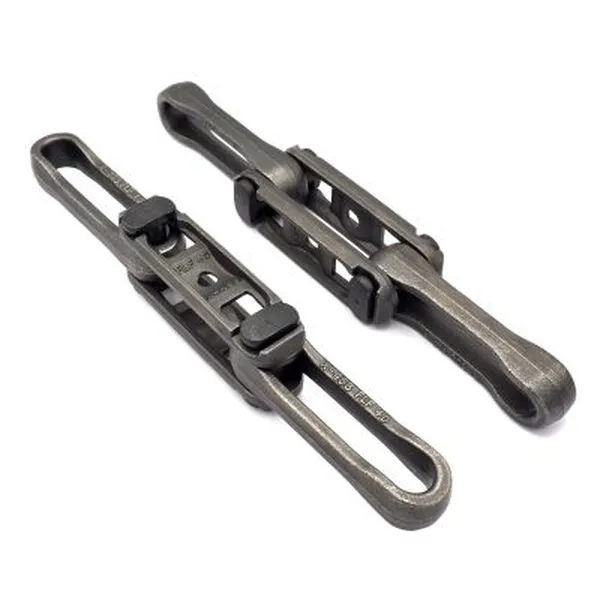
What are the safety measures for working with heavy-duty conveyor chains?
Working with heavy-duty conveyor chains requires strict adherence to safety measures to protect the workers and maintain a safe working environment. Here are some important safety measures to consider:
1. Proper Training: All personnel involved in working with conveyor chains should receive comprehensive training on the safe operation and maintenance of the equipment. This includes understanding the potential hazards, safety procedures, and proper use of personal protective equipment (PPE).
2. Equipment Inspection: Regular inspection of the conveyor chain and associated components is crucial to identify any signs of wear, damage, or malfunction. This includes checking for loose fasteners, worn sprockets, misalignment, and any other potential hazards. Any issues should be addressed promptly to prevent accidents.
3. Lockout/Tagout: Before performing any maintenance or repair tasks on the conveyor chain, proper lockout/tagout procedures must be followed. This ensures that the equipment is de-energized and isolated from any power source to prevent accidental startup or movement.
4. Personal Protective Equipment (PPE): Workers should wear appropriate PPE, including safety glasses, gloves, steel-toed boots, and hearing protection. The specific PPE requirements may vary depending on the nature of the work and the potential hazards involved.
5. Safe Work Practices: Workers should follow safe work practices, such as avoiding loose clothing or jewelry that can get caught in the chain, keeping hands and clothing clear of moving parts, and using proper lifting techniques when handling heavy loads.
6. Emergency Stop Systems: Conveyor systems should be equipped with emergency stop buttons or pull cords that allow workers to quickly stop the chain in case of an emergency or hazardous situation.
7. Regular Maintenance: Scheduled maintenance and lubrication of the conveyor chain should be performed according to the manufacturer’s recommendations. This helps to ensure optimal performance and minimize the risk of unexpected failures.
8. Clear Warning Signs and Labels: Proper signage, warning labels, and safety instructions should be clearly displayed near the conveyor chain system to remind workers of potential hazards and safe operating procedures.
9. Regular Safety Training and Communication: Ongoing safety training and communication among the workforce are vital to reinforce safe practices and raise awareness of any changes or updates to safety protocols.
By implementing these safety measures and fostering a safety-conscious culture, the risks associated with working with heavy-duty conveyor chains can be minimized, ensuring the well-being of the workers and the efficient operation of the equipment.

Can a conveyor chain be used for vertical lifting applications?
Yes, conveyor chains can be used for vertical lifting applications in certain circumstances. However, several factors need to be considered to ensure safe and efficient vertical lifting with a conveyor chain.
1. Chain Type: Not all conveyor chains are suitable for vertical lifting. Specialized chain types, such as bucket elevator chains or vertical reciprocating conveyor chains, are designed specifically for vertical lifting applications.
2. Load Capacity: The conveyor chain selected for vertical lifting must have the appropriate load capacity to handle the weight of the load being lifted. It is crucial to consider both the static and dynamic loads during the lifting operation.
3. Speed and Acceleration: The speed and acceleration of the vertical lifting operation should be within the recommended limits of the conveyor chain to prevent excessive stress and potential failure.
4. Safety Mechanisms: Adequate safety mechanisms, such as overload protection devices or emergency stop systems, should be implemented to ensure the safety of the lifting operation.
5. Maintenance and Inspection: Regular maintenance and inspection of the conveyor chain are essential to identify any wear, fatigue, or damage that could compromise the lifting operation’s safety and reliability.
It is important to consult the manufacturer’s guidelines and recommendations when considering the use of a conveyor chain for vertical lifting applications. They can provide specific information regarding chain selection, installation, maintenance, and safety considerations for vertical lifting operations.


editor by CX 2024-04-03