Et færdigblandet betonanlæg i Gyeonggi-do udskiftede sin transportkæde til genbrug af tilslag for fjerde gang på 18 måneder i starten af 2024. Hver udskiftning var med samme specifikation - ANSI #120 tung rullekæde, matchet med de 25T tandhjul, der allerede var i drevet. Kæden havde den korrekte stigning, den korrekte brudbelastning på papiret og den korrekte længde. Den fortsatte med at svigte i 4-5 måneder på samme sted - den midterste del af det nederste løb, hvor kæden slæbte direkte gennem det akkumulerede fine tilslag på trugbunden. Fejltilstanden var identisk hver gang: ydre ledplader slidt igennem i midten, cylinderens ydre overflade slidt fladt på kontaktsiden og flere fastsiddende samlinger fra indtagelse af slibemiddel. Den korrekte løsning var ikke en bedre kvalitet af #120 rullekæde. Det var en ændring af en produktkategori designet til denne specifikke belastningstilstand: tapkæde med hærdede cylinderoverflader og åben cylinderkonstruktion, der frigiver fanget slibemiddel i stedet for at slibe det ind i lejefladerne.
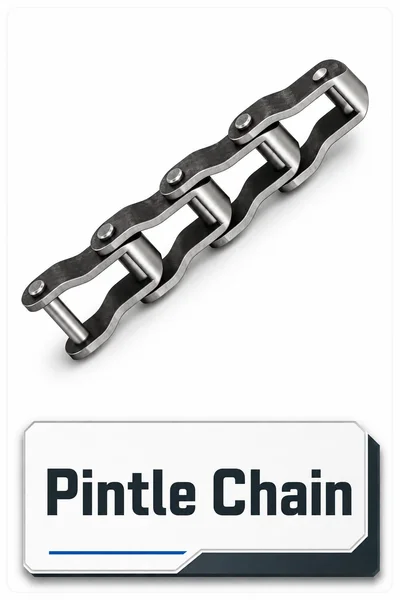
Det er nødvendigt at forstå forskellen mellem rullekæde, akselkæde og slæbekæde – og hvilke specifikke designfunktioner hver enkelt adresserer – for at træffe det rigtige valg til håndtering af tunge bulkmaterialer.
Pintle Chain: Struktur og designrationale
En kæde med tap (ASME B29.4, ISO 1977) er opkaldt efter den solide tap – "tappen" – der danner samlingen mellem led. I modsætning til en standardrullekæde, hvor tappen er indesluttet i en bøsning og rulle, bruger kædesamlingen en åbensidet støbt eller smedet sidestang ("sidestangen") med en åben krog eller slids, der modtager tappen på det tilstødende led uden en fuldstændig bøsningsindkapsling.
Det afgørende designtræk, der adskiller en kædebolt fra en rullekæde i bulkmaterialeapplikationer, er denne åbne samlingsgeometri. Når slibende materiale trænger ind i en standard rullekædebøsningsboring, fanges det mellem stiften og bøsningsoverfladen og danner en slibende forbindelse, der sliber kontinuerligt ved hver bevægelse. I en kædebolt tillader den åbne samling slibende partikler at falde gennem samlingsafstanden i stedet for at blive fanget - kæden er delvist selvrensende under drift. Denne ene designforskel giver en dramatisk længere levetid i applikationer, hvor kontakt med fint slibende materiale er uundgåelig.
Standard Pintle Chain-serie og deres anvendelser
| Kæde nr. | Hældning (mm) | Tapdiameter (mm) | Min. brudbelastning (kN) | Linktype | Primær anvendelse |
|---|---|---|---|---|---|
| 32-serien | 101.6 | 25.4 | 111.0 | Offset sidebjælke i støbejern | Genbrug af aggregater, sandtransportør |
| 42-serien | 101.6 | 31.8 | 156.0 | Støbejern, tungere sidebjælke | Grus, knust sten, cementklinker |
| 51-serien | 152.4 | 38.1 | 178.0 | Støbejern eller støbt stål | Mest almindelige: cement, minedrift, aggregatmodstand |
| 55-serien (tung) | 152.4 | 44.5 | 267.0 | Støbt stål | Tungt tilslag, stenbrud, mineflade |
| 62-serien | 203.2 | 50.8 | 356.0 | Kraftigt støbt stål med fastgørelsespunkter for møtrikker | Bulkterminal, store malmklumper, stålskrot |
Fladkæde: Når skrabere og medbringere er nødvendige
Hvor en kæde med tap er et selvtransporterende element (selve kæden er i kontakt med materialet), er en flad slæbekæde et drivelement, der bærer separate medbringere - stålstænger eller -padler, der er svejset eller boltet til kæden med regelmæssige intervaller. Medbringerne skubber materialet vandret langs en rende eller et kar, uden at selve kæden behøver at være i direkte kontakt med materialet.
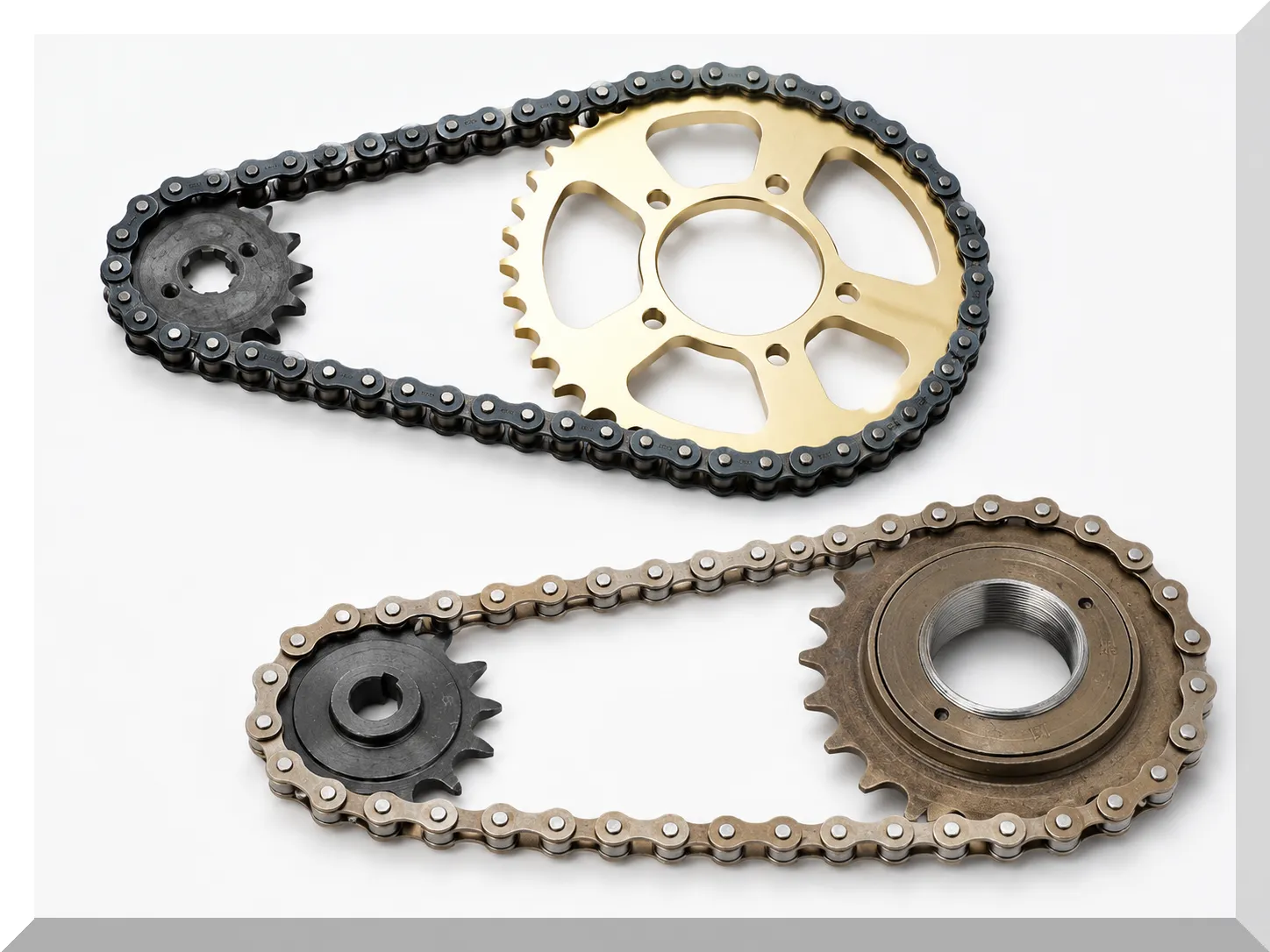
Flade slæbekæder bruger en af to kædetyper som drivelement: en kraftig rullekæde i maskinklassen (ASME B29.10-serien - se artikel 11 i denne serie) med laterale fastgørelsesplader til flyveblade eller en specialbygget slæbekæde i svejset stål, hvor kædens sidestænger er fremstillet af en tyk konstruktionsstålplade med fastgørelsespunkterne integreret i fabrikationen.
Flyvevinkelen — afstanden mellem på hinanden følgende flyvestænger — bestemmer materialelagets dybde i truget. For fine materialer (korn, kulfint materiale, pulver) opretholder en kortere flyveafstand (0,5–1× trugbredden) en ensartet materialedybde. For grovere materialer (stort tilslag, træflis) reducerer en bredere flyveafstand (1–2× trugbredden) kædens trækkraft pr. flyve ved at tillade materialet at flyde naturligt i stedet for at blive skubbet som en solid prop.
Materialet fylder hele trugets tværsnit. Kæde og medbringere bevæger sig langsomt (0,05-0,2 m/s) gennem materialemassen. Meget høj kapacitet pr. kædekraftenhed. Anvendes til: korn, pellets, pulver, fint kul. Kædetræk beregnet ud fra materialets rumvægt × trugets tværsnit × længde × friktionskoefficient.
Materialet ligger lagvis mellem medbringere i en åben bakke. Medbringere skubber materialet fremad. Højere kædehastighed mulig (op til 0,5 m/s). Anvendes til: tilslag, træflis, nedrivningsaffald, store klumper. Kæde udsat for stød fra store klumper.
Kæden slæber skrabeplader direkte på trug eller jordoverflade. Både kæden og skrabepladerne er slidelementer. Høje kædetrækbelastninger fra materialefriktion. Anvendes til underjordisk transport af kul, tilslag og malm, hvor frihøjde forhindrer båndtransportører.
Kædetrækberegning for slæbetransportører: Designbelastningsmetoden
Den primære designberegning for enhver slæbekæde er kædetrækkraften - den trækkraft, som kæden skal overføre mellem drivhjulet og returløbet. Kædetrækkraften bestemmer den nødvendige kædebrudbelastning (via designsikkerhedsfaktoren), som derefter bestemmer valget af kædeserie.
F_materiale = ρ × A × L × g × μ_m
F_chain = m_c × L × g × (μ_c + sin θ)
F_flyvninger = m_f × N_f × g × μ_f
F_gradient = (ρ × A × L + m_c × L) × g × sin θ
L = transportbåndslængde (m) · g = 9,81 m/s²
μ_m = materiale-på-gennem-friktionskoefficient
m_f = flyvemasse (kg) · N_f = antal flyvninger
θ = hældningsvinkel
Typiske friktionskoefficienter for kædetransportører: materiale på ståltrug — 0,4-0,6 for tørt tilslag, 0,5-0,7 for vådt sand, 0,25-0,35 for korn. Kæde på ståltrug — 0,1-0,2 med smøring, 0,25-0,35 uden smøring. Kæde på slidstærk plastforing — 0,08-0,15. Disse koefficienter er dominerende variabler i beregningen af kædetræk — et skift fra ståltrug til UHMW-foring reducerer kædetrækket med 35-45%, hvilket muliggør en betydeligt mindre (og billigere) kædeserie.
Den nødvendige kædebrudbelastning beregnes ud fra kædetrækket: Brudbelastning ≥ F_total × sikkerhedsfaktor. CEMA (Conveyor Equipment Manufacturers Association) anbefaler en sikkerhedsfaktor på 6-8 for slæbetransportører til bulkmaterialer - betydeligt højere end de 3-5 faktorer, der anvendes til standard kraftoverføringsrullekæder. Den højere faktor tager højde for stød- og slagbelastningerne fra klumpmateriale, der kommer ind i transportbåndet, hvilket kan producere øjeblikkelige spidskræfter på 2-4 gange den stabile kædetrækkraft. For aggregater med en maksimal klumpstørrelse over 50 mm bør en slagfaktor på 1,5-2,0 anvendes på F_material, før der ganges med sikkerhedsfaktoren.
Slidvurdering og levetidsstyring for kæder med slæbe- og kædebolte
Standard slidvurdering af rullekæder (måling af forlængelse af stiftbøsninger) gælder for kæder i ingeniørklassen, der anvendes som drivelementer til slæbebånd. For kæder med tap er den primære slidmåling anderledes: fordi tappen (stiften) hviler direkte på det støbte leds sidebjælke, er slidmålingen reduktionen af tappens diameter snarere end forlængelsen af leddets stigning. ASME B29.4 anbefaler udskiftning af kæden med tap, når tappens diameter er reduceret med mere end 10% af den oprindelige diameter på et hvilket som helst målt punkt langs kædens længde.
Mål tappdiameteren ved hjælp af udvendige skydelærer på tre positioner langs hver tapp: midt på spændet og i begge ender inden for 10 mm fra sidebjælkehullet. Slid på midterspændet indikerer løbende kontakt med sidebjælkehullet under drift. Endeslid indikerer forskydning mellem de to sidebjælkeboringer i tilstødende led - et tegn på vridning eller sidebelastning i kæden. Hvis endeslitaget overstiger slid på midterspændet, oplever kæden sidebelastninger, der ikke er en del af konstruktionen - kontroller for forskydning af trug, skævhed i tandhjulet og binding af kædens spiralvægge.
For slæbebåndskæder med medbringerbeslag er sliddet på medbringerstangen en separat vurdering fra kædesliddet. Medbringerstangen slæber direkte på trugforinger og slides nedefra - sliddet på den nederste flade er synligt og målbart. Udskift medbringerstangen, når den nederste flade er slidt mere end 50% af den oprindelige stanghøjde, eller når bagkantprofilen er blevet eroderet til det punkt, hvor materialet ruller over stangen i stedet for at blive skubbet fremad. Ingeniørklasse og tung slæbekæde til bulkmaterialeapplikationer er tilgængelig med matchende specifikationer for flytilbehør.
Valg af aksel- og slæbekædemateriale: Kulstofstål vs. legeret stål vs. støbejern
| Linkmateriale | Hårdhed (HB) | Slidstyrke | Slagfasthed | Omkostningsrelativ | Bedste applikation |
|---|---|---|---|---|---|
| Standard støbejern | 170–220 | Moderat | Lav — sprødbrud under stød | Laveste | Fine materialer, lav stød, cement (sigtet) |
| Smedbart støbejern | 180–240 | God | Moderat | Lav-moderat | Korn, kul, moderat klumpformet tilslag |
| Støbt stål (varmebehandlet) | 280–360 | Høj | Høj | Moderat | Aggregat, knust sten, malm i store klumper |
| Højkrom støbejern | 450–600 | Meget høj | Lav — brug kun ved lav stødbelastning | Høj | Fint tilslag med højt silicaindhold, glasskår, slibepulver |
| Legeret stål (smedet) | 300–400 | Høj | Meget høj | Høj | Tung minedrift, stålskrot, nedrivningsaffald |
Branchespecifikke anvendelser i Korea og Sydøstasien
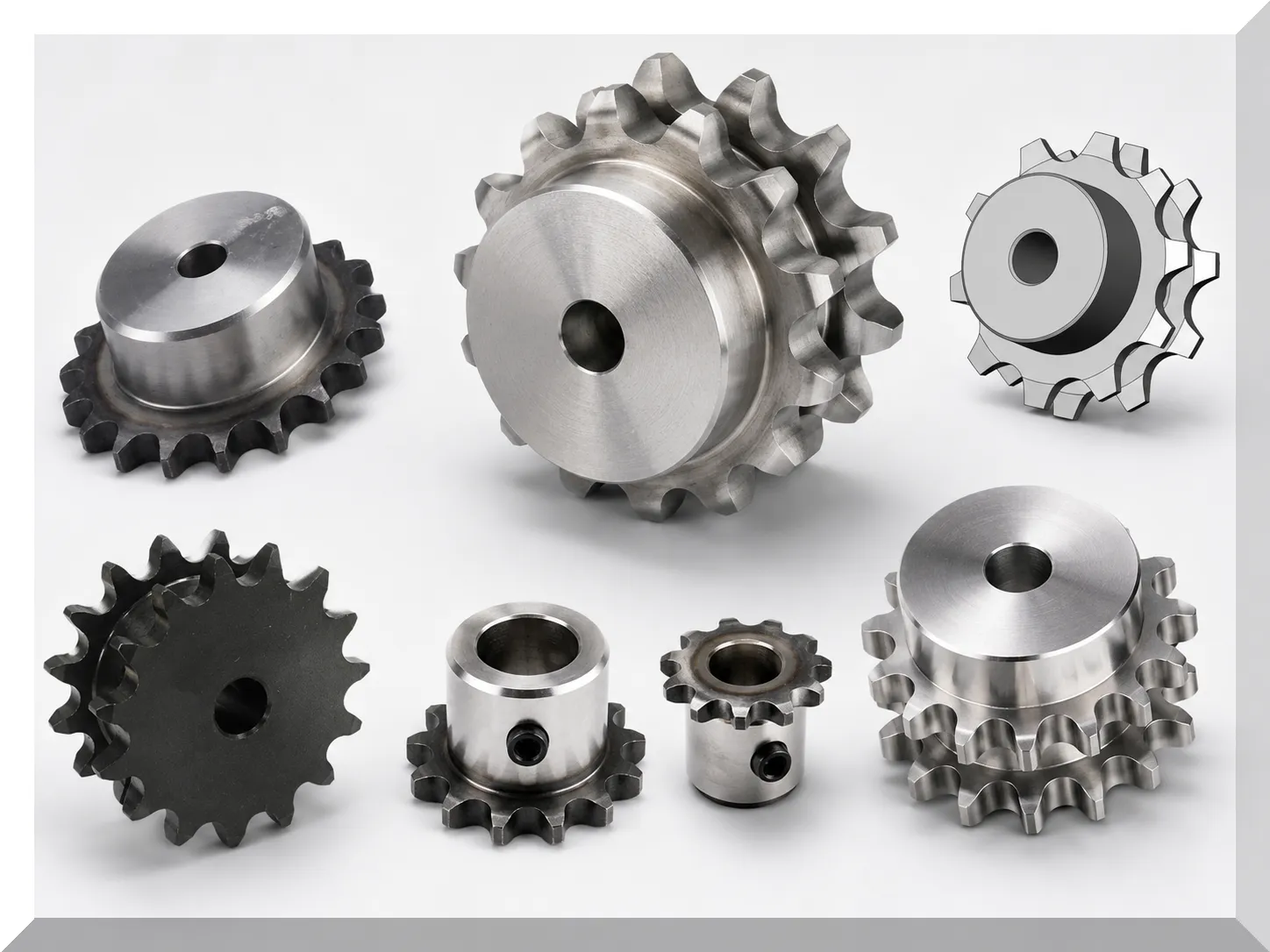
Fabrikker til fremstilling af færdigblandet beton og tilslag. Det første eksempel i denne artikel er repræsentativt for den mest almindelige anvendelse af tapkæder i koreansk produktion - transportbånd til genbrug af tilslag under opbevaringsbåse, der flytter knust sten, sand og blandet tilslag fra opbevaring til blandesystemet. Den korrekte specifikation er en 42-serie eller 51-serie støbt ståltapkæde til anvendelser af knust sten (maksimal klumpstørrelse 40-60 mm, bulkdensitet 1.600-1.800 kg/m³). Til genbrug af fint sand er 42-serien af smedejern tilstrækkelig og billigere. Kædehjul med tap i støbt stål med hærdede tandflader er specificeret sammen med kæden til disse anvendelser — tandhjulets hårdhed skal matches med kædematerialets hårdhed for at undgå foretrukket slid på den blødere komponent.
Cementproduktion. Koreanske cementfabrikker (Ssangyong, Asien og Hanil) bruger flere slæbetransportører til håndtering af råmaterialer, ovnindløbstransportører og klinkerkølekæder. Cementovnens indløbstransportør udsættes for de mest alvorlige forhold - klinker ved 100-200 °C, store uregelmæssige klumper på op til 80 mm og slibende silikatstøv. Standardspecifikationen for denne position er en 55-serie støbt ståltapkæde med en varmebestandig taplegering. Ovnindløbskæden fungerer typisk ved 0,05-0,15 m/s og udskiftes efter en planlagt vedligeholdelsescyklus på 2 år i velholdte anlæg, mod 6-9 måneder med standard rullekæden i maskinklassen, der tidligere var specificeret på ældre udstyr.
Kornkooperativs kopelevatorer. Koreas landbrugskooperative kornopbevaringsinfrastruktur bruger massive slæbetransportører til horisontal korntransport mellem opbevaringsbeholdere og forarbejdningsfaciliteter. Materialet er korn (bulkdensitet 700-800 kg/m³, effektivt ikke-slibende sammenlignet med mineralanvendelser) ved lave kædehastigheder (0,05-0,12 m/s). Til disse anvendelser er standarden en smedejernskæde eller en kraftig rullekæde af teknisk type med rustfri fastgørelsesplader - slidkravet er lavt, og korrosionsbeskyttelse (mod kornfugt og afvaskning efter høst) er det dominerende specifikationskrav.
Minedrift og stenbrud i Vietnam og Indonesien. Eksportkunder fra sydøstasiatiske aggregat- og mineralforarbejdningsvirksomheder er en betydelig del af Korea Ever-Powers levering af tapkæder — filippinske nikkel-lateritforarbejdningsfaciliteter, indonesiske kulterminalbåndfødere og vietnamesiske cementfabrikkers genbrugstransportører bruger alle tapkædespecifikationer i 51- og 55-serien. Kravet om leveringstid for sydøstasiatiske vedligeholdelsesoperationer — typisk 3-6 uger for ikke-lagerførte varer — betyder, at disse kunder drager betydelig fordel af koreanske lagerbeholdninger af almindelige seriestørrelser og -afstande i forhold til leveringstiden på 12-20 uger for direkte indkøb fra producenten.
Ofte stillede spørgsmål
Pintle Chain, Engineer Class slæbekæde og tung transportkæde tilgængelig
Send din transportbåndslængde, trugbredde, materialetype, klumpstørrelse og kædehastighed — vores ingeniører bekræfter den korrekte serie, materiale og konfiguration af flight-tilbehør før fremstilling.
Redaktør: Cxm