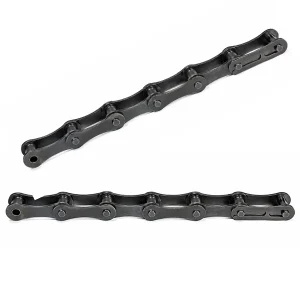
12A-G2 Rubber Top Roller Chain

Deploying the correct material interface on a high-speed automated production line strictly dictates the defect rate of your conveyed products. The 12A-G2 Rubber Top Roller Chain is a highly specialized conveyor chain engineered explicitly for environments demanding high-friction, non-marring transport. By vulcanizing a durable elastomeric pad directly onto the outer metal plates, this assembly eliminates destructive metal-to-payload contact, dampens high-frequency operational vibration, and secures fragile goods during aggressive incline sorting.
Mechanical Overview & Kinematic Profile
Standard metallic linkages introduce a severe risk of surface scratching and slippage when transporting finished architectural glass, laminated timber, or polished automotive components. Bare steel plates sliding against delicate payloads inevitably result in an unacceptable percentage of scrapped materials. The 12A-G2 assembly directly resolves this mechanical limitation. Operating on a precise 19.050mm (0.75-inch) dimensional pitch—which perfectly aligns with international ANSI 12A (60-series) standardization—this hybrid linkage pairs immense high-carbon steel core strength with advanced elastomeric surface protection. The "G2" suffix specifically indicates a premium heavy-duty strength rating. It features a thicker elastomeric cap and heavily reinforced steel side plates designed to manage intense radial loads without succumbing to plastic elongation.
The elastomeric cap is not merely glued; it is chemically bonded to the steel attachment plate during a high-pressure vulcanization process. This monolithic bond prevents delamination even under continuous lateral shear forces. This rubber interface generates a massive coefficient of friction against smooth payloads, ensuring cartons and glass vessels maintain exact spacing during rapid acceleration and deceleration cycles. A frequent inquiry from junior facility operators analyzing transmission schematics is, What is a chain and sprocket? Fundamentally, it represents a highly synchronized kinetic interface designed for efficient rotary torque transfer. However, in this specific conveyor iteration, the mechanism serves a dual purpose: the metallic lower section seamlessly engages the toothed hub for power transmission, while the vulcanized elastomeric top acts directly as a protective, high-friction moving floor.
Precise Dimensional Architecture
Before integrating an elastomer-topped component into a factory network, mechanical engineers and millwrights must rigorously evaluate the spatial clearances. The vulcanized rubber pad physically expands the maximum working height and the transverse width limits of the transmission assembly. Facility draftsmen must accurately calculate the available clearance between the top of the rubber profile and the machine's safety guards, return tracks, or crossover plates. If the 44.50mm attachment width (Dimension A) drags against rigid structural steel during the return cycle, the excessive lateral friction will rapidly shear the elastomer from the base plate and thermally overload the primary drive motor.
| Chain No. | Pitch (P) | Roller Dia (d1) | Inner Width (b1) | Pin Dia (d2) | Pin Length | Attachment & Plate Dimensions | Tensile (Q) | Weight (q) | ||||
|---|---|---|---|---|---|---|---|---|---|---|---|---|
| mm | mm | mm | mm | L max (mm) | h2 (mm) | A (mm) | B (mm) | H (mm) | T (mm) | kN/lbf | kg/m | |
| 12A-G2 | 19.050 | 11.91 | 12.57 | 5.94 | 52.9 | 18.00 | 44.50 | 37.05 | 21.0 | 1.85 | 62.3 / 14005 | 4.25 |
Focusing on the internal mechanics, the inner width between plates (b1) measuring 12.57mm remains completely unaltered by the rubber top. This strict geometric adherence guarantees that the solid cold-extruded steel rollers will mate flawlessly with standard commercial sprocket teeth. Furthermore, the documented ultimate tensile strength of 62.3 kN (approximately 14,005 lbf) is exceptional for a 19.050mm pitch profile. It confirms that the underlying steel architecture retains its massive yield capacity and remains completely unaffected by the extreme thermal vulcanization process. The 5.94mm pin diameter provides massive shear resistance against sudden torque spikes, distributing the kinetic load safely across the entire internal bearing surface.
Material Composition & Structural Metallurgy
Maintaining dimensional stability under heavy payload requires exceptional base materials operating in absolute tandem. A standard industrial linkage operating in dry, abrasive conditions requires continuous heavy fluid lubrication. However, on packaging lines moving cardboard boxes or finished timber, applying heavy petroleum oil to the metal plates inevitably ruins the conveyed product through cross-contamination. By utilizing highly engineered polymer compounds, the rubber top assumes the physical friction duties while the steel operates cleanly below.
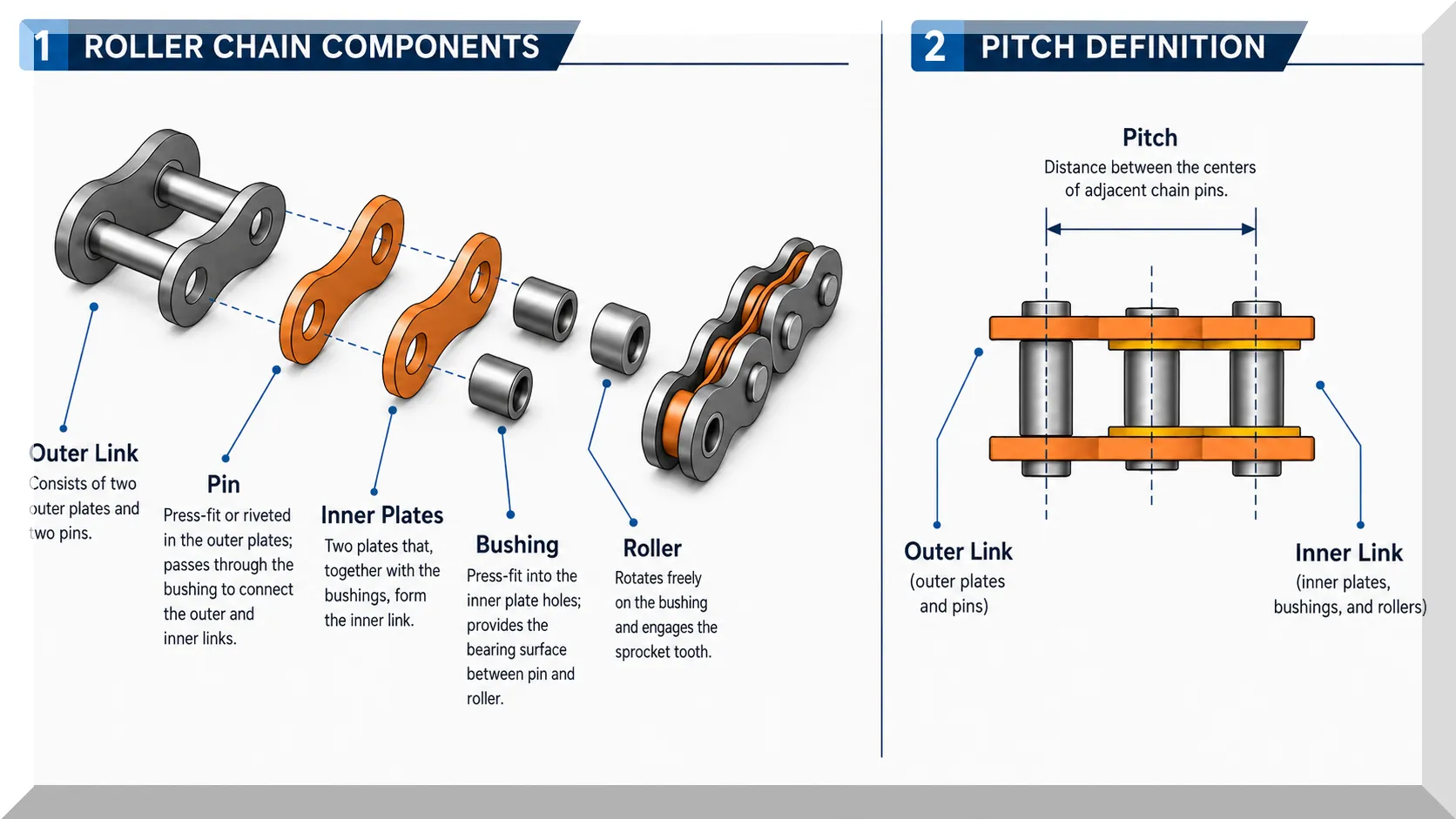
The vulcanized top blocks are molded from high-grade Nitrile Butadiene Rubber (NBR) or Natural Rubber (NR) blends, each offering distinct chemical advantages based on the facility environment. NBR is heavily specified for automated facilities where ambient machine oils, hydraulic fluids, or industrial solvents might inadvertently spill onto the line. Standard synthetic rubbers swell, soften, and dissolve upon contact with hydrocarbons; NBR actively repels them, maintaining strict geometric stability. The rubber hardness is calibrated to a specific Shore Hardness scale ranging from 65 to 85. This provides sufficient elasticity to grip smooth glass bottles firmly without scratching, yet remains dense enough to prevent heavy payloads from sinking deeply into the rubber and causing extreme rolling resistance.
| Engineering Parameter | 12A-G2 Technical Specifications |
|---|---|
| Core Metallic Grades | Carbon Alloy Steel (45Mn, 42CrMo) / Stainless Variants (SS304, SS316) |
| Elastomer Composition | Nitrile Butadiene (NBR) / Natural Rubber (NR) |
| Shore Hardness Scale | Shore 65-75 (High Grip) or Shore 75-85 (High Impact Load) |
| Surface Defense Treatment | Shot Peening, Blackening, Oxygenation, Zinc-plated, Nickel Plating |
| Environmental Resistance | Fire Resistant, Hydrocarbon Oil Resistant, High Heat Tolerant |
Objective Analysis: G2 vs G1 Rating
When drafting a new conveyor layout, procurement departments frequently debate whether to specify the baseline G1 specification or the reinforced G2 variation. Installing an under-rated G1 linkage on a high-capacity sorting line yields rapid elastomer degradation. The sharp edges of heavy payloads will rapidly shear away thin rubber layers under high acceleration, exposing the bare steel fasteners underneath and destroying the payload entirely. The 12A-G2 architecture explicitly combats heavy abrasion by increasing the volumetric mass of the protective elastomer pad and reinforcing the steel side plates.
| Kinetic Feature | 12A-G2 (Heavy Duty) | 12A-G1 (Standard Duty) |
|---|---|---|
| Elastomer Pad Thickness | 2.5 mm | 2.0 mm |
| Abrasive Wear Resistance | Superior (Extended Cycles) | Moderate Baseline |
| Acoustic Damping Coefficient | High (Low-Pass Filter) | Adequate |
| Physical Mass Profile | Heavier Base Structure | Lighter Base Structure |
The 12A-G2 boasts an elastomer layer measuring 2.5 mm in thickness, compared to the thinner 2.0 mm layer utilized on the G1 variant. While 0.5 mm appears mathematically insignificant, in kinematic physics, it drastically alters the compression volume and the kinetic energy dispersion rate. This extra thickness provides a far superior buffer against abrasive wear from rough plywood sheets or jagged ceramic bases. It isolates the material further from the steel plates and serves as a highly effective sacrificial wear layer. The extra density guarantees that the G2 variant can execute millions of additional cycles before maintenance intervention is necessary. The G2 is inherently heavier, weighing 4.25 kg/m, making it entirely superior for high-demand, 24/7 continuous processing applications where unscheduled downtime must be totally avoided.
Acoustic Dampening and High-Speed Kinematics
Industrial power transmissions inherently generate massive high-frequency vibration during normal operation. A mechanical phenomenon known as "chordal action"—the microscopic vertical rise and fall of the steel links as they rapidly engage and disengage the polygonal shape of the driving hub—creates a continuous, violent hammering effect against the transport rails. In a purely metallic system moving at high velocity, this action generates unbearable decibel levels and harmonic resonance that damages fragile products and violates occupational safety standards on the factory floor.
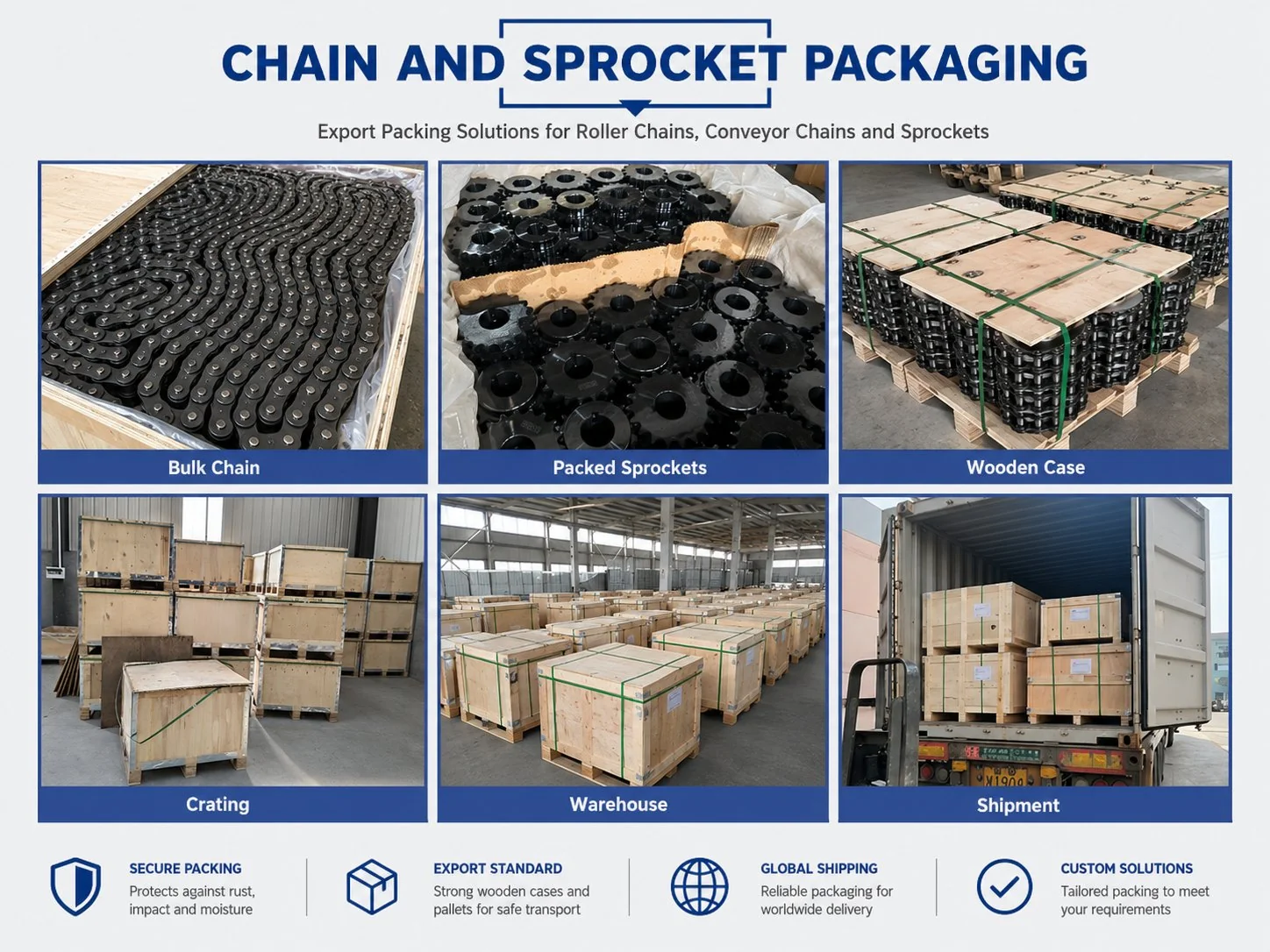
The 12A-G2 fundamentally acts as a kinetic low-pass filter for the entire conveyor bed. The 2.5 mm vulcanized rubber profile effectively absorbs and dissipates the high-frequency kinetic energy generated by chordal action before it can transfer upward into the conveyed payload. By damping this harmonic vibration at the exact point of contact, factories drastically decrease their ambient noise levels—often dropping well below strict occupational safety mandates without requiring expensive external acoustic enclosures. This mechanical damping ensures that highly delicate payloads, such as thin-walled glass vials, medical syringes, or precision-machined electronics, arrive at the end of the sorting line without suffering micro-fractures induced by chassis vibration.
Companion Hub Integration and Gear Anatomy
A critical oversight during installation is failing to verify the interaction between the expanded rubber profile and the toothed drive hubs. The chain and sprocket are two distinct components that must function together flawlessly. The mechanics dictating the precise anatomy of a sprocket demand that the solid rollers must seat deeply into the root cavity of the gear teeth. If the chosen sprocket lacks sufficient lateral side clearance, or if the hub's boss (the thickened center section around the shaft bore) protrudes too closely to the teeth, the rubber pads will forcefully grind against the spinning metal of the hub.
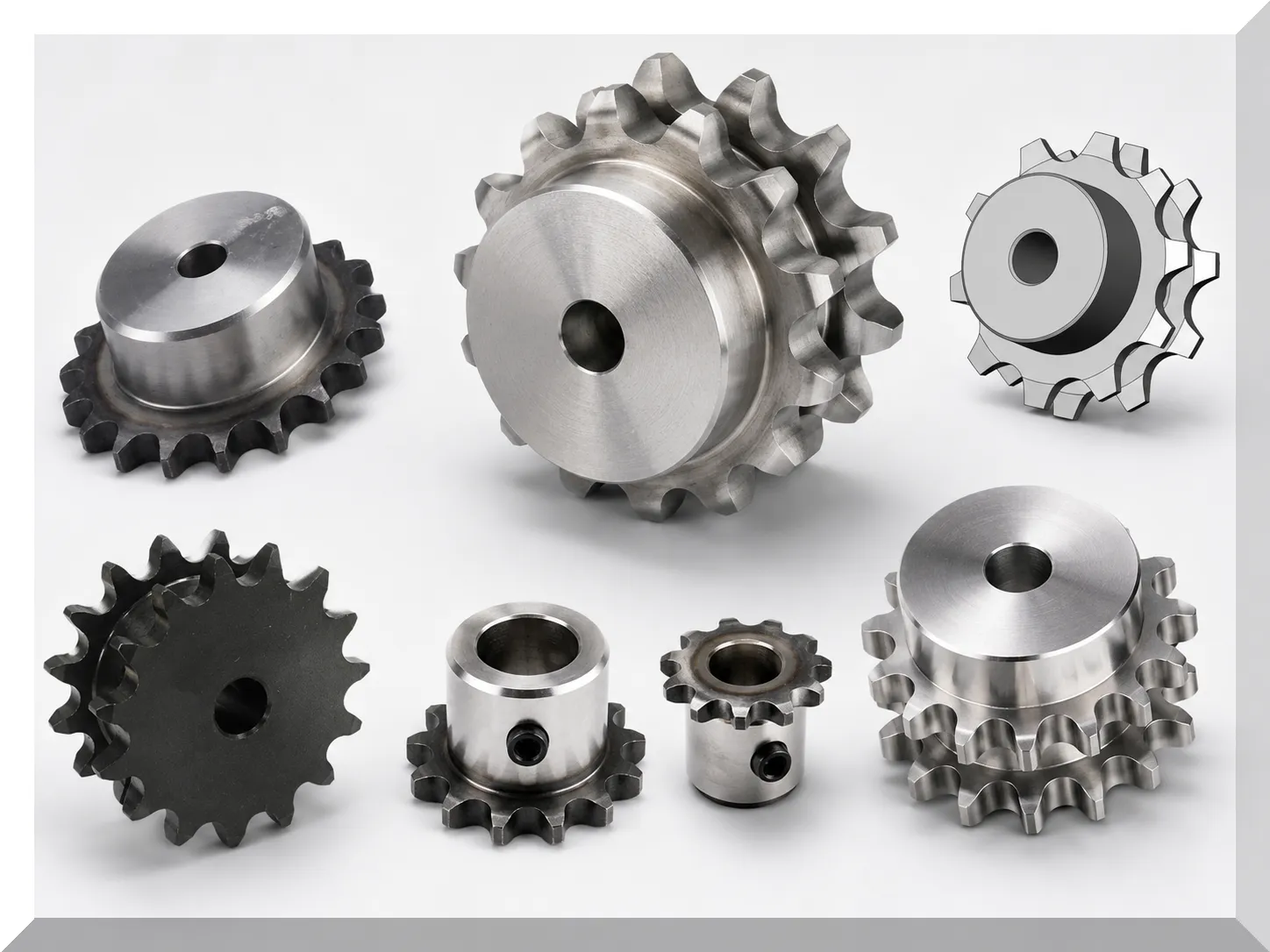
This aggressive friction will rapidly shear the vulcanized elastomer cleanly off the steel plate within mere hours of operation, rendering the entire system useless. You must strictly specify sprockets explicitly hobbed for rubber-top clearances. These specialized hubs feature induction-hardened involute teeth to resist the abrasive friction of the solid steel rollers, combined with narrowed shoulder reliefs that allow the elastomer overhang to pass through the rotational arc completely unhindered. By pairing perfectly matched geometric components, engineers ensure maximum mechanical efficiency and fully eliminate premature structural degradation across the drivetrain.
Global Industrial Application Scenarios
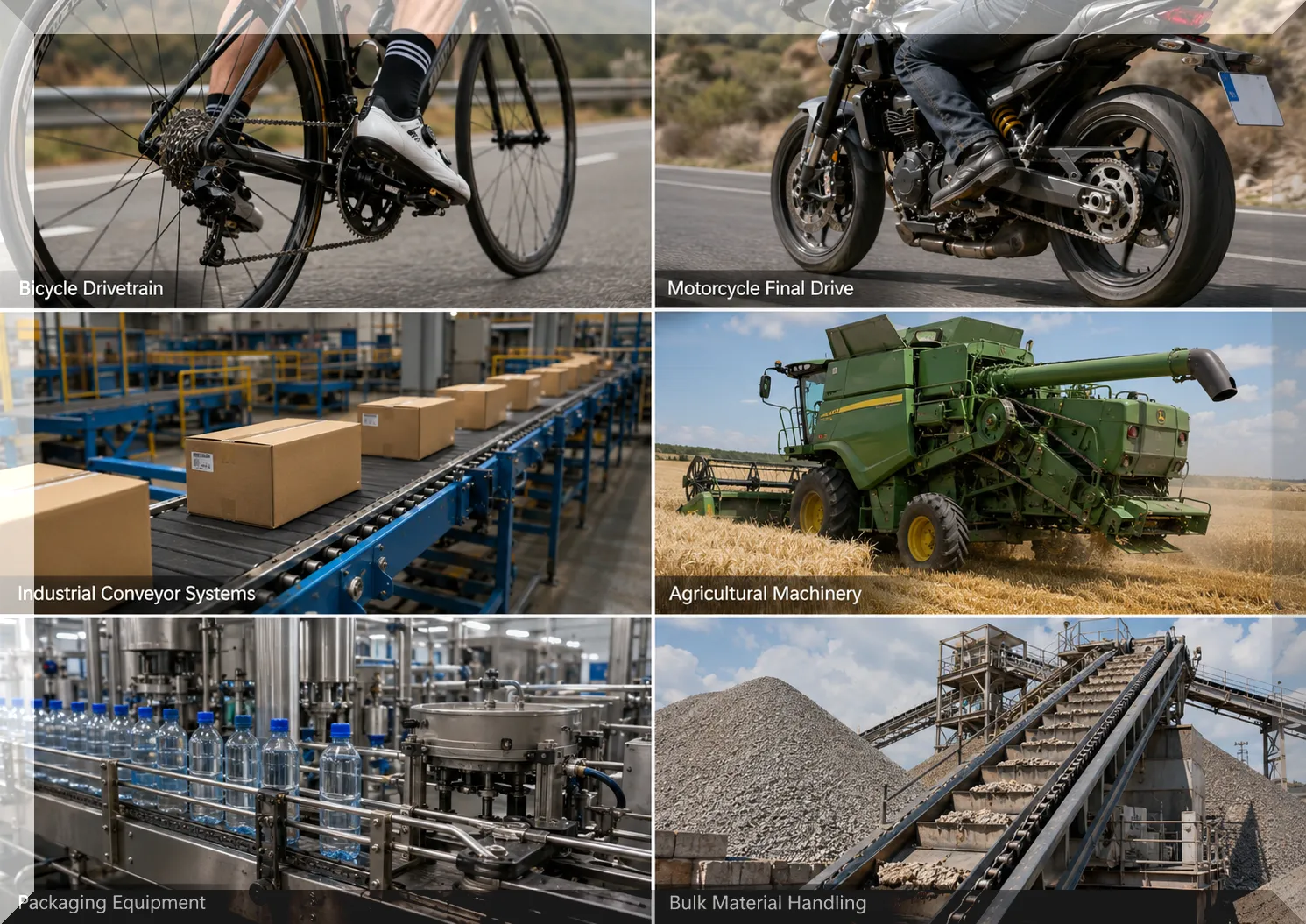
Deploying a high-tensile, non-slip transmission system is absolutely mandatory across several critical heavy-industry sectors where product preservation outweighs pure hauling capacity.
📦 Automated Packaging and Logistics
Heavy cardboard containers slip and skew on smooth metal chains during rapid incline conveying. The Shore 75 NBR elastomer mechanically grips the corrugated fibers, holding the payload absolutely stationary during rapid vertical and horizontal acceleration, ensuring high-speed barcode scanners read perfectly without blur.
🌲 Finished Timber Processing
Lumber mills processing smooth, finished plywood or decorative veneers cannot tolerate metal gouges. Bare steel rips deep channels into the wood under compression. The 12A-G2 distributes the massive weight safely across the non-marking rubber pads, entirely preserving the high-value cosmetic surface of the timber while resisting abrasive sawdust.
🍾 Glass Bottling Operations
Glass inherently shatters when subjected to high-frequency harmonic vibration or direct steel impact. The acoustic isolation properties of the vulcanized elastomer block act as a continuous shock absorber, isolating the fragile glass from the massive kinetic impacts of the drivetrain gear teeth. The NBR also repels water and sanitizing chemicals during frequent washdowns.
ISO Certified Manufacturing & Automation
Engineering superior metallurgy on paper means little without the severe manufacturing discipline required to execute it reliably in mass production. With ISO9001:2008 certification and decades of dedicated transmission expertise, our facilities enforce absolute metallurgical traceability. The steel attachment plates undergo an aggressive shot-peening phase to micro-texture the surface, exponentially increasing the chemical bonding surface area for the NBR/NR injection.
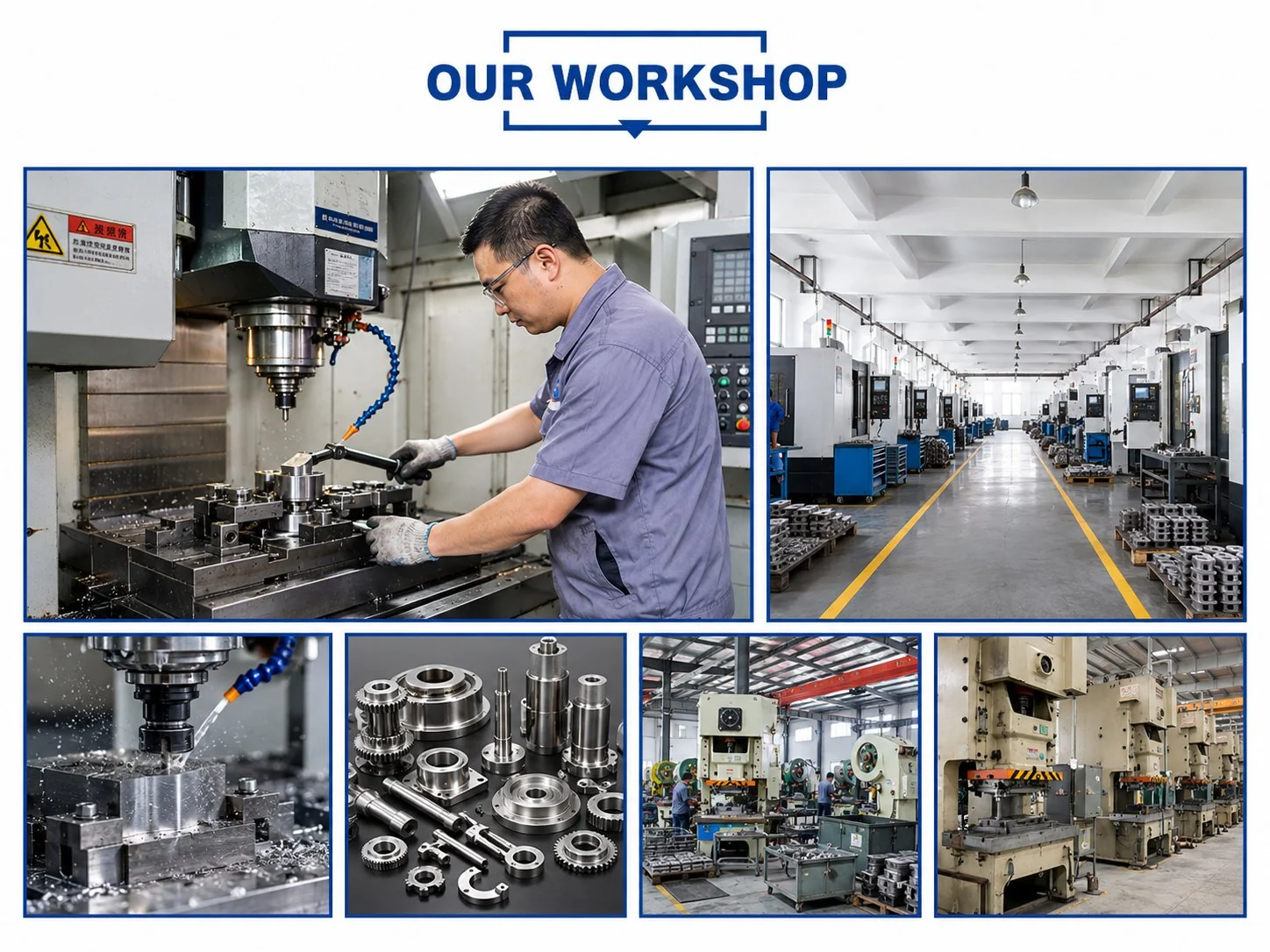
Our continuous mesh belt furnaces provide highly consistent heat-treatment depth on all pins and bushings to maximize surface hardness, while intelligent welding robotics execute flawless, deep-penetrating structural welds. We automatically pre-load every chain, applying hydraulic tension equaling roughly 30% of the ultimate tensile strength limit before the chain ever enters vacuum packaging, virtually eliminating initial run-in elongation on the factory floor. By maintaining localized distribution hubs, we send ready-to-install parts to manufacturing centers across Asia overnight to minimize your facility downtime.
Technical Diagnostics and Maintenance FAQ
Managing advanced elastomer-topped transmission systems requires specific technical knowledge to prevent chemical or physical degradation. Below are definitive answers addressing the most challenging operational inquiries from factory mechanics.
Standard NBR compounds safely sustain continuous operational temperatures up to roughly 90°C (194°F). Exceeding this thermal limit consistently will cause the rubber to undergo thermal degradation, becoming highly brittle and physically cracking away from the steel plate. For high-heat industrial ovens, alternative synthetic compounds must be explicitly requested.
You must completely avoid heavy, solvent-based penetrants and non-compatible mineral oils that swell and dissolve Natural Rubber (NR). Utilize targeted drip lubrication featuring synthetic, elastomer-safe oils directly applied exclusively to the pin and bushing clearances, strictly avoiding heavy fluid runoff onto the top pads.
Due to the high precision required to keep flat payloads perfectly level, replacement is strictly mandated at 1.5% to 2.0% total elongation. Waiting for the standard 3.0% limit will cause the linkage to ride high on the sprocket teeth, inducing severe vertical jitter that disrupts material handling stability and accuracy.
Compression set occurs when static heavy payloads rest continuously on localized sections of the belt during unscheduled machine halts. Ensure the line is physically cleared of heavy materials prior to long-duration shutdowns to allow the elastomer structure to completely rebound to its original 2.5 mm depth.
No. A standard master link lacks the vulcanized rubber pad, creating a massive gap in the continuous traction surface that will drop or scratch delicate payloads. You must explicitly inventory exact-match 12A-G2 elastomer master links to preserve continuous traction and maintain the elevated G2 tensile rating.
Verified Industrial Client Feedback
Advanced metallurgy and elastomer chemistry are proven solely through relentless operation on the factory floor. The unedited technical feedback below originates from plant directors and automation engineers across Asia relying heavily on the 12A-G2.
"The heavy veneer sheets we process require aggressive acceleration. The standard G1 chains we previously used suffered from rapid pad wear, requiring replacement every six months. The 2.5 mm vulcanized layer on this 12A-G2 format hasn't shown significant degradation after ten months of brutal 24/7 shifting. The chemical bond to the steel is extremely resilient."
"Acoustic vibration was causing micro-fractures in our thin-walled glass during the wash cycle. By switching the primary lines to the 12A-G2, the elastomer effectively damped the high-frequency chordal action from the motors. We recorded a 14% drop in ambient decibel readings near the drive stations, and product shatter rates plummeted. Exceptionally smooth kinematics."
"I routinely verify the tensile loads on new parts entering our facility. The base steel chassis of these G2 drives easily surpassed the 62.3 kN rating during our hydraulic pull tests. The dimensional accuracy of the 19.05mm pitch prevents any skipping on the specialized hubs. Local logistics kept our installation schedule perfectly intact."
"We wash down our sorting lines heavily with commercial surfactants. The old setup we used would peel its rubber off within months due to the chemicals. This NBR formulation resists the chemical wash completely. The adhesion to the steel plates is practically indestructible under our heavy load requirements."
"The pre-tensioning from the factory is highly reliable. We installed these on a 40-meter custom sorting loop and only had to adjust the turnbuckles once during the initial 48-hour run-in. The wide-waist link-plates and quad-staked pins enhance holding power and resist shock loading efficiently."
Additional information
| Editor | Cxm |
|---|
Related products
-
SH Series Roller Chains | High Strength Heavy Duty Short Pitch
-
Motorcycle Drive Chain | 25 to 530H Series – Standard, Heavy & O-Ring
-
SP Series Roller Chain | Heavy Short Pitch
-
Double Pitch Transmission Chain (Series 208 through 232)
-
A Series Short Pitch Precision Roller Chains
-
B Series Short Pitch Precision Roller Chains
-
Heavy Duty Roller Drive Chain: The Kinetic Core of Commercial Machinery