Motorcycle Drive Chain | 25 to 530H Series – Standard, Heavy & O-Ring
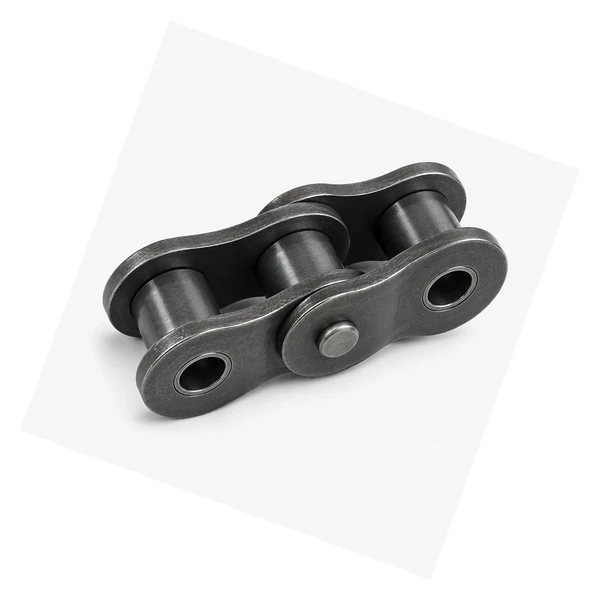
Korea Ever-Power motorcycle chains cover every grade from lightweight 420-series commuter chains (1,850 kgf breaking load) to heavy-duty 530H units rated at 3,300 kgf — giving your drivetrain exactly the strength it actually needs, nothing more, nothing less. Standard roller, O-ring, and X-ring sealed variants are stocked, with full dimensional compliance to JIS B 1801 motorcycle chain standards.
Motorcycle Drive Chain — Series 25 to 530H
A motorcycle drive chain is the mechanical link between the engine output sprocket and the rear wheel sprocket, converting engine torque into forward motion with minimal power loss. Unlike belt or shaft final drives, a well-maintained roller chain delivers near-zero drivetrain friction — which is why it remains the standard choice for sport bikes, motocross machines, and the majority of street motorcycles produced today.
Korea Ever-Power Chain and Sprocket Co., Ltd. manufactures the complete motorcycle chain range — from light 25-series chains for small-displacement engines to 530H reinforced units for high-torque liter-class bikes and enduro competition. All chains are dimensionally manufactured to JIS B 1801 standards, making them direct-fit replacements for Tsubaki, DID, RK, and EK equivalent grades.
- ⚙Pitch range: 6.35 mm (25-series) — 15.875 mm (530-series)
- ⚙Breaking load: 450 kgf (25 standard) up to 3,300 kgf (530H)
- ⚙Types: standard, heavy-duty (H), super heavy-duty (SH), O-ring, X-ring
- ⚙Suitable for motorcycles from 50 cc scooters to 1,400 cc superbikes
Full Dimensional Specifications
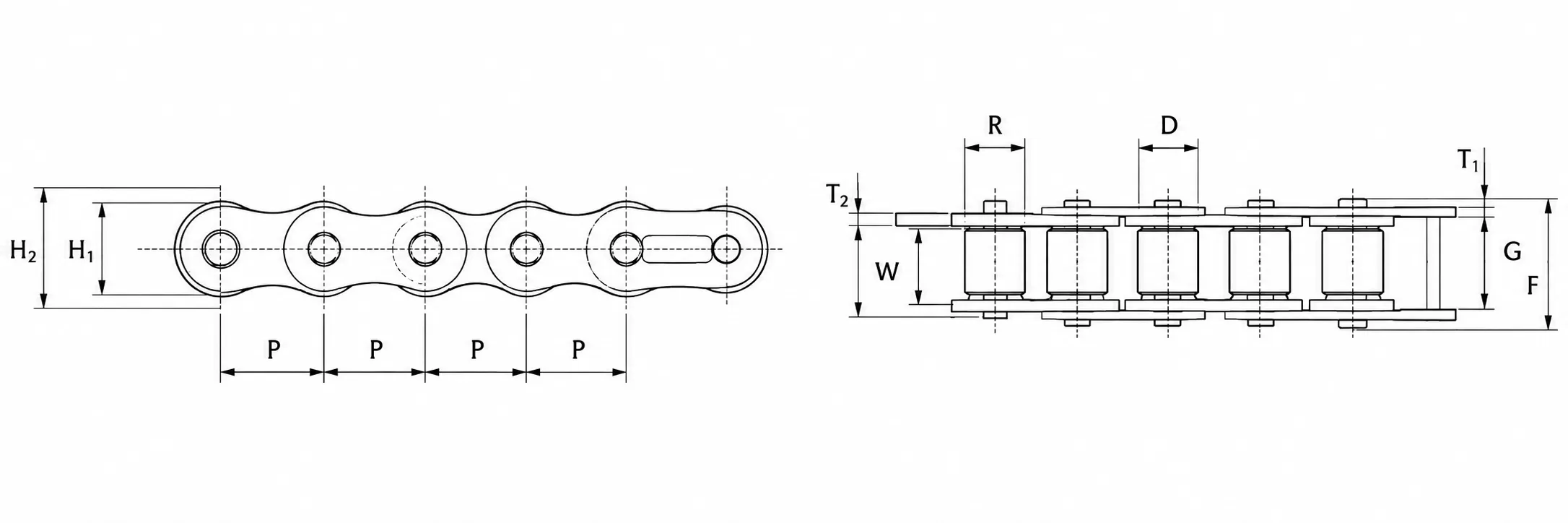
The table below lists complete dimensional data for all standard and heavy-duty motorcycle chain grades. Key columns include pitch, roller diameter (R), inner-link plate heights (H1/H2), plate thickness (T/T2), pin diameter (D), pin assembly lengths (F/G), average ultimate tensile strength (kgf), and approximate weight per metre. Confirm all dimensions against your motorcycle's service manual before ordering — pin diameter and inner width are the two measurements most commonly mismatched during chain substitution.
| Chain No. | Pitch × Width | R (mm) |
H1 (mm) |
H2 (mm) |
T (mm) |
T2 (mm) |
Pin D (mm) |
F (mm) |
G (mm) |
Breaking Load (kgf) |
Weight (kg/m) |
|
|---|---|---|---|---|---|---|---|---|---|---|---|---|
| inch | mm | |||||||||||
| 25 | 1/4″×1/8″ | 6.35×3.18 | 3.30 | 5.00 | 5.80 | 0.75 | 0.75 | 2.30 | 3.80 | 4.80 | 450 | 0.14 |
| 25-2 | 1/4″×1/8″ | 6.35×3.18 | 3.30 | 5.00 | 5.80 | 0.75 | 0.75 | 2.30 | 7.03 | 8.02 | 900 | 0.26 |
| 25H | 1/4″×1/8″ | 6.35×3.18 | 3.30 | 5.00 | 5.80 | 1.00 | 1.00 | 2.30 | 4.50 | 5.10 | 560 | 0.16 |
| 415S | 1/2″×5/16″ | 12.70×7.76 | 7.77 | 8.55 | 9.70 | 1.00 | 1.00 | 3.62 | 5.50 | 6.70 | 920 | 0.33 |
| 415H | 1/2″×5/16″ | 12.70×7.76 | 7.77 | 10.20 | 11.80 | 1.50 | 1.50 | 3.96 | 6.40 | 7.80 | 1850 | 0.50 |
| 420 | 1/2″×1/4″ | 12.70×6.35 | 7.77 | 10.20 | 11.80 | 1.50 | 1.50 | 3.96 | 7.50 | 8.40 | 1850 | 0.58 |
| 420H | 1/2″×1/4″ | 12.70×6.35 | 7.77 | 10.20 | 11.80 | 1.50 | 1.50 | 3.96 | 8.10 | 8.95 | 1900 | 0.65 |
| 425 | 1/2″×5/16″ | 12.70×7.94 | 7.92 | 10.20 | 11.80 | 1.80 | 1.80 | 3.96 | 8.20 | 9.35 | 1850 | 0.58 |
| 428 | 1/2″×5/16″ | 12.70×7.94 | 8.50 | 11.20 | 11.90 | 1.50 | 1.50 | 4.44 | 8.25 | 9.40 | 1900 | 0.68 |
| 428H | 1/2″×5/16″ | 12.70×7.94 | 8.50 | 11.20 | 12.20 | 1.80 | 1.80 | 4.44 | 8.90 | 10.20 | 2300 | 0.79 |
| 428SH | 1/2″×5/16″ | 12.70×7.94 | 8.50 | 11.20 | 12.20 | 2.00 | 2.00 | 4.44 | 9.30 | 10.70 | 2400 | 0.85 |
| 520 | 5/8″×1/4″ | 15.875×6.35 | 10.16 | 13.00 | 14.80 | 2.00 | 2.00 | 5.06 | 8.50 | 10.10 | 3100 | 0.90 |
| 520H | 5/8″×1/4″ | 15.875×6.35 | 10.16 | 13.00 | 14.80 | 2.40 | 2.40 | 5.06 | 9.30 | 10.90 | 3300 | 1.00 |
| 525 | 5/8″×5/16″ | 15.875×7.94 | 10.16 | 13.00 | 14.80 | 2.00 | 2.00 | 5.06 | 9.30 | 10.90 | 3100 | 0.97 |
| 525H | 5/8″×5/16″ | 15.875×7.94 | 10.16 | 13.00 | 14.80 | 2.40 | 2.40 | 5.06 | 10.00 | 11.60 | 3100 | 1.05 |
| 530 | 5/8″×3/8″ | 15.875×9.53 | 10.16 | 13.00 | 14.80 | 2.00 | 2.00 | 5.06 | 10.10 | 11.60 | 3100 | 1.01 |
| 530H | 5/8″×3/8″ | 15.875×9.53 | 10.16 | 13.00 | 14.80 | 2.40 | 2.40 | 5.06 | 10.90 | 12.40 | 3300 | 1.12 |
Standard vs. Heavy-Duty vs. O-Ring: Which Grade Do You Need?
Not all motorcycle chains are equal. The three core grades differ in plate thickness, pin size, and whether a sealing element retains grease between the link plates. Choosing the wrong grade is the single most common source of premature chain wear — a 420-standard on a 600 cc sport bike, or an O-ring chain on a muddy enduro course, are both mismatches with predictable consequences.
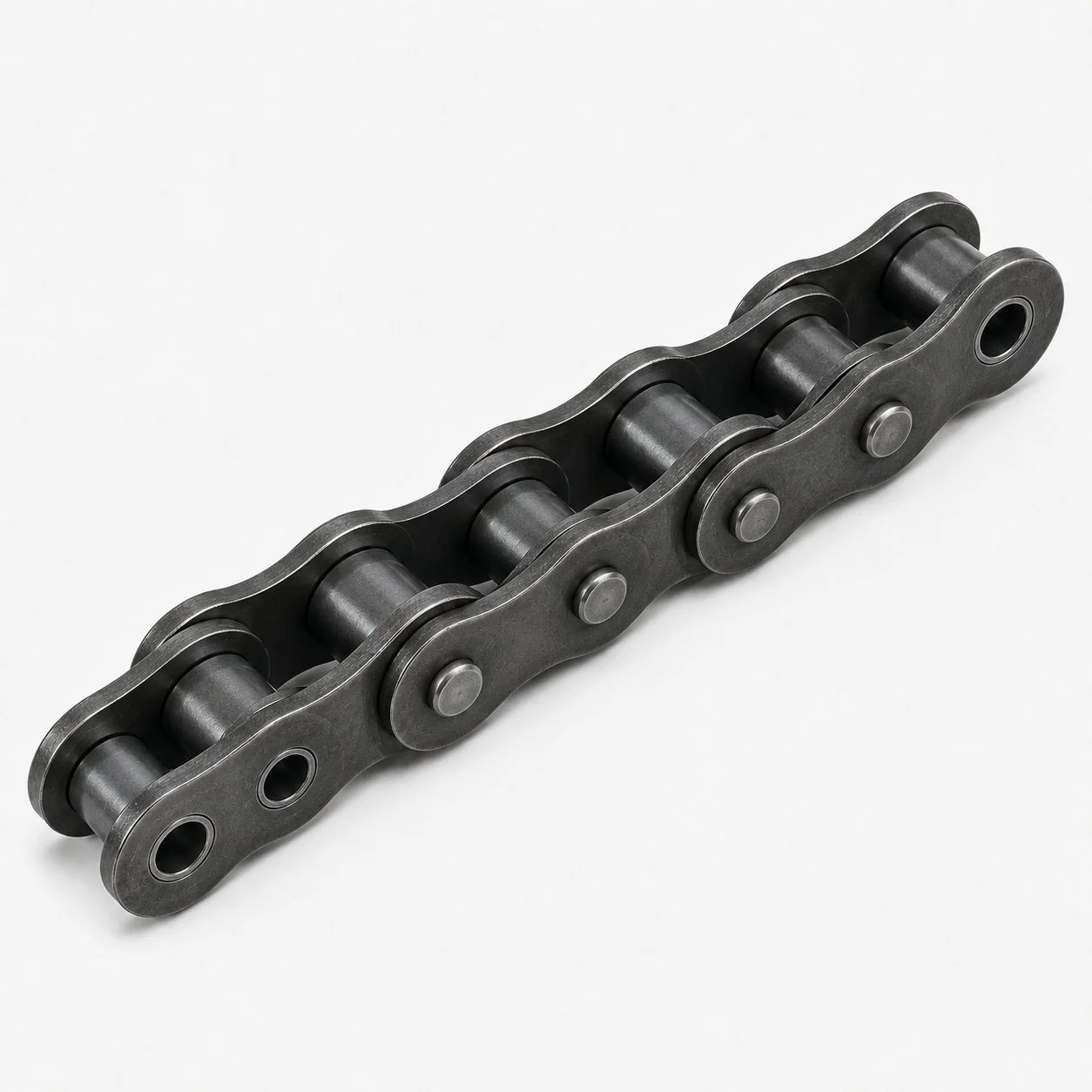
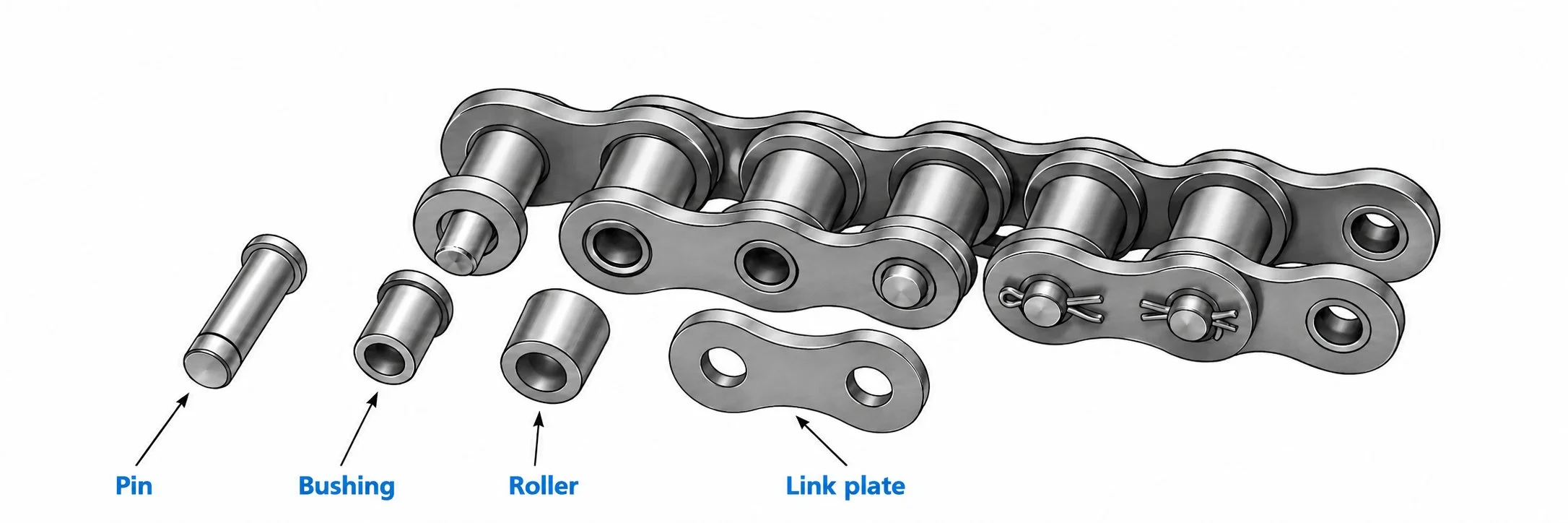
Inside a Motorcycle Drive Chain — Component Breakdown
Understanding each component helps you identify wear early and match the replacement grade to your operating conditions. A standard motorcycle chain consists of six elements, each with a defined role in the roller chain power transmission cycle.
Maintenance, Lubrication, and Wear Inspection
A well-maintained standard chain on a 250 cc commuter will outlast a neglected heavy-duty chain on a sport bike by a considerable margin. The following schedule is a practical framework — adjust intervals based on riding environment. Wet roads, coastal salt air, and off-road mud all demand more frequent attention.
Where These Chains Are Used
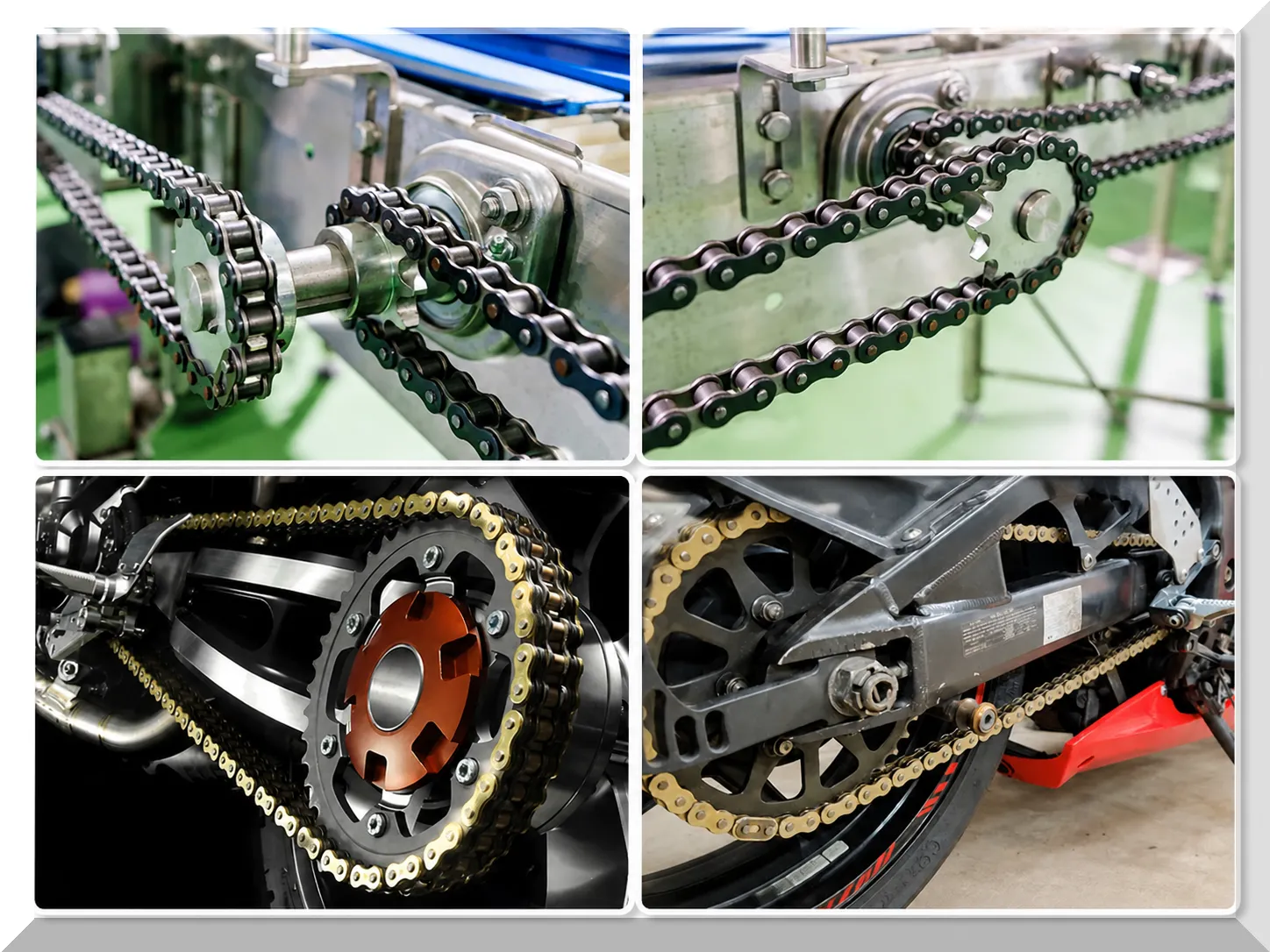
Korea Ever-Power vs. Premium Brand Motorcycle Chains
The following comparison covers the practical purchasing considerations that matter to fleet managers, dealers, and riders sourcing chains for the Korean market.
| Criteria | Korea Ever-Power | Premium Brand (DID / RK / Tsubaki) |
|---|---|---|
| Dimensional standard | JIS B 1801 compliant | JIS / ISO base standard |
| Material | Carbon / alloy steel, induction-hardened pins | Carbon / alloy steel, proprietary heat treatment |
| Price point | 20–40% below premium retail pricing | Higher retail price; brand premium included |
| MOQ to Korea | Flexible, low minimum order quantities | Typically through distributors; higher thresholds |
| Lead time | 7–15 business days for stocked grades | Depends on distributor stock levels |
| Custom lengths | Cut-to-length and bulk reels available | Standard retail lengths only, typically |
| Test documentation | CoC and material test reports on request | Brand warranty; limited technical documentation |
This comparison is provided for customer reference and selection purposes only. Korea Ever-Power Chain and Sprocket Co., Ltd. is an independent manufacturer. We do not produce or sell counterfeit products and claim no affiliation with any brand referenced above. All trademarks belong to their respective owners.
How to Select the Right Motorcycle Chain
A few specific data points are all that is needed to narrow down the correct chain for any motorcycle. The following five-step process is used by experienced workshop mechanics and fleet procurement managers alike:
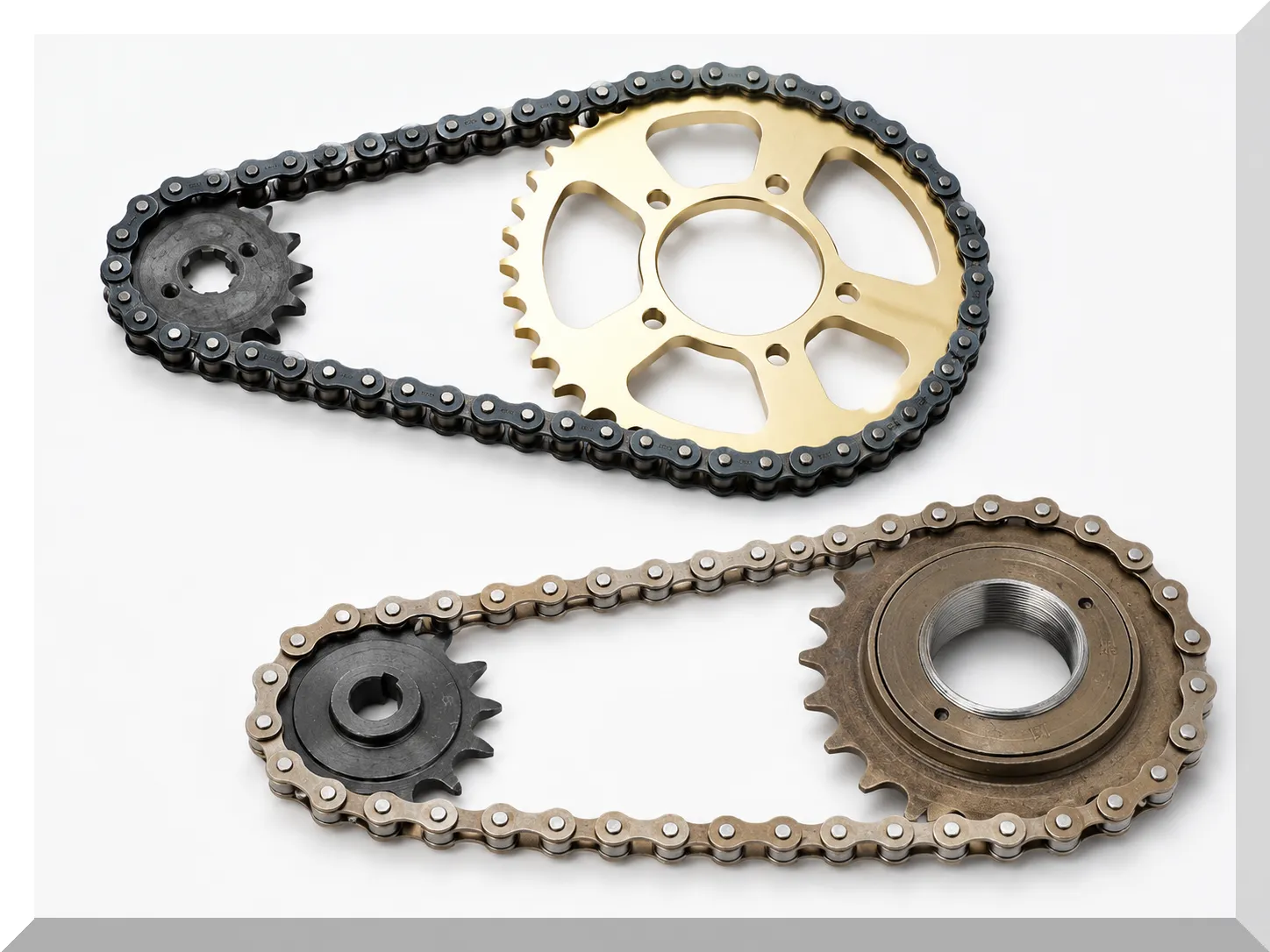
- Identify the chain number from markings stamped on the outer plate of the existing chain (e.g., 428, 520, 530). If the chain is too worn to read, check your motorcycle's service manual under "Drive Chain Specifications."
- Count the links. Count total inner link assemblies or measure the overall chain length and divide by pitch. Standard lengths are 100, 110, or 120 links; cut-to-length and joining links are available for non-standard requirements.
- Select the appropriate grade. For engines above 400 cc or any off-road application, use H-grade minimum. For touring above 25,000 km per year, choose O-ring or X-ring to reduce maintenance frequency.
- Confirm sprocket condition. A new chain should always be checked against existing sprockets. Hooked or thinned tooth profiles on either sprocket mean both should be replaced alongside the chain.
- Check width compatibility if doing a series conversion (e.g., 530 to 520). Sprocket groove width must match the new chain's inner width — a mismatch causes lateral misalignment wear from the first ride.
Matching Sprockets for Your Motorcycle Chain Series
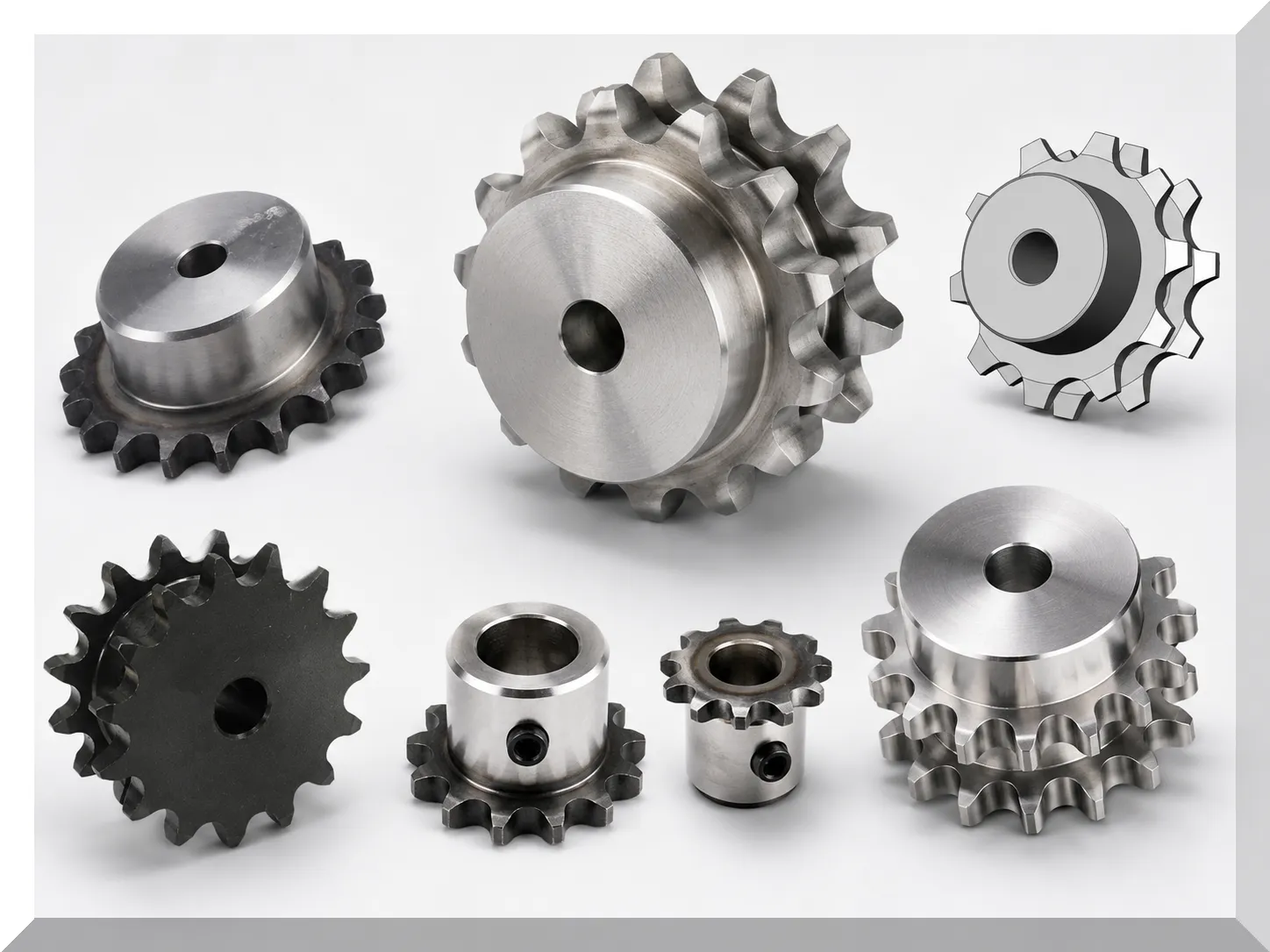
A drive chain is only as reliable as the sprockets it meshes with. Korea Ever-Power stocks a full range of motorcycle chain sprockets — front countershaft and rear wheel sprockets — machined to match the 420, 428, 520, 525, and 530 chain series listed in the specification table above.
Our sprockets are manufactured from C45 carbon steel with induction-hardened tooth profiles, achieving surface hardness of HRC 50–55. Standard bore and custom-bore options are available. When ordering a complete chain and sprocket system, specify your motorcycle make, model, and whether you want OEM tooth count or a modified gear ratio — our team can calculate the effect on acceleration, top speed, and cruising RPM.
Why Choose Korea Ever-Power Chain and Sprocket
Korea Ever-Power Chain and Sprocket Co., Ltd. combines manufacturing experience with a supply chain positioned specifically for the Korean and Asia-Pacific market. Here is what sets us apart from generic importers:
ISO 9001-certified production — quality management system audited annually; every batch traceable to raw material test certificates
Pre-shipment tensile testing — breaking load verified on each production lot; test reports available on request at no additional charge
Complete series coverage — 25-series through 530H plus O-ring and X-ring sealed variants; no need to source from multiple suppliers
Korean-market proximity — shorter logistics lead times than direct China sourcing; documentation aligned to Korean import requirements
Bulk and custom packaging — 25 m and 50 m reels, pre-cut retail lengths, dealer packs for workshop and fleet maintenance programmes
Technical support in Korean and English — chain selection confirmation, gear ratio calculations, and OEM cross-referencing before your order is placed
Frequently Asked Questions
Customer Reviews
Verified feedback from customers in Korea and surrounding markets.
Kim Tae-hyun, Motorcycle Workshop Owner, Busan (early 2025)
"We switched our workshop to Korea Ever-Power 428H chains for mid-size bike services about eight months ago. Customers have not returned with complaints. The chains are fitting cleanly on all the OEM sprockets we stock, and the price difference versus Japanese brands lets us offer a more competitive service rate."
Park Ji-yeon, Delivery Fleet Manager, Seoul (late 2024)
"We run 38 125 cc delivery bikes across Gangnam. Bulk 420-series reels save us roughly 30% per chain versus retail. Mechanics say quality is consistent batch to batch — that predictability is exactly what we need managing this many machines. Lead time has been 10 days to our warehouse."
Choi Min-jun, Track Day Enthusiast, Gyeonggi-do (2024)
"I converted my 600 cc supersport from 530 to 520H and ordered the chain and front sprocket from Korea Ever-Power. The connecting link fitted first time with no filing required. About 3,500 km on the setup now — road and two track days — and there is no visible roller wear yet."
Lee Soo-jin, Adventure Touring Rider, Jeju Island (March 2025)
"Fitted the 525H O-ring chain to my adventure tourer. Put 8,000 km on it across Jeju coastal roads and gravel tracks. Lubed it twice in that entire period, which genuinely surprised me. Previous sealed chain from a Japanese brand needed attention every 3,000 km."
Yoon Dong-hyun, Motocross Competitor, North Gyeongsang Province (2024)
"I go through chains fast in training so cost matters. I use 428H unsealed from Ever-Power for practice and save the premium Japanese sealed chains for race day. In training where I clean the chain after every session, the performance difference is undetectable. No bent or cracked plates in eight months."
Han Byung-chul, Motorcycle Parts Distributor, Incheon (Q1 2025)
"We import roughly 400 units per quarter across the 420, 428, 520, and 530 series. Incoming quality checks — measuring pin diameter and roller diameter against JIS spec — have been consistently within tolerance. No rejection batches in the past 12 months. Documentation is accurate, which keeps customs clearance clean."
Additional information
| Editor | Cxm |
|---|
Related products
-
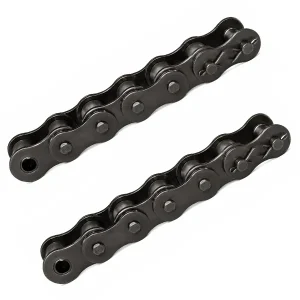
SH Series Roller Chains | High Strength Heavy Duty Short Pitch
-
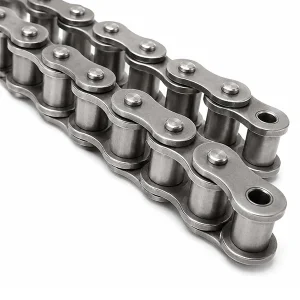
SP Series Roller Chain | Heavy Short Pitch
-
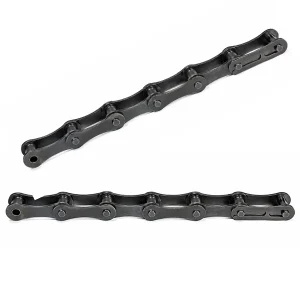
Double Pitch Transmission Chain (Series 208 through 232)
-
A Series Short Pitch Precision Roller Chains
-
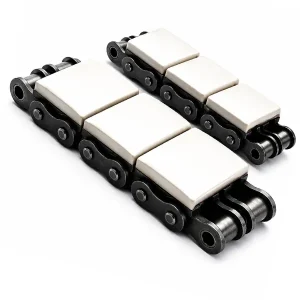
12A-G2 Rubber Top Roller Chain
-
B Series Short Pitch Precision Roller Chains
-
Heavy Duty Roller Drive Chain: The Kinetic Core of Commercial Machinery