Roller Chain Sprockets | A-Plate & B-Hub – 18 to 72 Teeth, SAE 1045 Steel

Korea Ever-Power #25 roller chain sprockets cover A-plate (18–72 teeth, outside diameter 1.568″–5.876″) and B-hub (10–72 teeth) configurations in SAE 1045 steel with precision-cut teeth and black oxide finish. At just 0.03–1.30 lb per unit, these are the lightest sprockets in the ANSI range — ideal for small-format drive systems in instrumentation, light conveyor chain applications, medical equipment, and precision machinery across Korea.
#25 Chain Sprockets — ANSI Light-Duty Series, A-Plate and B-Hub
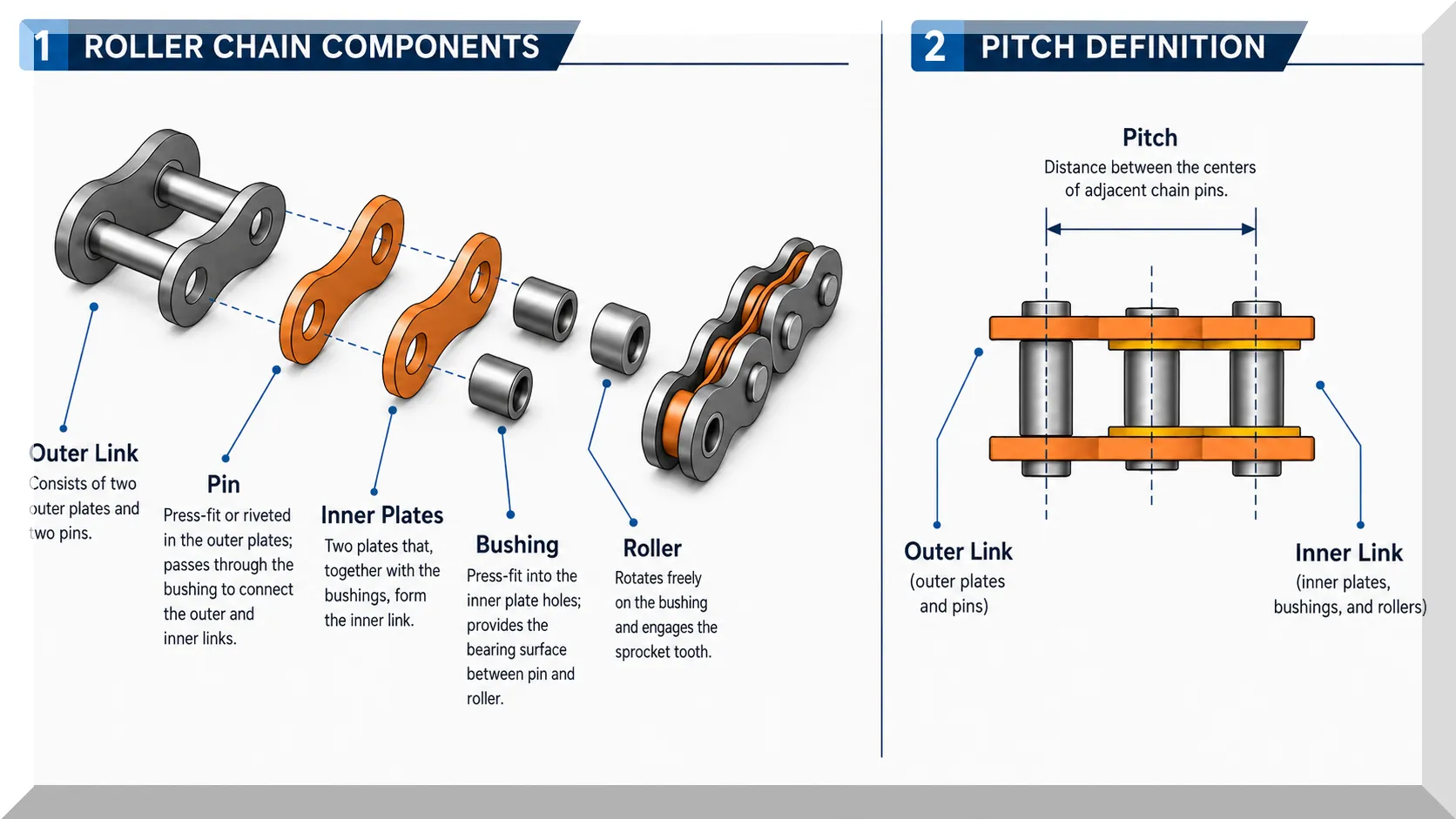
#25 roller chain is the smallest ANSI standard chain size, with a pitch of 1/4 inch (6.35 mm) and a breaking strength of approximately 780 lbf (354 kgf). The corresponding #25 sprockets are designed for drives where the transmitted power is low but precision and smooth engagement matter — think instrument panel drives, vending machine mechanisms, seed counting equipment, and light packaging machinery. The 1/4-inch pitch means a high tooth count can be achieved in a very compact outside diameter, which is why #25 drives are often found in space-constrained control mechanisms.
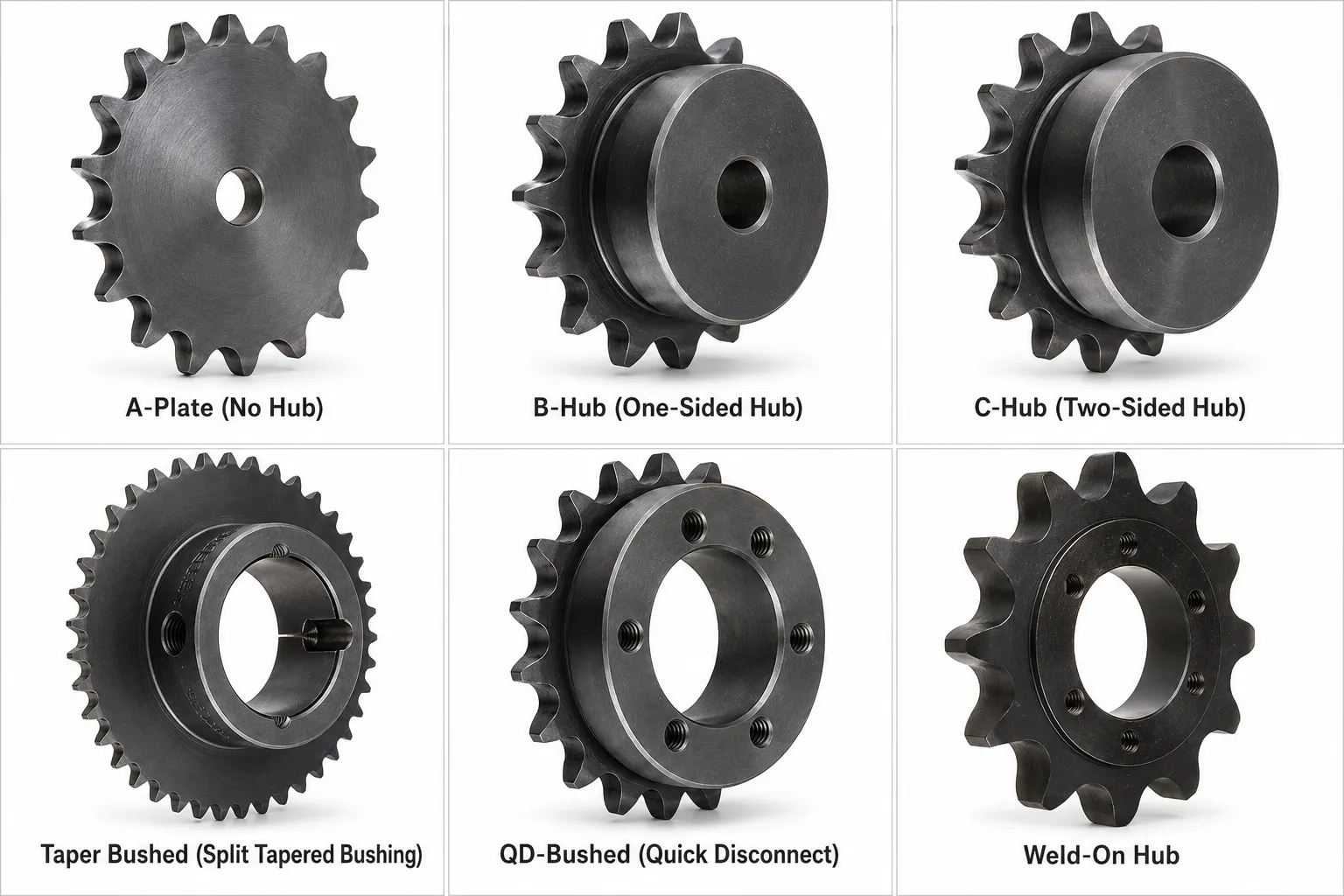
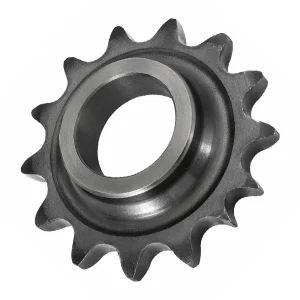
Korea Ever-Power manufactures #25 sprockets in two hub configurations. A-plate sprockets (25A series, 18–72 teeth) are flat discs with no hub — minimal axial thickness, suitable for flush-mount or weld-on installations. B-hub sprockets (25B series, 10–72 teeth) carry a single-sided hub that extends shaft engagement length and accepts a keyway plus set screws for reliable torque transmission. Both types are SAE 1045 steel with black oxide finish as standard.
- ⚙Chain: ANSI #25 — pitch 1/4″ (6.35 mm), roller dia 0.130″, inner width 0.125″
- ⚙A-plate range: 18–72 teeth, OD 1.568″–5.876″, weight 0.04–0.74 lb
- ⚙B-hub range: 10–72 teeth, OD 0.919″–5.876″, weight 0.03–1.30 lb
- ⚙Material: SAE 1045 steel, black oxide finish, ANSI B29.1 compliant
#25 A-Plate Sprocket Specifications
A-plate (#25A) sprockets have no hub projection — the bore passes directly through the flat plate body. The stock bore listed is the minimum standard bore; larger bores up to the outside diameter constraint can be machined on request. Outside diameter values below are nominal imperial measurements per ANSI B29.1.
| Sprocket Size | Teeth | Type | Outside Dia. | Stock Bore | Weight (lb) |
|---|---|---|---|---|---|
| 25A18 | 18 | A | 1.568″ | 1/4″ | 0.04 |
| 25A19 | 19 | A | 1.648″ | 1/4″ | 0.04 |
| 25A20 | 20 | A | 1.729″ | 1/4″ | 0.04 |
| 25A21 | 21 | A | 1.809″ | 3/8″ | 0.04 |
| 25A22 | 22 | A | 1.889″ | 3/8″ | 0.06 |
| 25A23 | 23 | A | 1.969″ | 3/8″ | 0.06 |
| 25A24 | 24 | A | 2.049″ | 3/8″ | 0.08 |
| 25A25 | 25 | A | 2.129″ | 3/8″ | 0.08 |
| 25A26 | 26 | A | 2.209″ | 3/8″ | 0.09 |
| 25A28 | 28 | A | 2.369″ | 3/8″ | 0.11 |
| 25A30 | 30 | A | 2.529″ | 3/8″ | 0.13 |
| 25A36 | 36 | A | 2.972″ | 3/8″ | 0.15 |
| 25A42 | 42 | A | 3.454″ | 1/2″ | 0.19 |
| 25A48 | 48 | A | 3.937″ | 1/2″ | 0.24 |
| 25A54 | 54 | A | 4.442″ | 1/2″ | 0.38 |
| 25A60 | 60 | A | 4.920″ | 1/2″ | 0.54 |
| 25A72 | 72 | A | 5.876″ | 1/2″ | 0.74 |
#25 B-Hub Sprocket Specifications
B-hub (#25B) sprockets carry a single hub projection on one face, providing a longer bore engagement length for keyway-and-set-screw shaft retention. The "Recommend Max. Bore" column is the largest bore that can be machined while maintaining adequate hub wall thickness. "Length Thru Bore" is the overall axial hub engagement depth — a critical value when sizing a key length or checking shaft protrusion clearance.
| Size | Teeth | OD | Stock Bore | Max Bore | Hub Dia. | Length Thru Bore | Weight (lb) |
|---|---|---|---|---|---|---|---|
| 25B10 | 10 | 0.919″ | 1/4″ | 1/4″ | 1/2″ | 1/2″ | 0.03 |
| 25B11 | 11 | 1.002″ | 1/4″ | 5/16″ | 9/16″ | 1/2″ | 0.04 |
| 25B12 | 12 | 1.083″ | 1/4″ | 3/8″ | 5/8″ | 1/2″ | 0.06 |
| 25B13 | 13 | 1.167″ | 1/4″ | 7/16″ | 23/32″ | 1/2″ | 0.07 |
| 25B14 | 14 | 1.248″ | 1/4″ | 1/2″ | 3/4″ | 1/2″ | 0.08 |
| 25B15 | 15 | 1.330″ | 1/4″ | 5/8″ | 7/8″ | 5/8″ | 0.09 |
| 25B16 | 16 | 1.410″ | 1/4″ | 5/8″ | 7/8″ | 5/8″ | 0.10 |
| 25B17 | 17 | 1.492″ | 1/4″ | 5/8″ | 7/8″ | 5/8″ | 0.12 |
| 25B18 | 18 | 1.568″ | 1/4″ | 3/4″ | 1″ | 5/8″ | 0.13 |
| 25B20 | 20 | 1.729″ | 1/4″ | 3/4″ | 1″ | 5/8″ | 0.14 |
| 25B21 | 21 | 1.809″ | 3/8″ | 3/4″ | 1-1/8″ | 5/8″ | 0.15 |
| 25B24 | 24 | 2.049″ | 3/8″ | 3/4″ | 1-1/8″ | 5/8″ | 0.18 |
| 25B30 | 30 | 2.529″ | 3/8″ | 3/4″ | 1-1/8″ | 3/4″ | 0.27 |
| 25B36 | 36 | 2.972″ | 3/8″ | 3/4″ | 1-1/8″ | 3/4″ | 0.37 |
| 25B42 | 42 | 3.454″ | 1/2″ | 3/4″ | 1-1/8″ | 3/4″ | 0.49 |
| 25B48 | 48 | 3.937″ | 1/2″ | 1-3/8″ | 2″ | 3/4″ | 0.75 |
| 25B54 | 54 | 4.442″ | 1/2″ | 1-3/8″ | 2″ | 3/4″ | 0.90 |
| 25B60 | 60 | 4.920″ | 1/2″ | 1-3/8″ | 2″ | 3/4″ | 1.10 |
| 25B70 | 70 | 5.717″ | 1/2″ | 1-3/8″ | 2″ | 3/4″ | 1.25 |
| 25B72 | 72 | 5.876″ | 1/2″ | 1-3/8″ | 2″ | 3/4″ | 1.30 |
SAE 1045 vs. SAE 1018 Steel — Why the Material Grade Matters
Many #25 sprockets in the market are made from SAE 1018 low-carbon steel — the industry baseline. Korea Ever-Power specifies SAE 1045 medium-carbon steel for all sprockets. The difference is not marketing language — it has measurable consequences for how long the sprocket lasts in service.
| Property | SAE 1045 (Korea Ever-Power) | SAE 1018 (Common Baseline) |
|---|---|---|
| Carbon content | 0.43–0.50% | 0.15–0.20% |
| Tensile strength | 570–700 MPa | 400–490 MPa |
| Surface hardness (normalised) | 163–207 HB | 126–163 HB |
| Induction hardenability | Excellent — achieves 50–58 HRC surface | Poor — insufficient carbon for deep hardening |
| Tooth wear resistance | Significantly higher — especially on small sprockets | Adequate for very low-speed, low-load applications only |
| Machinability | Good — suitable for custom bore machining | Very good — easier to machine, but at cost of strength |
For #25 sprockets specifically, the higher tensile strength of SAE 1045 matters because the small pitch means each tooth carries load over a short engagement arc. Higher tooth-face hardness (achieved through induction hardening on sub-30-tooth sprockets) directly extends the period before tooth-face wear requires sprocket replacement.
Characteristics of #25 Chain Drive Systems
#25 is the lightest and most compact ANSI roller chain size, and this brings specific design characteristics that engineers working with #25 drives should understand before specifying sprockets:
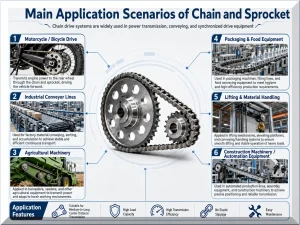
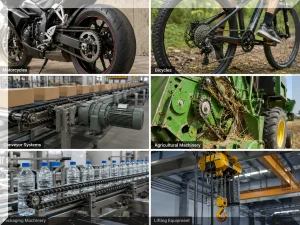
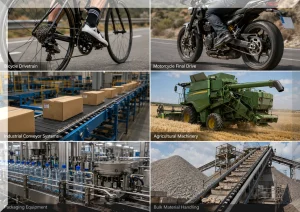
Typical Applications for #25 Chain and Sprockets
Compatible #25 Roller Chain
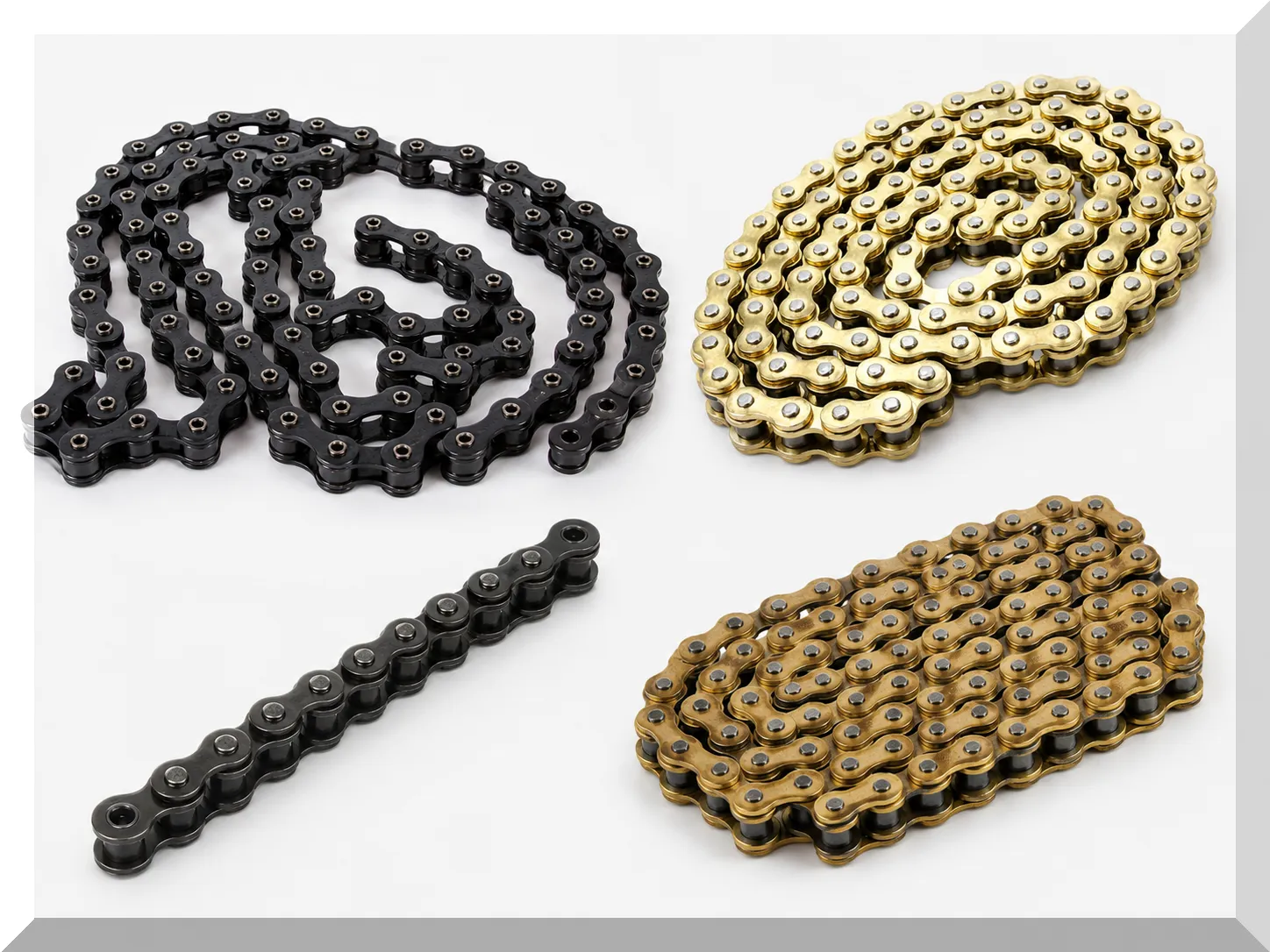
All #25 sprockets listed above are dimensioned for use with ANSI #25 roller chain — pitch 0.250″ (6.35 mm), roller diameter 0.130″, inner width 0.125″. Korea Ever-Power stocks #25 chain in single-strand, double-strand (#25-2), and connecting links to pair with the sprockets above. When ordering a matched set, specify the tooth counts for both driver and driven sprocket plus your shaft centre distance, and we will calculate the required chain link count.
For broader chain and sprocket system guidance covering power rating selection, centre distance calculations, and lubrication recommendations for #25 drives, our technical team can assist before your order is placed.
Why Korea Ever-Power Chain and Sprocket
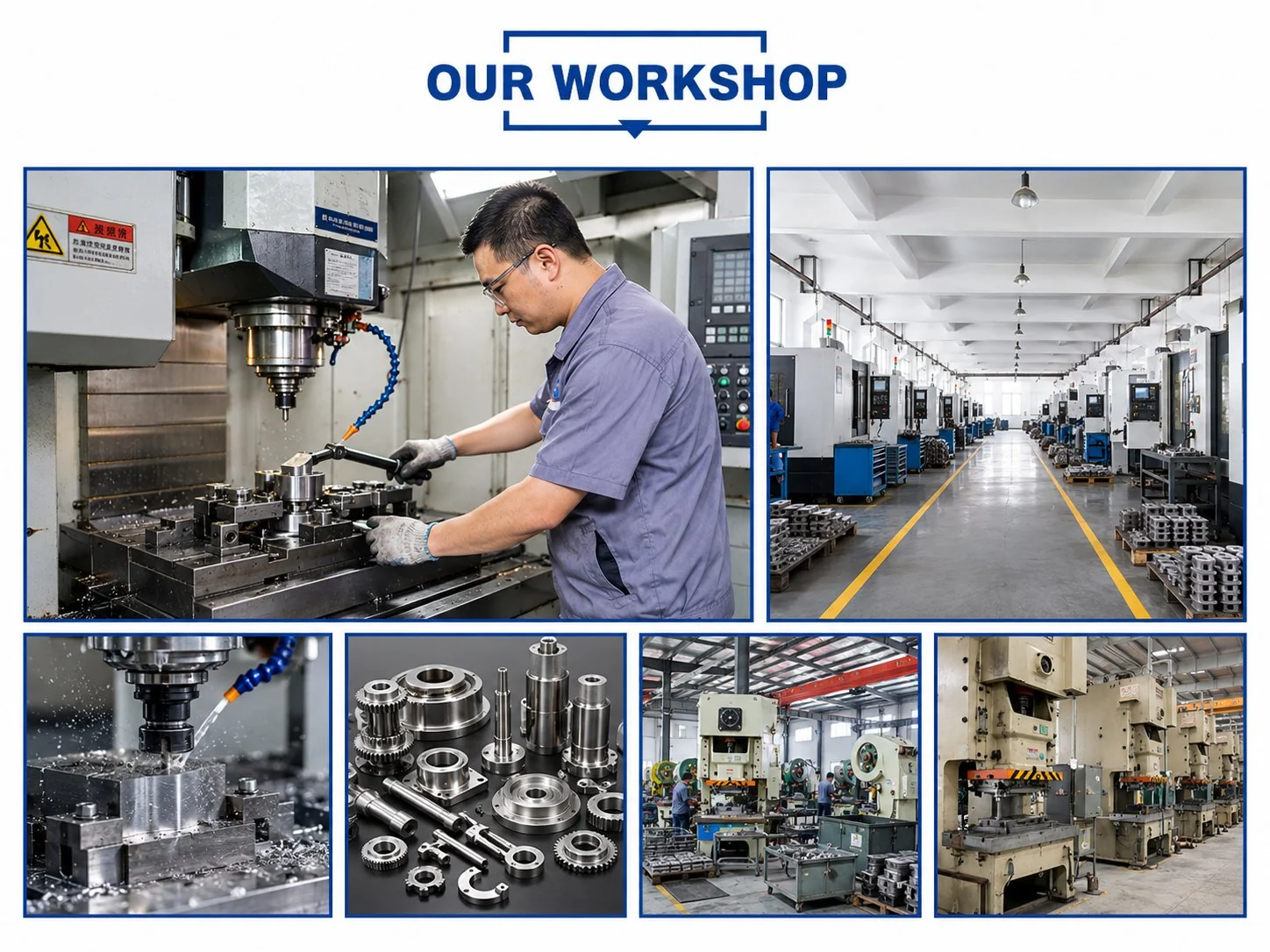
Korea Ever-Power Chain and Sprocket Co., Ltd. stocks the complete #25 A-plate and B-hub range with fast Korea dispatch:
Frequently Asked Questions
Customer Reviews
Verified feedback from customers in Korea and surrounding markets.
Lee Jae-won, R&D Engineer, Medical Device Company, Seongnam (early 2025)
"We use #25 chain drives in a sample transport mechanism inside a diagnostic instrument. Precision and low noise are non-negotiable. Korea Ever-Power 25B18 and 25B30 sprockets have been running in our prototype for six months without measurable pitch diameter wear. The custom bore machining (8mm diameter, 3mm key) was accurate to within our drawing tolerance of ±0.02mm."
Kwon Min-seo, Mechanical Engineer, Vending Machine Manufacturer, Gyeonggi-do (2024)
"We buy #25 B-hub sprockets in 14T, 18T, and 24T for our vending machine product elevator mechanisms. Korea Ever-Power stock these in the correct bore sizes and lead time is consistently 9–11 days. We have been sourcing from them for about 14 months and have had zero dimensional non-conformances on arrival inspection."
Ahn Soo-ji, Production Engineer, Agricultural Equipment OEM, Chungbuk (Q4 2024)
"For seed drill metering drives we need multiple tooth count options in A-plate to adjust seeding rates without changing the chain. We use 25A30, 25A36, 25A42, and 25A48. Korea Ever-Power supplies all four in a single order. The flat plate profile stacks cleanly on our metering shaft with minimal spacing, which is exactly what our design requires."
Park Ji-ho, Maintenance Technician, Electronics Assembly Plant, Incheon (2025)
"We maintain #25 chain drives on component transport trays in our PCB assembly line. The SAE 1045 sprockets from Korea Ever-Power last noticeably longer than the 1018-based sprockets we used previously from a domestic supplier. Specifically the 25B12 and 25B15 — the small teeth used to show wear after about 4 months. With Ever-Power we are now at 9 months on the current set without tooth-face wear reaching the replacement threshold."
Oh Sung-min, Design Engineer, Printing Equipment Company, Seoul (early 2025)
"#25 A-plate sprockets for auxiliary register drives on our sheet-fed press. We needed 25A20 and 25A30 with a 6mm bore, which is non-standard. Korea Ever-Power machined the custom bore with a 2mm key slot exactly to our drawing. The response time from drawing submission to delivery confirmation was four business days."
Additional information
| Editor | Cxm |
|---|
Related products
-
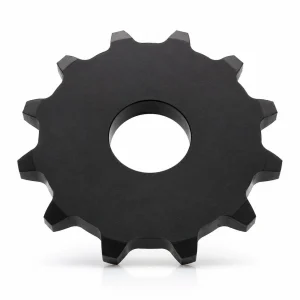
WR78 / WH78 Welded Steel Chain Sprockets | A-Plate 7–20 Teeth — Mild Steel & QT400 Hardened
-
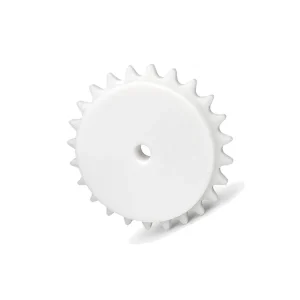
Plastic Sprockets | Nylatron, Acetal, Nylon — FDA-Approved, Self-Lubricating, Corrosion-Free
-
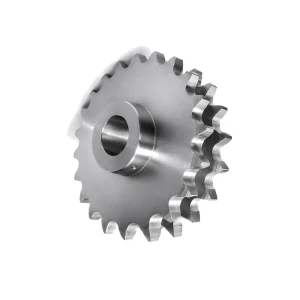
Double Pitch Sprockets | C2040 C2050 C2060 C2080 Standard & Carrier Roller Types
-
#240 Roller Chain Sprockets | A-Plate B-Hub C-Hub – 10 to 60 Teeth, 3-Inch Pitch
-
#180 Roller Chain Sprockets | A-Plate B-Hub C-Hub – 11 to 60 Teeth, SAE 1045
-
Single Strand Roller Chain Sprockets | A-Plate B-Hub C-Hub Taper QD Weld-On
-
Plate Wheel Sprocket 081B-1 | DIN 8187 ISO 606 – 8 to 125 Teeth
-
Cast Iron Sprocket | DIN 8187 ISO 606