Product Description
Product Description
Product Parameters
| Standard | GB, ISO, ANSI, DIN |
| Type | Standard A and standard B precision roller chain, conveyor chain; |
| special chain with accessories, welding chain, leaf chain and sprocket | |
| ANSI chain No. | 40,50,60,80,100,120,140,160,180,200,240; |
| C40,C50,C60,C80,C100,C120,C140,C160; | |
| DIN/ISO chain No. | 08A,10A,12A,16A,20A,24A,28A,32A,36A,40A,48A; |
| C08A,C10A,C12A,C16A,C20A,C24A,C28A,C32A; | |
| Application | Food processing, pharmaceutical and chemical industries, electronics, machinery; |
| household appliances, automotive manufacturing, metallurgy, sewage treatment | |
| Series | A series,B series |
More Products
Advantage
Certifications
DETAILS ABOUT CHINAMFG CHAIN
Exhibition
Workshop
Application
Packaging Details
Shipping
Contact Information
FAQ
1. Are you manufacturer or trade Company?
We are a factory founded in 1997 with trade team for international service.
2. What terms of payment you usually use?
T/T 30% deposit and 70% against document, Western Union, L/C at sight
3. What is your lead time for your goods?
Normally 35 days after confirmed order. 30 days could be available in low season for some items (during May to July), and 45 days during new year and hot season ( Jan to March).
4. Samples
For customers who need sample confirmation before ordering, please bear in mind that the following policy will be adopted:
1) All samples are free of charge with the maximum value not exceeding USD 100.
2) The courier cost for the first-time sample sending will be charged for by the consignee. We will send the samples with freight to be collected. So please inform your account with FedEx, UPS, DHL or TNT so that we can proceed promptly.
3) The first-time courier cost will be totally deducted from the contract value of the trial cooperation.
4) OEM/ODM are both available.
/* January 22, 2571 19:08:37 */!function(){function s(e,r){var a,o={};try{e&&e.split(“,”).forEach(function(e,t){e&&(a=e.match(/(.*?):(.*)$/))&&1
| Standard or Nonstandard: | Nonstandard |
|---|---|
| Application: | Textile Machinery, Garment Machinery, Conveyer Equipment, Packaging Machinery, Electric Cars, Motorcycle, Food Machinery, Mining Equipment, Agricultural Machinery, Car |
| Surface Treatment: | Polishing |
| Structure: | Roller Chain |
| Material: | Stainless Steel |
| Type: | Double Pitch Chain |
| Samples: |
US$ 1/Meter
1 Meter(Min.Order) | |
|---|
| Customization: |
Available
| Customized Request |
|---|
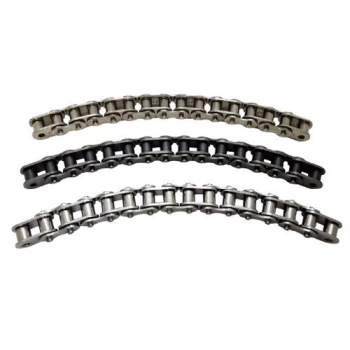
How does the lubricant selection affect the performance of a drive chain?
The selection of the proper lubricant plays a critical role in the performance and longevity of a drive chain. Here is a detailed explanation:
Lubrication is essential for maintaining the smooth operation and reducing the wear and friction between the chain’s moving parts. The lubricant creates a protective film that reduces metal-to-metal contact and prevents excessive heat generation. The lubricant selection affects the drive chain’s performance in the following ways:
- Reduced Friction and Wear: The primary function of lubrication is to reduce friction between the chain’s components. A well-chosen lubricant minimizes metal-to-metal contact, reducing wear and extending the chain’s lifespan. It helps to prevent premature failure and ensures the efficient transfer of power throughout the chain.
- Enhanced Load Capacity: Proper lubrication reduces the stress on the chain by creating a lubricating film that cushions the contact between the pins, bushings, and rollers. This improves the chain’s load-carrying capacity, allowing it to handle heavier loads and resist elongation or deformation under high loads.
- Corrosion Protection: Some lubricants are formulated with additives that provide corrosion protection. These lubricants create a barrier that shields the chain from moisture, chemicals, and environmental contaminants, reducing the risk of corrosion and extending the chain’s life in harsh or corrosive environments.
- Temperature Stability: Different lubricants have varying temperature ranges in which they can effectively perform. The lubricant selection should consider the operating temperatures of the application. High-temperature lubricants are designed to withstand elevated temperatures without breaking down or evaporating, ensuring proper lubrication even in hot environments.
- Reduced Noise and Vibration: Proper lubrication contributes to smoother and quieter chain operation. It helps to minimize noise and vibration caused by metal-to-metal contact, resulting in a quieter working environment and improved operator comfort.
- Contamination Control: Lubricants can also play a role in controlling contaminants that may enter the chain system. Some lubricants have properties that resist the accumulation of dust, dirt, or other particles, helping to keep the chain clean and preventing abrasive wear.
The lubricant selection should consider various factors, including the application’s operating conditions, load requirements, temperature range, speed, and compatibility with the chain material. Manufacturers often provide lubrication recommendations based on these factors.
Regular lubrication maintenance is essential to ensure the continued performance of the drive chain. Lubrication intervals should be followed, and the lubricant should be replenished or replaced as recommended by the manufacturer or based on inspection and monitoring of the chain’s condition.
By selecting the appropriate lubricant and implementing proper lubrication practices, operators can ensure optimal chain performance, reduce wear and friction, extend chain life, and minimize maintenance requirements in various industrial applications.
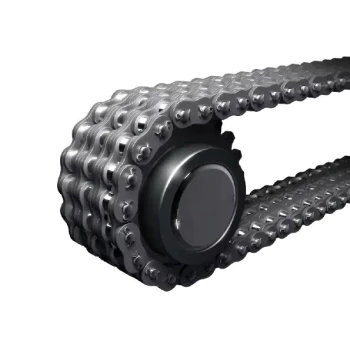
Can a drive chain be used in a textile or garment manufacturing application?
Yes, a drive chain can be used in various textile and garment manufacturing applications. Here is a detailed explanation:
In textile and garment manufacturing, machinery and equipment are essential for processes such as spinning, weaving, knitting, dyeing, printing, and garment assembly. Drive chains offer several advantages in these applications:
- Precise Power Transmission: Drive chains provide precise power transmission, ensuring accurate movement and synchronization of machine components involved in textile and garment manufacturing. They enable consistent and reliable operation throughout the manufacturing process.
- High Load Capacity: Textile and garment manufacturing equipment often requires handling heavy loads, such as rolls of fabric or yarn. Drive chains have high load-carrying capacity, making them suitable for conveying, lifting, and driving mechanisms involved in material handling.
- Smooth and Reliable Operation: Drive chains offer smooth and reliable operation, minimizing the risk of sudden stops or jerky movements that could affect the quality of textile or garment production. They ensure consistent motion and precise control of machine components.
- Customization Options: Drive chains can be customized to suit specific textile and garment manufacturing applications. They are available in various sizes, pitches, and materials to accommodate different loads, speeds, and environmental conditions.
- Compatibility with Auxiliary Components: Drive chains can be easily integrated with auxiliary components commonly used in textile and garment manufacturing machinery, such as tensioners, guides, sprockets, and bearings. This allows for efficient and reliable power transmission throughout the entire system.
- Cost-Effectiveness: Drive chains offer a cost-effective solution for power transmission in textile and garment manufacturing. They have a long service life, reduced maintenance requirements, and lower replacement costs compared to some alternative power transmission systems.
It is important to consider the specific requirements of the textile or garment manufacturing application when selecting a drive chain. Factors such as load capacity, speed, environmental conditions, and maintenance considerations should be taken into account.
Regular maintenance, including inspection, lubrication, and tension adjustment, is crucial to ensure optimal performance and longevity of the drive chain in textile and garment manufacturing applications.
By utilizing drive chains in textile and garment manufacturing, operators can benefit from precise power transmission, reliable operation, and efficient production processes, contributing to high-quality textile and garment products.
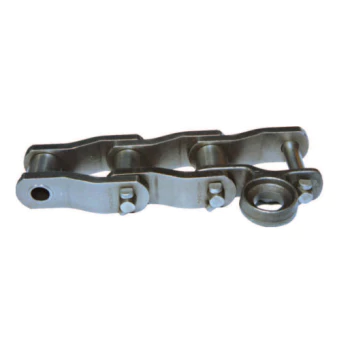
What are the maintenance requirements for a drive chain?
Maintaining a drive chain is crucial for ensuring its optimal performance, longevity, and safe operation. Here are the key maintenance requirements for a drive chain:
- 1. Lubrication: Proper lubrication is essential to reduce friction, prevent wear, and minimize corrosion. Apply the recommended lubricant to the chain as per the manufacturer’s guidelines. The frequency of lubrication depends on factors such as operating conditions and the type of lubricant used.
- 2. Tension Adjustment: Regularly check the chain tension to ensure it is within the manufacturer’s specified range. Proper tensioning prevents excessive slack or over-tightening, both of which can lead to premature wear or component damage. Adjust the tension as needed, following the manufacturer’s guidelines.
- 3. Alignment: Check the alignment of the drive chain to ensure it runs smoothly and evenly on the sprockets. Misalignment can cause uneven wear and decreased performance. Adjust the alignment if necessary, following the manufacturer’s instructions.
- 4. Cleaning: Periodically clean the drive chain to remove dirt, debris, and contaminants that can accelerate wear and affect performance. Use a suitable cleaning agent and a brush to carefully clean the chain, and ensure it is thoroughly dried before lubrication.
- 5. Inspection: Regularly inspect the drive chain for signs of wear, damage, or elongation. Look for worn-out links, rollers, or plates, as well as signs of corrosion or rust. Check for any abnormal noise, vibration, or performance issues during operation. Address any identified issues promptly.
- 6. Replacement: Eventually, even with proper maintenance, a drive chain will reach the end of its service life. Monitor the chain’s condition and replace it when it shows signs of significant wear, elongation beyond acceptable limits, or severe damage that cannot be repaired.
Following these maintenance requirements will help maximize the performance and lifespan of the drive chain, minimize downtime, and ensure safe and reliable operation in various applications.


editor by CX 2024-04-08