Double Pitch Sprockets | C2040 C2050 C2060 C2080 Standard & Carrier Roller Types
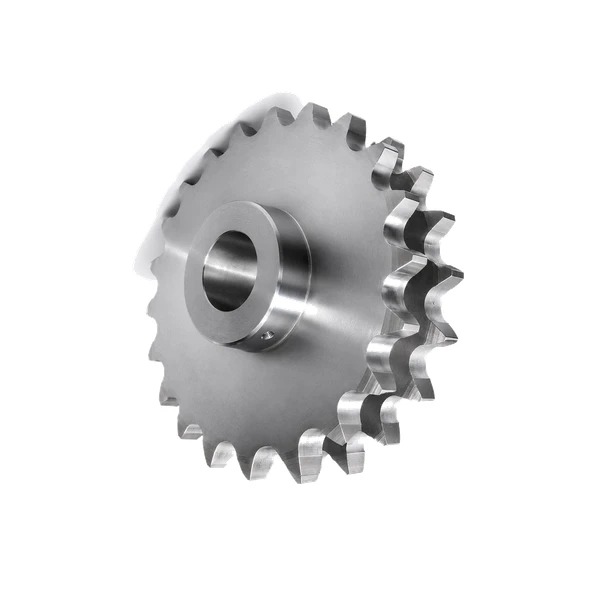
Korea Ever-Power double pitch sprockets are manufactured in SAE 1045 case-hardened steel with black oxide coating, covering C2040 through C2160H chain series in standard roller and carrier roller profiles. Using a single-pitch sprocket with double pitch chain is one of the most common field errors in conveyor drive setup — it causes chain jumping within hours of startup.
Why Double Pitch Chain Requires a Dedicated Sprocket Profile
Double pitch roller chain — designated with a "C" prefix (C2040, C2050, C2060, etc.) — has exactly twice the pitch of the equivalent ANSI single-pitch chain but uses the same roller diameter and inner width. A C2040 chain has a pitch of 1.000 inch (25.4 mm), which is double the #40 chain pitch of 0.500 inch, yet shares identical rollers and sideplates with #40 standard chain. This means it runs on a larger pitch circle for the same tooth count — or equivalently, fits a much smaller sprocket for the same pitch circle.
The critical consequence: standard single-pitch sprocket teeth are too shallow to correctly seat double pitch chain rollers. On a standard #40 tooth profile, the gap between adjacent teeth is sized for a roller every 0.500 inch. Double pitch chain rollers arrive every 1.000 inch — on even tooth counts, every alternate tooth gets a roller, and on odd tooth counts, alternate teeth are loaded on every other sprocket revolution. The tooth geometry must be cut deeper and at a different seating angle to fully capture the roller at this wider engagement spacing. A standard sprocket tooth does not achieve this — the roller perches on the tooth tip rather than seating in the root, generating the chain jumping and accelerated tooth wear that workshops typically diagnose as "wrong chain size" when the actual fault is the wrong sprocket tooth form.
Rule of thumb: For chain sizes C2040, C2050, C2060, C2060H, C2080H, C2100H, C2120H, and C2160H — always specify a double pitch sprocket when tooth count is 30 or fewer. At 31 teeth and above, the pitch circle is large enough that a standard single-pitch sprocket of the equivalent ANSI size can be used, because the seating angle error becomes geometrically negligible. This exception does not apply to carrier roller type chains (C2042, C2052, C2062, etc.) — carrier roller chains require matched carrier roller sprockets at all tooth counts.
Double Pitch Chain Reference — Pitch and Roller Dimensions
When ordering a double pitch sprocket, the first step is to identify your chain's ANSI designation from the markings on the connecting link or outer plate. The table below maps chain designations to their base ANSI equivalent, pitch, and roller type to confirm which sprocket profile you need.
| Chain Designation | Base ANSI | Pitch (inches) | Roller Type | Sprocket Profile |
|---|---|---|---|---|
| C2040 | #40 | 1.000″ | Standard | Standard Roller (SR) |
| C2042 | #40 | 1.000″ | Carrier (oversized) | Carrier Roller (CR) |
| C2050 | #50 | 1.250″ | Standard | Standard Roller (SR) |
| C2052 | #50 | 1.250″ | Carrier (oversized) | Carrier Roller (CR) |
| C2060 / C2060H | #60 | 1.500″ | Standard | Standard Roller (SR) |
| C2062 / C2062H | #60 | 1.500″ | Carrier (oversized) | Carrier Roller (CR) |
| C2080H | #80 | 2.000″ | Standard | Standard Roller (SR) |
| C2082H | #80 | 2.000″ | Carrier (oversized) | Carrier Roller (CR) |
| C2100H / C2120H / C2160H | #100–#160 | 2.500″–4.000″ | Standard | Standard Roller (SR) |
The Three Double Pitch Sprocket Tooth Profiles — Which One Do You Need?
Double pitch sprockets come in three distinct tooth profiles that correspond to three different chain configurations. Mixing profiles and chain types is the second-most common specification error after using single-pitch sprockets entirely. Here is exactly what separates them:
Why Engineers Choose Double Pitch Chain Drives for Conveyor Systems
Double pitch chain is not simply a heavier version of standard roller chain. It solves a specific design problem: low-speed conveyor drives where the chain carries load on its top run rather than transmitting power between two shafts. The advantages of double pitch in these applications compared to single-pitch chain of the equivalent base size are:
Fewer links for the same conveyor length. Double pitch means half as many links carry the same linear chain length — less mass, fewer articulation points to lubricate and wear, and fewer connecting links that are typically the weakest point in the chain.
Lower cost per metre. Fewer rollers and pins per unit length means material cost is lower than equivalent single-pitch heavy-duty chain. For long conveyor runs of 10–50 metres, this is significant.
Compatible with product carriers and attachments. Every other link can be fitted with extended sideplates, carrier flights, or attachment brackets at standard double pitch spacing — exactly the 1-inch, 1.25-inch, or 1.5-inch spacing that matches common carrier attachment designs.
Carrier roller variant supports chain on conveyor frame rails. The oversized carrier roller of C2042/C2052 series bears directly on the conveyor frame trough or guide rail, eliminating chain sag between sprockets on long horizontal runs without separate support rollers.
Where Double Pitch Sprockets Are Used in Korean Industry
Selection Guide — Four Things to Confirm Before Ordering
Unlike standard roller chain sprockets where chain size and tooth count are the only variables, double pitch sprockets add the tooth profile type as a mandatory specification. Getting any one of these four wrong results in a non-functioning drive:
- Identify the exact chain designation — read the marking on the outer plate. C2040 and C2042 look identical in a parts bin but require different sprockets. The "2" suffix means carrier roller. If the chain is not marked, measure roller diameter and compare against the tables above — carrier roller chains have rollers that stand above the sidebar height.
- Determine tooth count and sprocket type (SR vs CR) — confirm whether your chain is standard roller or carrier roller type, then select SR or CR profile accordingly. Remember: the 31+ tooth exception for using standard single-pitch sprockets applies only to SR-type chains, never to CR-type.
- Specify hub style and bore — drive end sprockets typically use B-hub with keyway; take-up end sprockets may be A-plate. Provide shaft diameter, keyway dimensions, and set screw requirements when ordering custom bores.
- Choose an odd tooth count where possible — on drive sprockets, odd tooth counts (13, 15, 17, 19, 21T) distribute wear across all teeth over time rather than loading the same tooth on every revolution. In 24-hour conveyor operation this extends sprocket service life measurably.
Matching Double Pitch Conveyor Chain
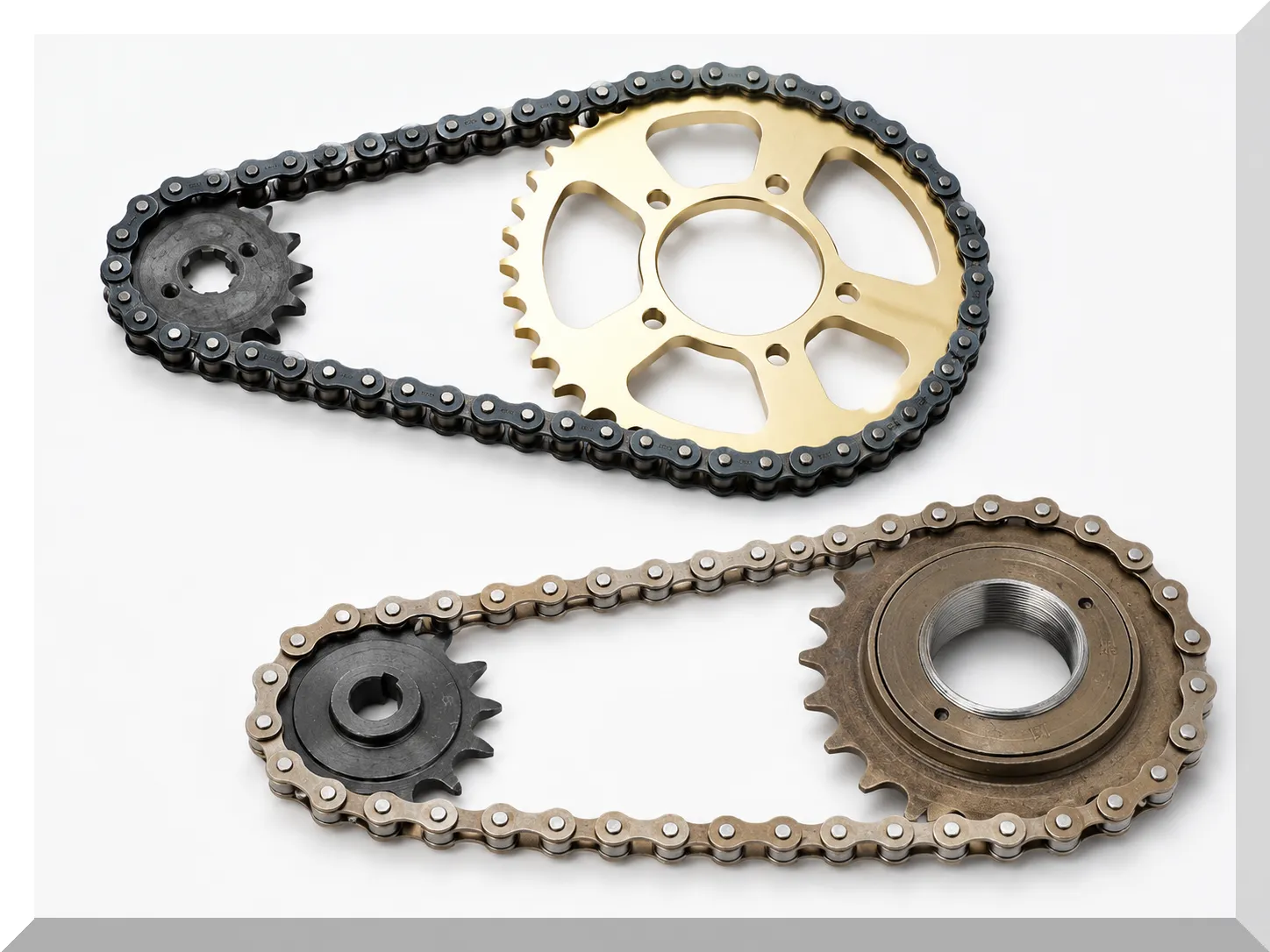
Korea Ever-Power stocks the full range of double pitch conveyor chain — C2040, C2042, C2050, C2052, C2060, C2060H, C2062H, C2080H, C2082H — in standard lengths with attachment plates and extended-pin variants for carrier bracket installation. Ordering matched chain and sprockets from the same source eliminates tooth profile guesswork and ensures the sprocket profile code is correct for your specific chain variant before delivery.
For complete conveyor chain and sprocket system layout design — centre distance calculation, slack run tension, and attachment pitch matching to your carrier spacing — our technical team provides pre-order consultation at no charge. Bring your conveyor length, speed requirement, and product weight and we will specify the correct chain and sprocket combination from first principles.
Why Korea Ever-Power Chain and Sprocket
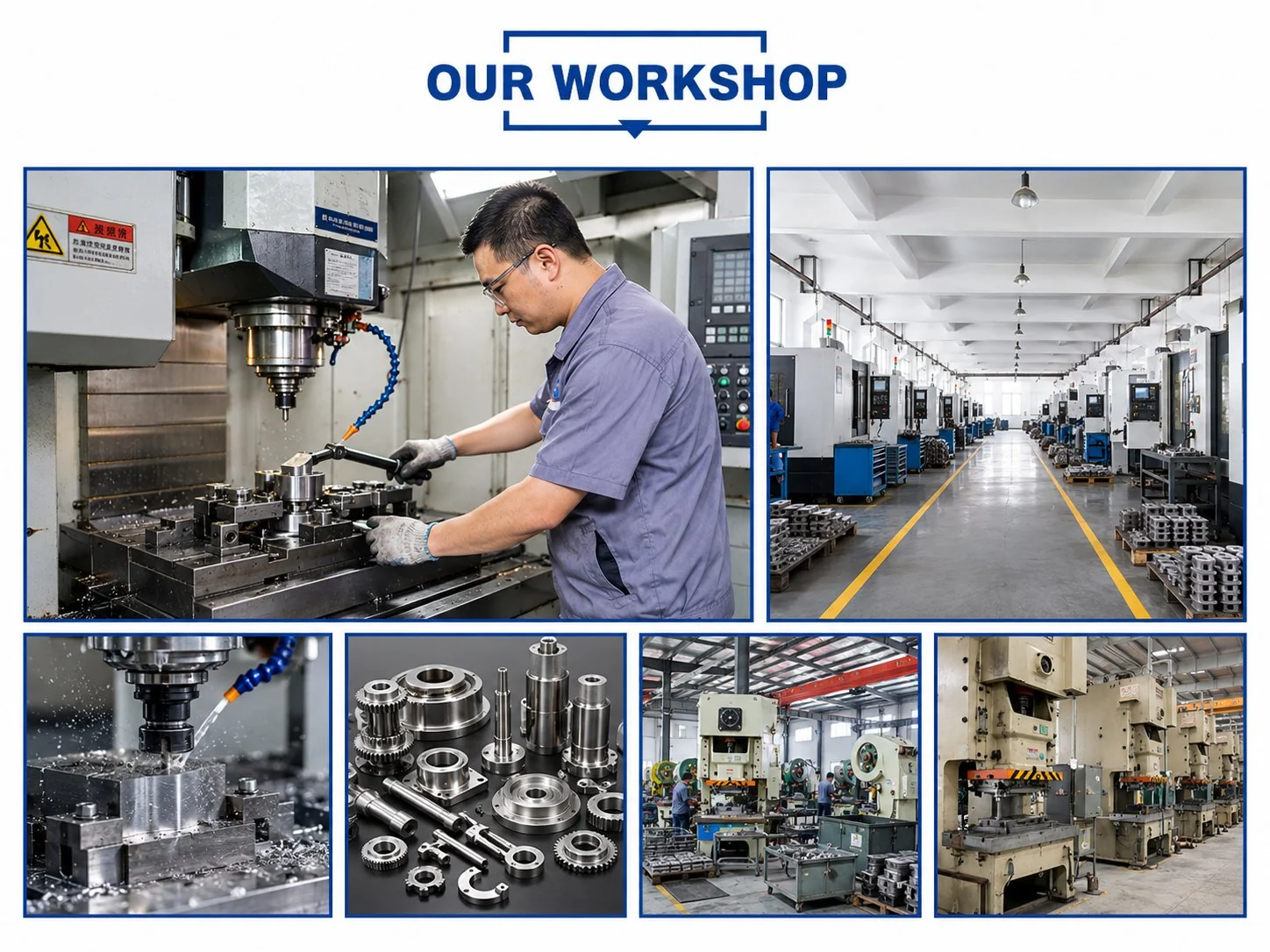
Korea Ever-Power Chain and Sprocket Co., Ltd. stocks double pitch sprockets with correct tooth profiles for both standard roller and carrier roller chain:
Frequently Asked Questions
Customer Reviews
Verified feedback from customers in Korea.
Jung Min-jae, Conveyor Systems Engineer, Electronics Assembly Plant, Suwon (early 2025)
"We were having chain jumping problems on a new tray conveyor line using C2050 chain. The previous sprockets were standard #50 — nobody had flagged they needed to be double pitch type. Korea Ever-Power identified the issue immediately when we described the symptoms, confirmed it was a tooth profile mismatch, and supplied the correct SR-type C2050 double pitch sprockets. Problem resolved on first restart. The profile explanation they gave us was clear and we have now updated our standard specification."
Park Soo-yeon, Production Engineering Manager, Food Packaging Company, Incheon (2024)
"Our bottling line uses C2042 carrier roller chain on UHMW guide rails. We needed CR-type sprockets in an odd tooth count (17T) to extend service life in our 20-hour per day operation. Korea Ever-Power had the carrier roller profile in 17T in stock — I was concerned this specific configuration would need to be special ordered but it arrived in 10 days. Chain is running smoothly without jumping at our normal 0.8 m/s line speed."
Kim Hyun-jun, Maintenance Supervisor, Logistics Distribution Centre, Gyeonggi-do (Q3 2024)
"We maintain C2060 chain conveyors across a 45,000 sqm distribution facility. Annual sprocket replacement across 12 conveyor lines. Korea Ever-Power provides our standard SR-type C2060 sprockets in 17T and 21T. Consistent quality, correct profile, on-schedule delivery. We have not had a chain jumping incident since switching to matched double pitch sprockets two years ago."
Lee Sang-hoon, Mechanical Engineer, Automotive Parts Manufacturer, Ulsan (2025)
"We use C2040 chain for parts carrier conveyors between press lines. Specified 19T odd-count drive sprockets on Korea Ever-Power's recommendation after discussing wear patterns with their team. Previous even-count sprockets showed visible localised tooth wear on half the teeth at the 8-month inspection. The 19T replacements are at 10 months now and wear is visibly more uniform — looks like we will get well past 12 months before next replacement."
Choi Byung-hoon, Equipment Procurement, Cold Chain Logistics Company, Busan (early 2025)
"We operate refrigerated conveyor systems where chain jumping would contaminate product. Korea Ever-Power supplied matched C2052 carrier roller chain and CR-type sprockets as a complete set. Having both components from the same supplier with confirmed profile compatibility gave our food safety team the documentation they needed for HACCP compliance on the conveyor specification."
Additional information
| Editor | Cxm |
|---|
Related products
-
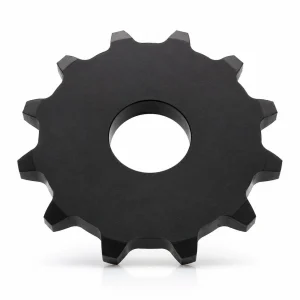
WR78 / WH78 Welded Steel Chain Sprockets | A-Plate 7–20 Teeth — Mild Steel & QT400 Hardened
-
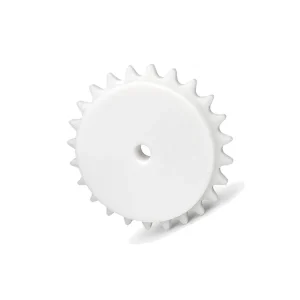
Plastic Sprockets | Nylatron, Acetal, Nylon — FDA-Approved, Self-Lubricating, Corrosion-Free
-
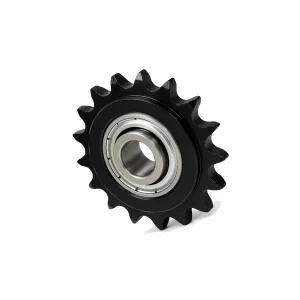
Idler Sprockets | Ball Bearing, Needle Bearing, Bronze & Non-Metallic — Chain Guide and Tensioner
-
#240 Roller Chain Sprockets | A-Plate B-Hub C-Hub – 10 to 60 Teeth, 3-Inch Pitch
-
Roller Chain Sprockets | A-Plate & B-Hub – 18 to 72 Teeth, SAE 1045 Steel
-
Single Strand Roller Chain Sprockets | A-Plate B-Hub C-Hub Taper QD Weld-On
-
Plate Wheel Sprocket 081B-1 | DIN 8187 ISO 606 – 8 to 125 Teeth
-
Cast Iron Sprocket | DIN 8187 ISO 606