Product Description
KT-MD300C Palm Plantation Four Wheel Mini Dumper Chain Dirve 4×4
Specifications:
| Name & Model | Mini Dumper KT-MD300C | ||
| Engine type | 4-stroke, single cylinder, | ||
| Brand & Model | B&S 750 | HONDA GXV160 | LONCIN 196cc |
| Transmission | Transaxle 4 CHINAMFG / 1 reverse speed | ||
| Fuel | Unleaded petrol | ||
| Capacity | 8cu.ft. or 300kgs/ 650lbs weight | ||
| Noise Rating | 79db | ||
| Brake | Disk | ||
| Cables | Protected | ||
| Wheels | Front 400 x 10, 4 ply, rear 400 x 8 | ||
| Dimensions | Length- 173cm/68″, Width- 75cm/29″, Height- 87cm/34″ | ||
| Weight | 130kg | ||
| Package | Angle iron welded frame, Packing size 1380*750*730mm | ||
| Loading Quantity | 20FCL- 36pcs; 40FCL/40HQ- 75pcs | ||
Features of Mini Dumper KT-MD300C:
- This Power Wheel barrow has 300kg / 660lbs carrying capacity.
- The Muck truck is powered by a HONDA GXV160/ B&S 750/ CHINAMFG 196cc engine with a 12 month commercial warranty.
- The Mini dumper is easily maintained, is simple and safe to use.
- The powered barrow has 4-forward gears and 1-Reverse.
- The transmission is sealed for life and requires no service.
- The dumpers can be completely Powder coated and have Hot dip Galvanizing bucket for optional.
- All the metal work is laser cut for a perfect finish.
- The motorized wheel barrow will climb 30 degrees fully loaded.
- Measurement in width, fit through all standard doorways.
/* January 22, 2571 19:08:37 */!function(){function s(e,r){var a,o={};try{e&&e.split(“,”).forEach(function(e,t){e&&(a=e.match(/(.*?):(.*)$/))&&1
| Type: | Loader |
|---|---|
| Handle Material: | Rubber |
| Transport Package: | Neutral Packing |
| Specification: | 6 CBF |
| Trademark: | KONSTANT |
| Origin: | China |
| Customization: |
Available
| Customized Request |
|---|
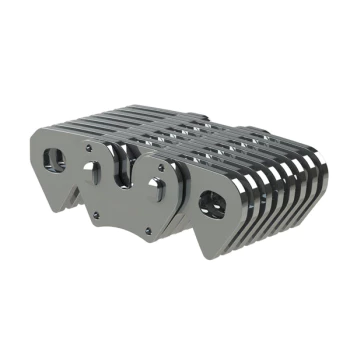
Can a drive chain be used in a HVAC or ventilation system?
Yes, a drive chain can be used in HVAC (Heating, Ventilation, and Air Conditioning) or ventilation systems where reliable and efficient power transmission is required. Here is a detailed explanation:
HVAC and ventilation systems utilize various components such as fans, blowers, dampers, and louvers to control air flow, temperature, and humidity in residential, commercial, and industrial buildings. Drive chains offer several advantages in these applications:
- Reliable Power Transmission: Drive chains provide reliable power transmission for HVAC and ventilation systems. They are capable of transmitting power over long distances, accommodating various speeds and torque requirements, and operating in different directions of rotation.
- Flexible System Design: Drive chains offer flexibility in system design and layout. They can be easily configured to connect and drive multiple components, such as fans, motors, and dampers, allowing for efficient control and adjustment of air flow and system performance.
- Accurate Speed Control: Drive chains allow for precise speed control in HVAC systems. By using sprockets of different sizes or incorporating variable speed drives, the rotational speed of fans or blowers can be adjusted to achieve the desired air flow rates and maintain optimal environmental conditions.
- High Load Capacity: HVAC and ventilation systems often require components to handle significant air volumes and pressure differentials. Drive chains are designed to handle high loads and transmit power effectively, ensuring reliable operation of fans, blowers, and other equipment.
- Durability and Longevity: Drive chains are engineered to withstand the demanding conditions of HVAC and ventilation systems. They are designed to resist wear, corrosion, and fatigue, ensuring durability and long service life even in continuous or high-cycle operations.
- Quiet Operation: Drive chains, when properly lubricated and maintained, can operate quietly in HVAC systems, minimizing noise and vibration levels. This is crucial for maintaining a comfortable and noise-free environment in residential, commercial, or institutional settings.
When selecting a drive chain for HVAC or ventilation applications, factors such as load capacity, speed requirements, environmental conditions (such as temperature and humidity), and maintenance considerations should be taken into account.
Regular inspection, lubrication, and tension adjustment are important for ensuring the optimal performance and longevity of the drive chain in HVAC and ventilation systems.
By utilizing drive chains in HVAC and ventilation systems, operators can benefit from reliable power transmission, flexible system design, accurate speed control, high load capacity, durability, longevity, and quiet operation, contributing to efficient and effective air conditioning and ventilation in various building environments.
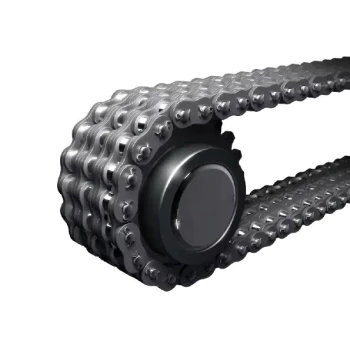
What are the factors that affect the lifespan of a drive chain?
The lifespan of a drive chain can vary depending on several factors. Here is a detailed explanation of the factors that can affect the lifespan of a drive chain:
- Maintenance: Regular and proper maintenance is crucial for maximizing the lifespan of a drive chain. This includes routine inspection, cleaning, lubrication, and tension adjustment. Neglecting maintenance can lead to accelerated wear, corrosion, and potential chain failure.
- Lubrication: Proper lubrication is essential for reducing friction, wear, and corrosion within the chain. Inadequate or improper lubrication can cause premature wear, increased friction, and accelerated chain elongation, decreasing the lifespan of the chain.
- Environmental Conditions: The operating environment can significantly impact the lifespan of a drive chain. Factors such as dust, dirt, moisture, temperature extremes, and exposure to chemicals or corrosive substances can contribute to accelerated wear and corrosion. Implementing appropriate measures to protect the chain and ensuring it is suitable for the specific environment can help prolong its lifespan.
- Load and Tension: Operating a chain beyond its recommended load capacity or having improper tension can put excessive stress on the chain, leading to accelerated wear, fatigue, and potential failure. Maintaining the chain within the manufacturer’s specified load and tension limits is important for extending its lifespan.
- Alignment and Sprocket Condition: Misalignment between the sprockets and improper sprocket condition can cause uneven chain wear, increased friction, and premature failure. Ensuring proper alignment and regularly inspecting and maintaining the sprockets are essential for maximizing chain lifespan.
- Chain Type and Quality: The type and quality of the chain can affect its lifespan. High-quality chains made from durable materials and designed for specific applications tend to have a longer lifespan compared to lower-quality or generic chains.
By addressing these factors and implementing proper maintenance practices, it is possible to extend the lifespan of a drive chain and ensure reliable and efficient power transmission in various applications.
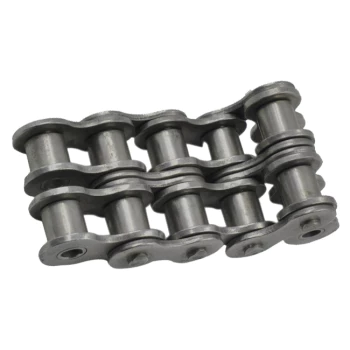
How does a drive chain differ from a timing belt?
A drive chain and a timing belt are both components used in power transmission, but they differ in their construction, operation, and application. Here are the key differences between a drive chain and a timing belt:
- Construction: A drive chain consists of interconnected links or rollers, typically made of steel, that form a flexible mechanism. In contrast, a timing belt is a toothed belt made of a reinforced rubber material with teeth on the inner surface.
- Power Transmission: Drive chains are commonly used for transmitting power in applications where flexibility and high-load capacity are required, such as in vehicles, machinery, and industrial equipment. Timing belts, on the other hand, are primarily used for precise synchronization of engine components, such as camshafts and crankshafts, in internal combustion engines.
- Motion and Operation: Drive chains transfer power through rotational motion. The engagement of the chain links with sprockets allows for the transfer of rotational force. Timing belts, on the other hand, rely on the meshing of teeth on the belt with grooves or pulleys to ensure precise timing and synchronization of the engine’s internal components.
- Maintenance and Tension: Drive chains require periodic lubrication and tension adjustment to ensure proper operation and minimize wear. Timing belts, on the other hand, are typically maintenance-free and do not require lubrication or frequent tension adjustments.
- Noise and Vibration: Drive chains, especially roller chains, can generate more noise and vibration during operation compared to timing belts, which are designed to operate with reduced noise and vibration.
- Replacement: In case of damage or wear, drive chains can be repaired by replacing individual links or sections. Timing belts, on the other hand, usually require complete replacement as they are not easily repairable.
Ultimately, the choice between a drive chain and a timing belt depends on the specific application requirements, such as the need for power transmission, precision timing, load capacity, maintenance preferences, and operational conditions.


editor by CX 2024-04-13